
This is the fifth entry in our 10th Annual Graduate Student Blogging Contest, “Revolution.”
By Deborah Wolfson
New York City likes to tilt itself towards the future—ever upwards, always remaking itself and its history. New Yorkers, too, in popular imagination, are self-styled strivers who are never satisfied without new victories.1 I would not as a general rule recommend walking up to New Yorkers and calling them losers,2 but the historical fact is, despite its image, this city does not have a particularly victorious battle record. The most marked and markéd defeat is the Battle of Brooklyn, but it was not the first eighteenth-century fight for freedom lost across what would become the five boroughs. Three centuries later, these revolutionary defeats still shape the city, even as the details erode in our collective memory. What remains in sharp relief is determined by what and how we choose to remember.
On a cold, mostly forgotten eighteenth-century night, a family was murdered in Queens. William Hallett III was the grandson of a prominent landowner and the son of a local magistrate. He lived in Newton, Long Island, on the western edge of Hallett land with his pregnant wife Ruth, their five children, and two people not considered people in the eyes of the law: Sam, said to be Native American, and a Black woman, said to be Sam’s wife, both enslaved by the Hallett family.3 Their play for freedom came at the end of an axe. On the night of January 24, 1708, William, Ruth, and all five Hallett children were murdered. The next morning, the enslaved woman ran to a neighbor, screaming her discovery, but by the afternoon, she confessed and was arrested.4 Fear spread alongside news of the deed. It was said the murder was revenge for being denied a day off, though the governor called it a plot.5 Sam and the woman were publicly tortured—“put to all torment profible [sic] for a terror to others”6—then hanged and burned at the stake, respectively, along with two other enslaved men hanged as co-conspirators.7 The Hallett name is remembered—”Hallet’s Cove” is named after them, though one “t” got lost along the way. But Sam, this woman, and their bloody bid for freedom are preserved only in a punishing law. On October 30, 1708, at the urging of William Hallett II, the Queens Council8 passed “An Act for Preventing the Conspiracy of Slaves.” It was a new kind of law in North America, preventing revolt by promising capital punishment for even the suspicion of a conspiracy. When we strip the passive voice from “history is written by the winners,” we can see how those victories are enforced: through the spectacle of torture and the force of law, which determine who is remembered as a freedom fighter and who is condemned as a traitor.
The law would be called into use soon enough, making its effectiveness as a preventative measure seem suspect. On April 7, 1712, Manhattan became the site of the first armed slave uprising in British North America by a large force.9 Two dozen people, a majority Coromantee and Pawpaw, gathered in an orchard in the East Ward armed with guns and blades and set an outhouse on fire, and then charged the New Yorkers who rushed to put out the blaze.10 Nine white New Yorkers were killed and twelve more wounded, some by the people they or their families enslaved.11 The rebels fled, but most were soon captured12 and twenty-one were soon executed.13 Historian Anne-Claire Faucquez posits that the rebellion shouldn’t be considered unsuccessful: no one won their freedom, but there was revenge and the social order was threatened, even if the response to the threat was paranoia rather than progress.14 The government’s answer to the uprising, as in 1708, was a further tightening of the slave systems. On December 12, 1712, the New York assembly passed the “Act for Preventing, Suppressing and Punishing the Conspiracy and Insurrection of Negroes and Other Slaves,” which promised easy violence to assuage the city’s slave owners’ fears of further revolt.15 It would not work against fear or rebellion. In her examination of the 1712 uprising, historian Thelma Wills Foote writes:
New York City’s Slave Revolt of 1712 demonstrated that the city’s enslaved inhabitants did not share their masters’ perspective on the world, much less their masters’ interest in preserving the colonial power structure, which fixed Africans, creole blacks, and Native Americans in the position of abject bondage.16
It was a declaration of independence, one that would not be heard as such but would still be echoed in 1776.
The fires of rebellion rose again three decades later. On March 18, 1741, Manhattan’s Fort George burned.17 It wasn’t initially suspicious, but it was followed by enough other fires to stop looking like an accident. When an enslaved Black man named Quaco was seen singsonging about burning down the city, the tension turned into panic.18 Colonial New Yorkers weren’t just whistling Dixie: fires were an existential threat to eighteenth-century cities.19 Despite the burning fears, however, no one was killed in the fires of 1741. The same cannot be said of the trials that followed, which served as a blood-soaked commemoration of 1708 and 1712. An investigation into the conspiracy to burn the city down and upend the government by installing an Irish-American king and a Black governor20 was led by a Supreme Court Justice Daniel Horsmanden.21 Seventeen people, including two white women, were hanged. Thirteen people were burned at the stake. Two corpses, one of a Black man named Caesar and the other a white man named John Hughson, were chained to a fence as a macabre display. One man slit his throat in prison. Eighty-four men and women were sold in punishment to plantations in the Caribbean.22 Thirty-nine of those accused had ties to earlier uprisings in the Caribbean,23 lending weight to geographer Clyde Wood’s argument that the slave society of what would become the United States can best be understood as the “Northern Caribbean.”24
The trials Horsmanden led proved the interconnectedness of 1712 and 1741 more effectively than it showed the conspiracy he was investigating. There were warnings passed down in families on both sides,25 of loved ones killed by the enslaved people they trusted to run their homes and loved ones murdered by the state without evidence.26 Terror pitched to hysteria also linked the two Manhattan uprisings. In the summer of 1741, one New York official received an anonymous letter from a Salem, Massachusetts resident who remembered the witch trials of his childhood. He wrote:
The former horrible executions among you upon this occasion puts me in mind of our New England Witchcraft in the year 1692 Which if I dont [sic] mistake New York justly reproached us for, & mockt at our Credulity about; but may it not now be justly retorted, mutato nomine de te fabula narratur.27
Historian Thomas J. Davis challenges us to consider the 1741 uprising as a protest. Without any access to the mechanisms of reform, many enslaved New Yorkers opted for the quiet rebellion of disobedience, scraping what they could to cobble together what they needed. When that was not enough, quiet rebellion crescendoed into revolution: “frustration… grew progressively from protest through reform to rebellion.”28 This too would echo all the way to Philadelphia in 1776. And that too Horsmanden would abhor; Horsmanden lived to see the Declaration of Independence but was a Royalist who resented his personal property being commandeered by a government he did not recognize.29
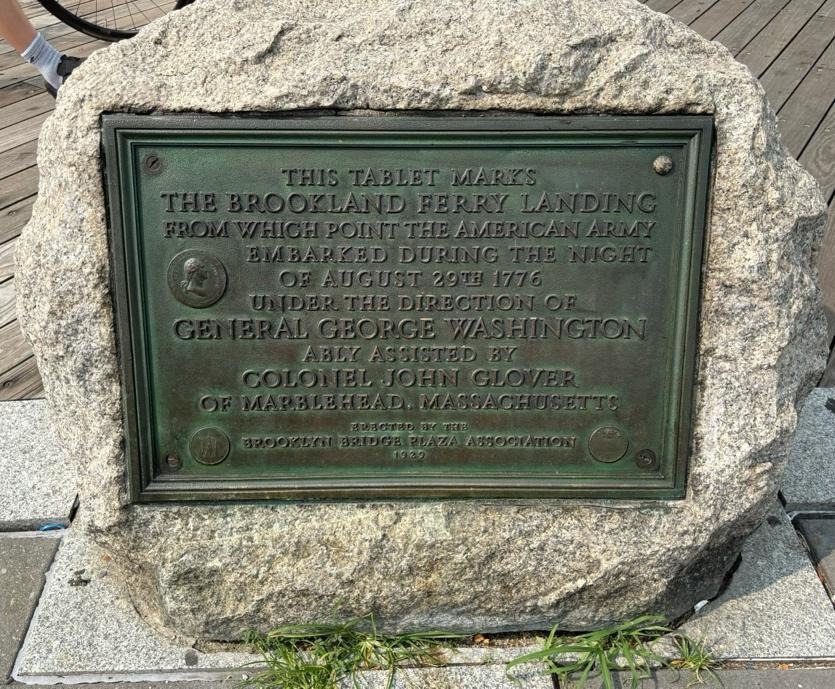
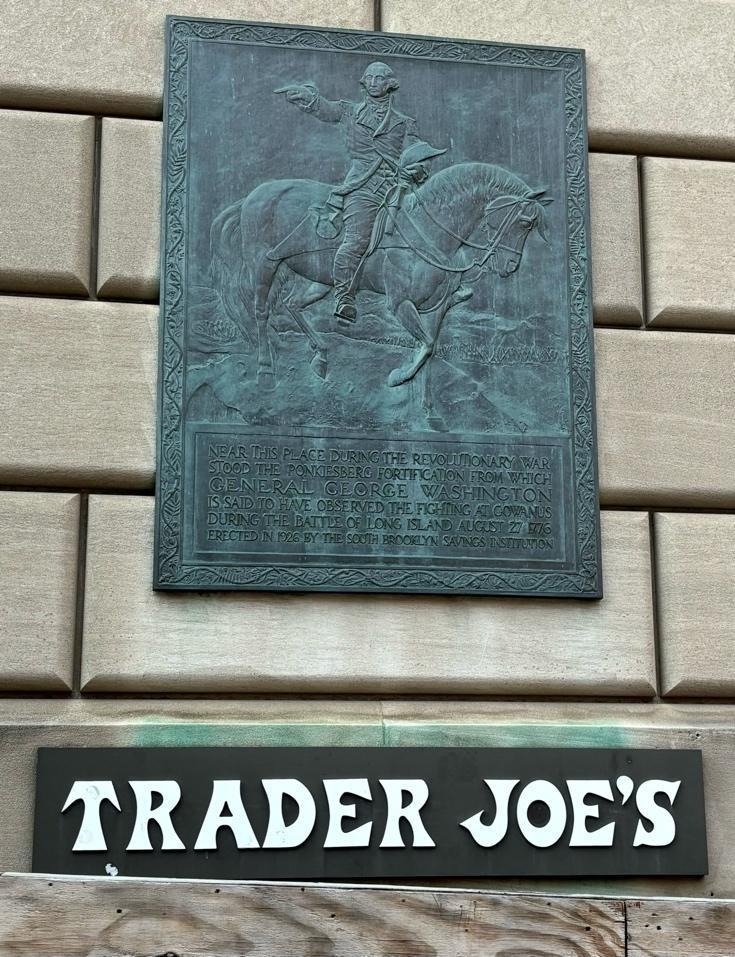
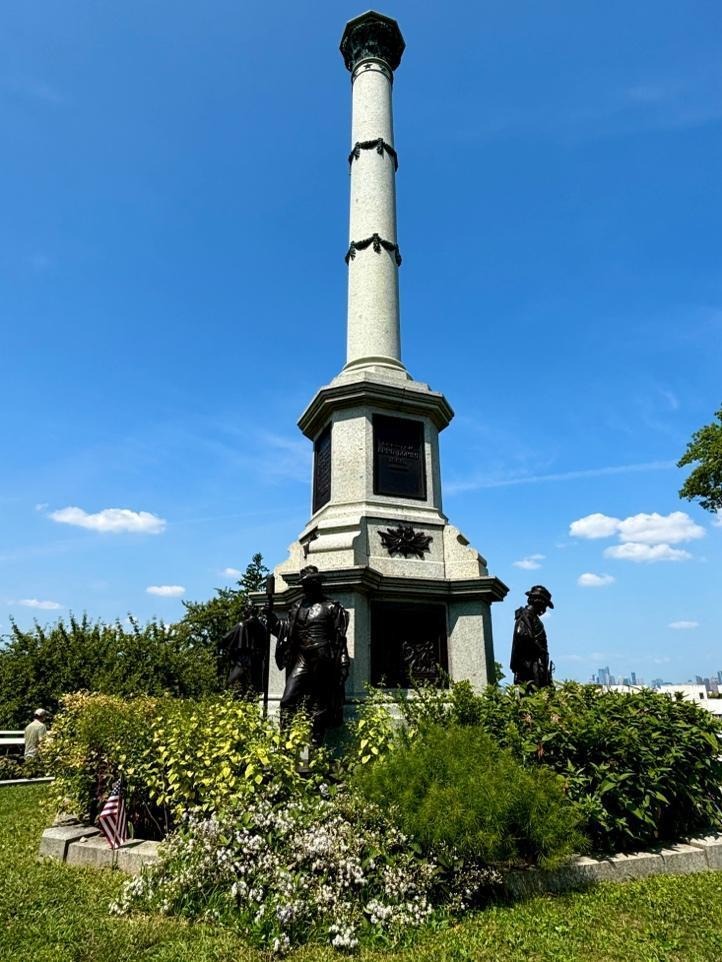
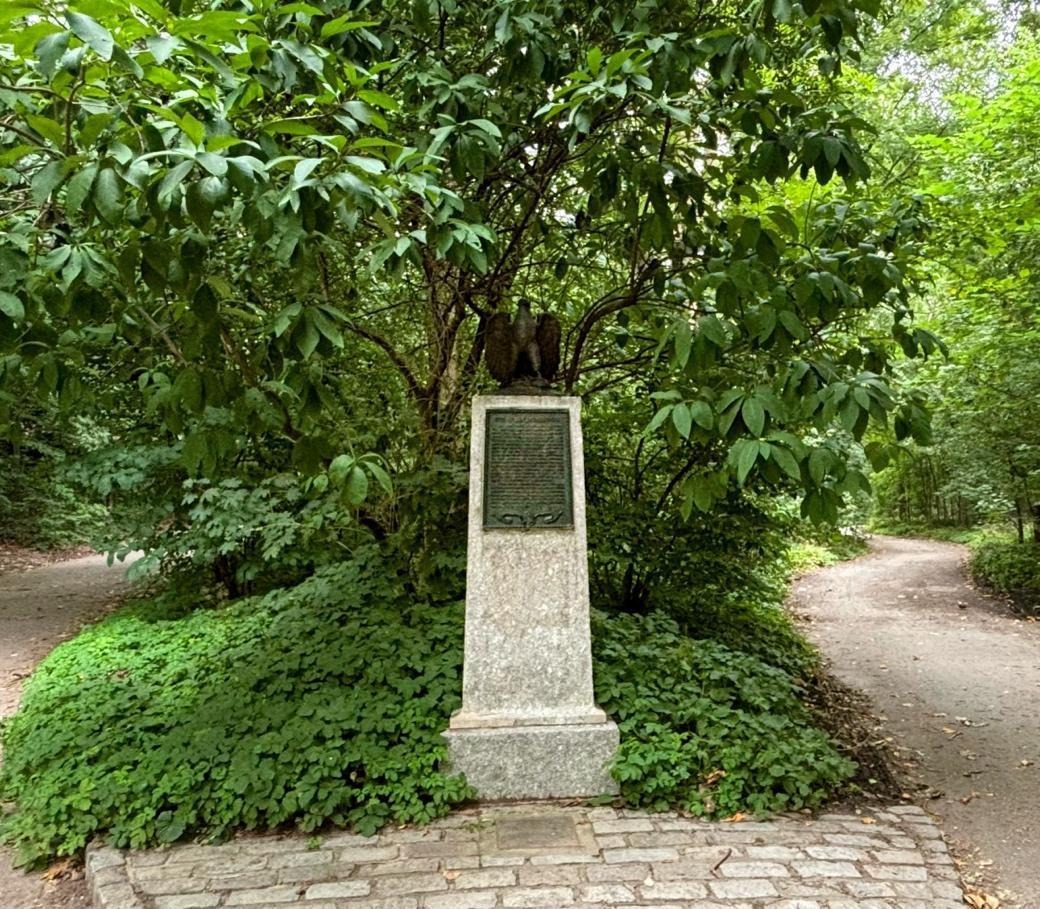
That one of these defeats is etched in gleaming and sober commemoration across the city and others are tucked quietly out of sight is both a statement of values and an act of reassurance. George Washington’s defeat in the Battle of Brooklyn is relatively comfortable to memorialize, as the survival of the army was its own kind of victory. The defeat of those fighting for their freedom at the hands of those whose kin fought under Washington is harder to reckon with, even three centuries later. This contrast in what we choose to honor is sharpened by the analysis of historian Gary B. Nash and his assertion that “the American Revolution represents the largest slave uprising in our history” after Lord Dunmore’s 1775 proclamation made emancipation for enslaved Americans a policy of the British army.30 One victory in a battle for independence meant another’s defeat, but not the defeat we can see on the sidewalks.
What we mark is an active and ongoing choice. That some of this history is commemorated on the streets is itself a result of another uprising that is rarely remembered as a victory: Occupy Wall Street.31 Scholars involved in the protest helped spark the campaign to mark the city-run Municipal Slave Market, whose opening preceded the 1712 uprising by only months and which stands a two-minute walk north of where George Washington disembarked during his August 29, 1776 retreat.32
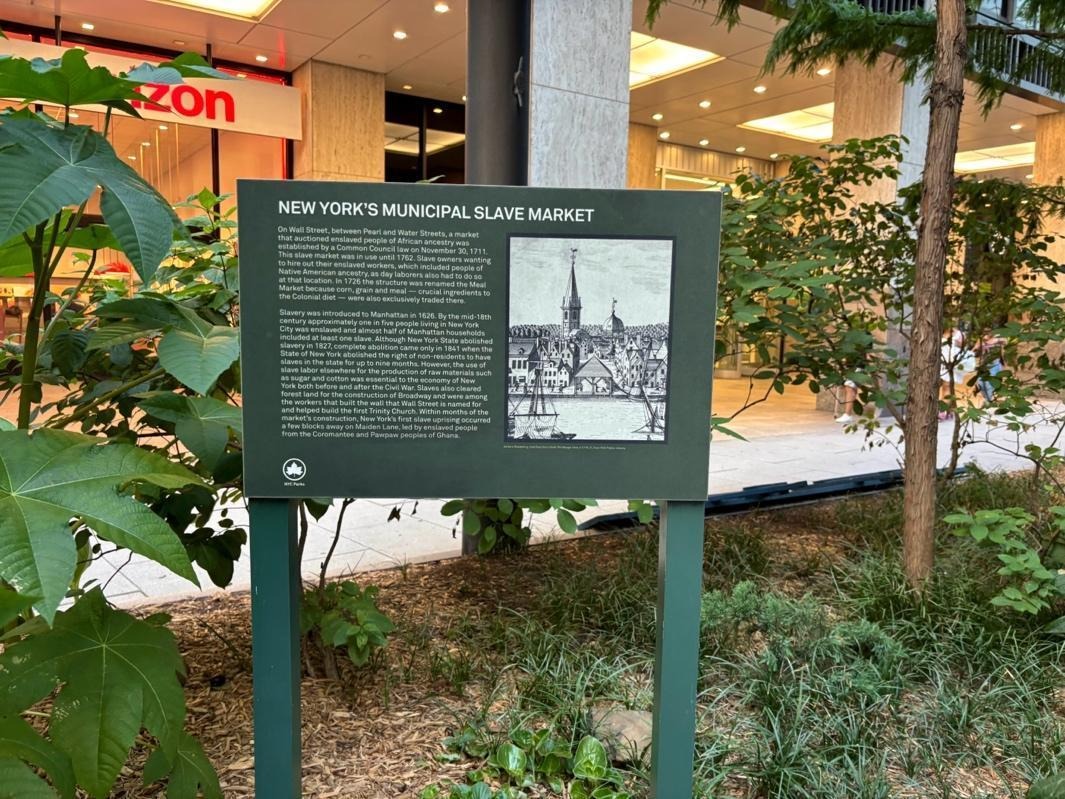
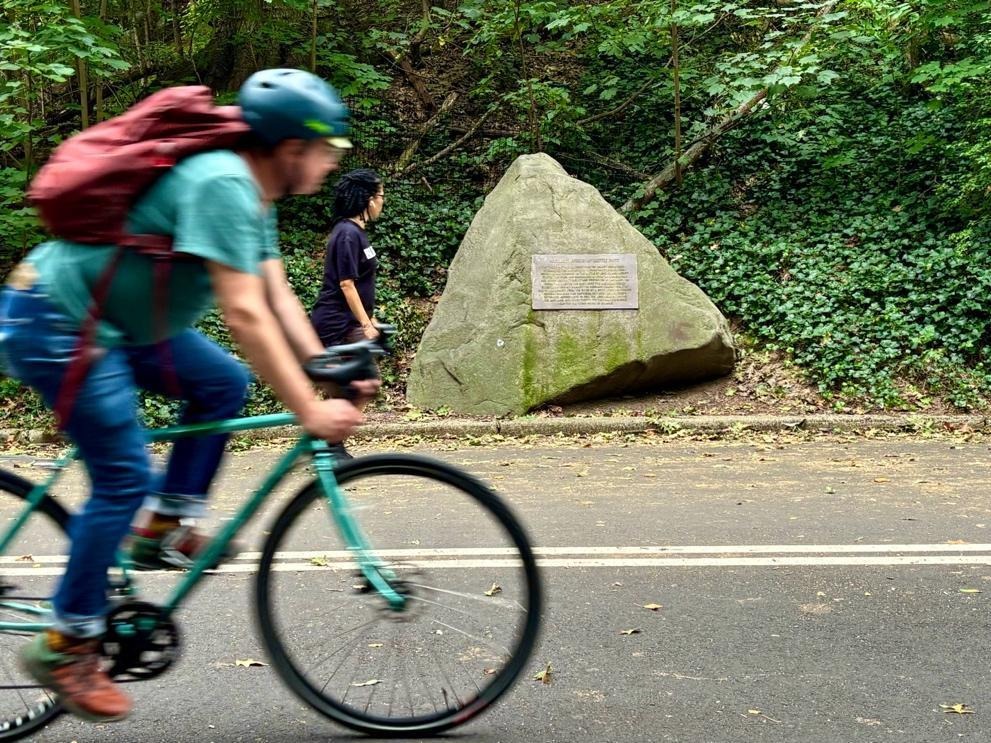
It is an old truism that winning or losing a battle is not the same as the war, and in these four eighteenth-century fights, we see not only the outcomes of the battles but how they are reforged and reframed in our memory: carried through the streets of the city and given to neighbors or left behind. You can easily retrace George Washington’s New York footsteps from plaque to plaque without a textbook, but he didn’t walk through history alone and his is not the only path worth following. Not all of our losses must stay lost, however, and it can be a new revolution to uplift their memory.
Deborah Wolfson is a student at the CUNY Graduate Center, pursuing a Master’s in New York Studies and Public Scholarship. Her work traces the history of immigration, labor, and social justice through New York streets and has been seen in the Dead Lady Show NYC, Nerd Nite NYC, and her history newsletter, Leaves of Glass. She is a 2026 Victorian Society NY Emerging Scholar.
- Whether that is compliment or castigation tends to depend on the context.
↩︎ - Especially not when the Knicks are the reigning NBA champions.
↩︎ - History of Queens County, New York: With Illustrations, Portraits, And Sketches of Prominent Families And Individuals. (New York: W. W. Munsell and Co., 1882), 268.
↩︎ - Scott, Kenneth. “The Slave Insurrection in New York in 1712.” New-York Historical Society Quarterly, v 45, no. 1 (January 1961): 45.
↩︎ - Faucquez, Anne-Claire. “‘A Bloody Conspiracy’: Race, Power and Religion in New York’s 1712 Slave Insurrection.” In Fear and the Shaping of Early American Societies, vol. 4, edited by Louis Roper and Lauric Henneton. (Boston: Brill, 2016), 211.
↩︎ - New-York, Feb. 10. The Boston News-Letter, no. 201, 23 Feb. 1708: 2.
↩︎ - Faucquez, “A Bloody Conspiracy,” 213.
↩︎ - By this I mean the governing body of the county Queens in New York, rather than the agents of the monarch, who at the time was Queen Anne.
↩︎ - Foote, Thelma Wills. “‘Some Hard Usage’: The New York City Slave Revolt of 1712.” In New York Folklore Society., and Barbara L. Hampton. Through African-Centered Prisms. New York Folklore Society, 2000: 147.
↩︎ - Foote, “Some Hard Usage,” 149.
↩︎ - Faucquez, “A Bloody Conspiracy,” 204.
↩︎ - Six of the leaders killed themselves rather than be taken prisoner.
↩︎ - Foote, “Some Hard Usage,” 148.
↩︎ - Faucquez, “A Bloody Conspiracy,” 205.
↩︎ - Faucquez, “A Bloody Conspiracy,” 220.
↩︎ - Foote, “Some Hard Usage,” 156.
↩︎ - Davis, Thomas J. A Rumor of Revolt : The “Great Negro Plot” in Colonial New York. (New York: The Free Press, 1985), 12.
↩︎ - Davis, A Rumor of Revolt, 17.
↩︎ - Lepore, Jill. New York Burning : Liberty, Slavery, and Conspiracy in Eighteenth-Century Manhattan. (New York: Alfred A. Knopf, 2005), 42.
↩︎ - Lepore, New York Burning, 9.
↩︎ - Horsmanden, Daniel. The New-York Conspiracy, or, A History of the Negro Plot, with the Journal of the Proceedings against the Conspirators at New-York in the Years 1741-2. Printed and published by Southwick & Pelsue, no. 3, New-street, 1810: vii. ↩︎
- Lepore, New York Burning, xii.
↩︎ - Lepore, New York Burning, 54.
↩︎ - Wood, Clyde. “”Sittin’ On Top Of The World” : The Challenges Of Blues and Hip Hop Geography.” McKittrick, Katherine, and Clyde Adrian Woods. Black Geographies and the Politics of Place. (Toronto: Between the Lines, 2007), 66.
↩︎ - Sometimes the linkages were more literally familial: One Roosevelt was killed in the 1712 uprising and the next generation’s enslaved men were hanged as conspirators in 1741. Jacobus’ line would eventually find its way north to Hyde Park and result in FDR and John’s family would end up in Oyster Bay, and with Theodore Roosevelt.
↩︎ - Lepore, New York Burning, 91. ↩︎
- Lepore, New York Burning, 204. Additionally, the Latin is translated as: Change the name, and the story is told about you. ↩︎
- Davis, Thomas J. “The New York Slave Conspiracy of 1741 as Black Protest.” The Journal of Negro History 56, no. 1 (1971). https://doi.org/10.2307/2716023: 28. ↩︎
- George Washington took over Horsmanden’s second wife’s home for use as a hospital.
↩︎ - Nash, Gary B. Race and Revolution. (Madison: Madison House, 1990), 60.
↩︎ - Meier, Allison. “Wall Street’s 18th-Century Slave Market Finally Recognized with Historic Marker.” Hyperallergic, July 3, 2015. ↩︎
- O’Grady, Jim. “City to Acknowledge It Operated a Slave Market for More Than 50 Years.” WNYC. April 14, 2015. https://wnyc.org/story/nyc-acknowledge-its-slave-market-more-50-years/
↩︎

