
This is the fourth post in our theme series for May, Cities at Play.
By Dan Holland
This year’s NFL Draft, held in Pittsburgh from April 23rd-25th, attracted an estimated 800,000 fans over three days, a record reinforcing the importance of sport to cities in the post-industrial era.1 Sport has long been deeply embedded in Pittsburgh’s Black community as a catalyst for change and an indicator of success and resilience in the face of discrimination. For half of the twentieth century, though, sports—and sporting locations—were racially exclusionary, keeping African Americans separated from competition with whites.
The history of African Americans’ participation in sport in Pittsburgh can be summarized in three periods: enlargement of the Black community during the Great Migration, 1920s-1940s; desegregation of the 1950s and 1960s; and today’s modern integrated game. And yet, “the integration of Pittsburgh sport did not necessarily reflect greater integration in Pittsburgh,” writes historian Rob Ruck. “Neighborhoods and schools were becoming more segregated in the 1950s despite breakthroughs in sport.”2 But the quest for progress today should not overshadow the importance of Pittsburgh’s African American sporting achievements.
Though African Americans’ employment and housing options were extremely limited before the 1960s, fields of play existed in the neighborhoods where most African Americans lived, as well as select towns throughout the Pittsburgh region. These venues enabled African American men and women to demonstrate that myths of racial superiority did not apply in the meritocracy of sport.
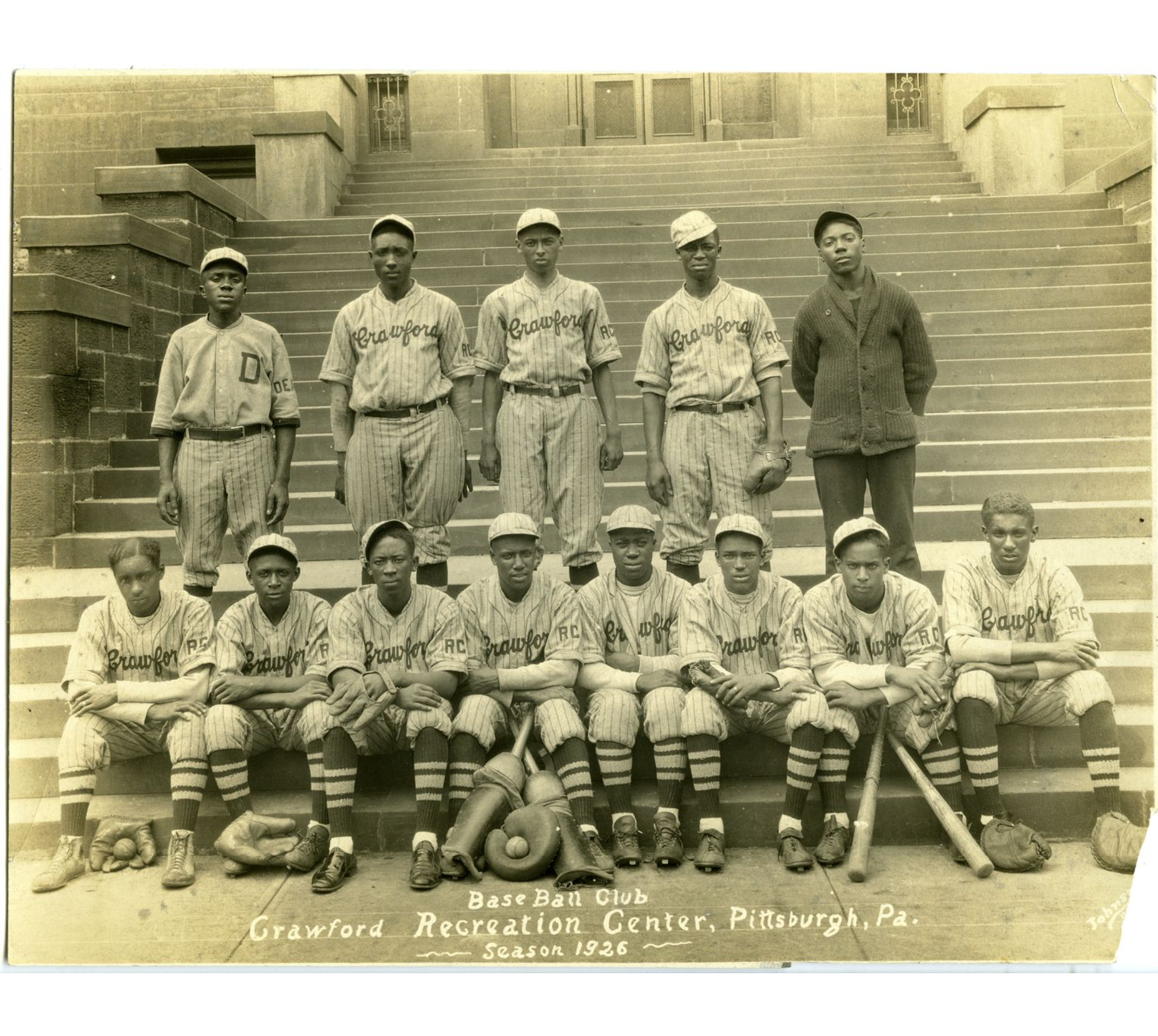
Baseball best represented African American sporting greatness in this era. Pittsburgh-area sandlots produced two of America’s best Black baseball clubs: the Homestead Grays (organized in 1901) and, in the 1920s, the Pittsburgh Crawfords, sponsored by the Hill District’s Crawford Recreation Center. In 1933, Pittsburgh’s “numbers baron” Gus Greenlee took over management of the Negro National League, and the area’s two teams made Pittsburgh the center of Black baseball in America.3 Between the Grays (1943, 1944, and 1948) and the Crawfords (1924–1927 and 1942–1948), they won more Negro League national titles than any other teams and unified Pittsburgh’s Black community as it wrestled with the Great Migration.
Black-owned sporting locations were rare and short-lived during this time, mirroring the segregated housing conditions that became a hallmark of the Great Migration’s first wave. “Working-class housing in early twentieth-century Pittsburgh and its satellite industrial towns was notoriously bad,” writes Peter Gottleib.4 And yet, African Americans built durable institutions in the form of churches, social clubs, and sporting leagues. As Joe Trotter writes, “Although precarious, in constant flux, and fragile, African American access to urban land, housing, and neighborhoods provided the territorial context for the expansion of the Black city and its extensive institutional infrastructure.”5
The center of this network was in Pittsburgh’s Hill District. In addition to being the home of the Crawfords, the Hill contained numerous fields of play, where newly arrived immigrants commingled with African American migrants from the American South. Places like Washington Park, Ammon Field, and Kennard Field provided numerous recreational opportunities for both African Americans and whites. Ruck writes that “The Hill was a racial and ethnic smorgasbord, and pickup games reflected this variety.”6
One of these venues, Greenlee Field, erected in 1932, was one of the the nation’s first African American-owned stadiums, where Hall of Famers Satchel Paige, Josh Gibson, and Cool Papa Bell played.7 The stadium was built by Greenlee, who spent more than $100,000 to construct his eponymous field along Bedford Avenue during the Great Depression. Greenlee and the Grays’ owner, Cumberland Posey, “shaped black sport in Pittsburgh and nationally during the 1930s and 1940s,” writes Ruck.8
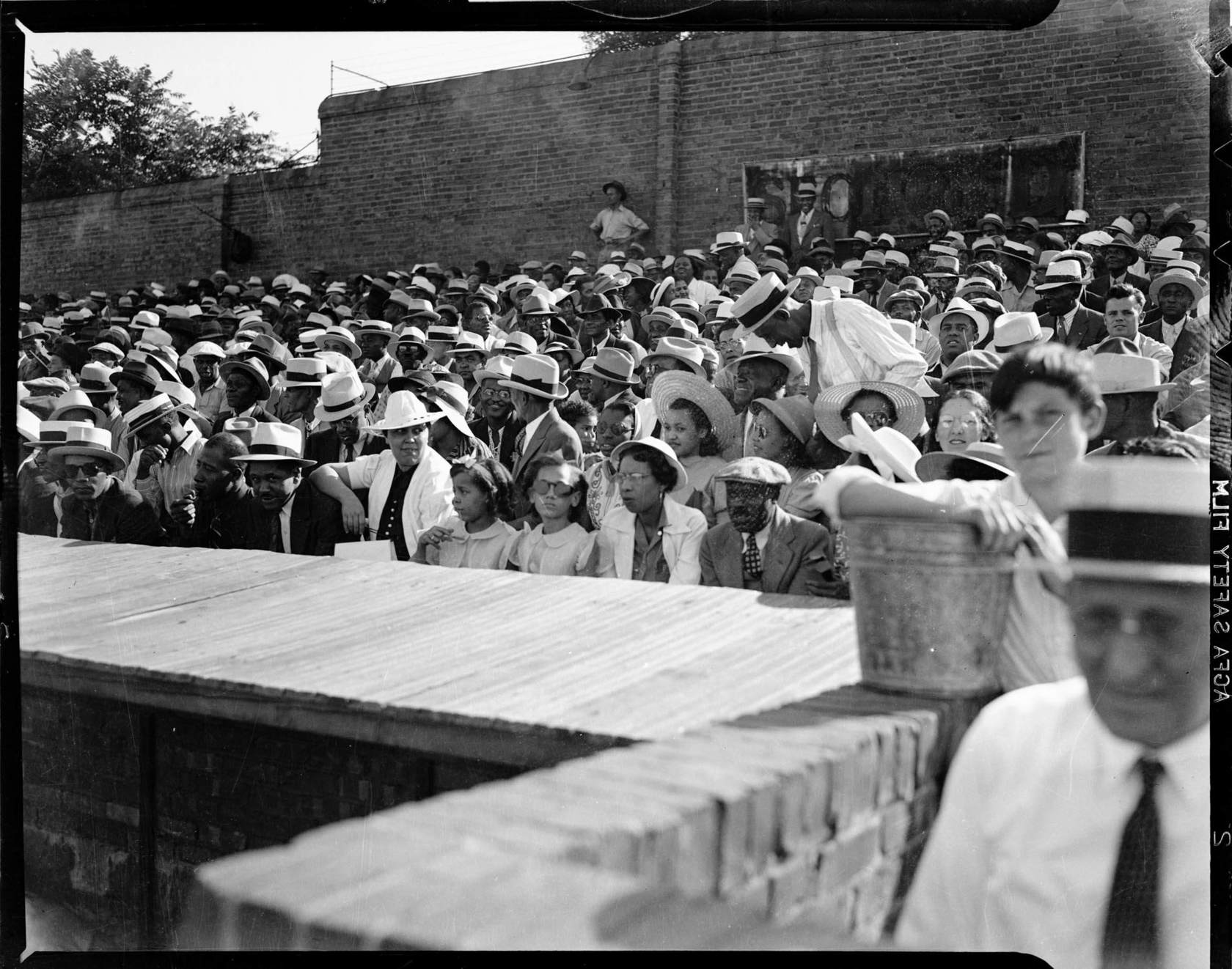
Greenlee Field was initially a success when it opened on April 29, 1932 (the next day, Courier editor, Robert L. Vann, threw out the first pitch). But due to cost-cutting measures, the field was not covered, making hot summer games unbearable; gate receipts suffered and the field fell into financial trouble. By 1938, the city’s Housing Authority paid Greenlee and his other shareholders $38,000 to acquire the field to construct Bedford Dwellings, one of the first public housing developments in the U.S. Writing in the Courier, John L. Clark opined that “Greenlee Field joins the list of banks, industries and other enterprises which should not be again attempted in this city for the next 100 years.”9 Erected in 2009, a Pennsylvania Historical and Museum Commission marker now indicates where Greenlee Field once stood.10
Out of the spotlight, African American individuals like James A. Dorsey, who served as recreation director at both Washington Park and Ammon Field in the Hill, played pivotal roles in organizing Black sport in Pittsburgh. Dorsey led the Monticello Athletic Club, which “dominated Colored basketball in the early 1920s.”11 In 1923, Dorsey became the first director of the newly constructed Centre Avenue YMCA in the Hill, another key sporting location for the Black community (now a City-designated Historic Landmark).
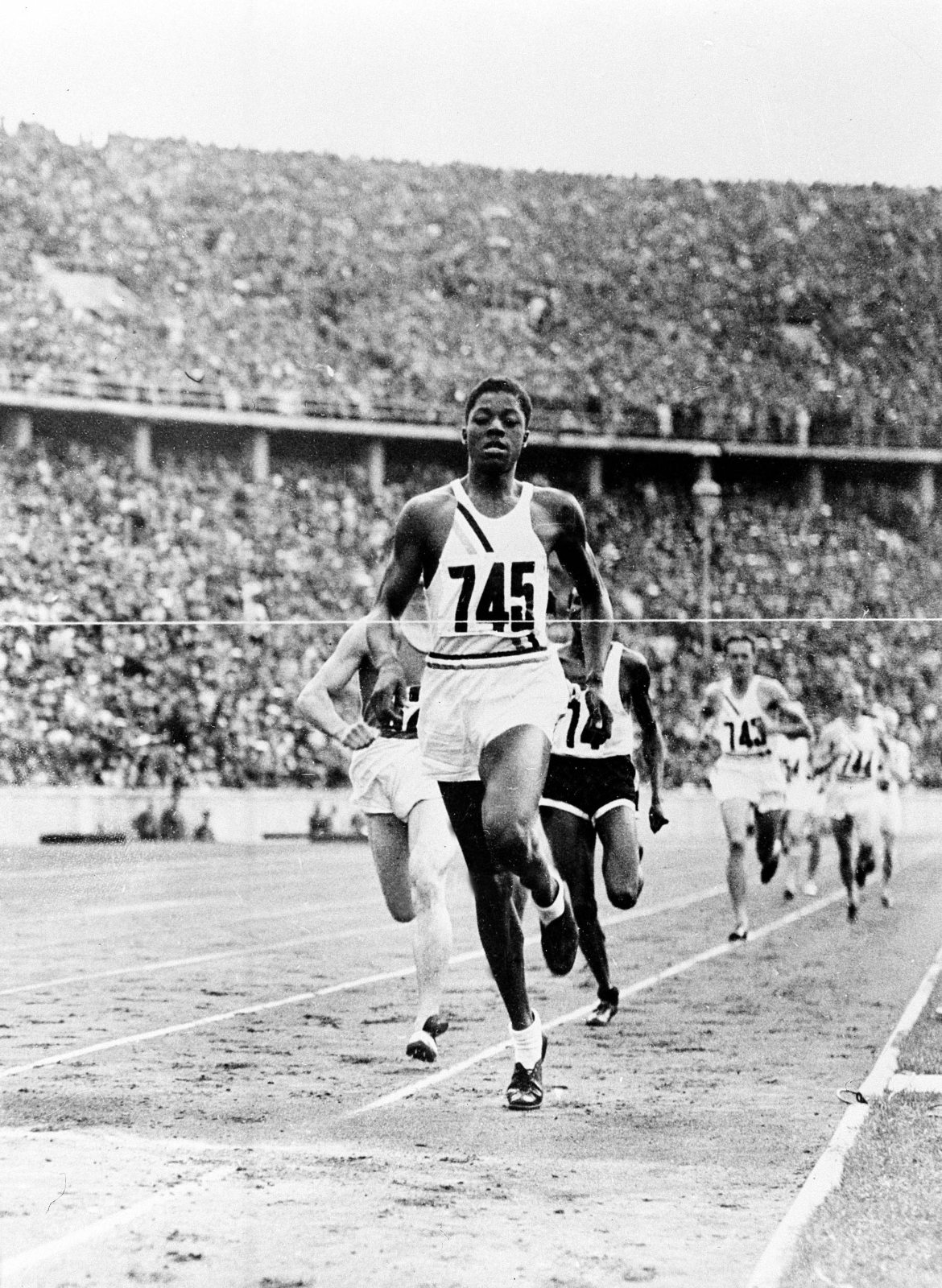
Pittsburgh was home to several African American track and field champions, who trained and raced on numerous venues in the area. Among the best known was John Woodruff (1915–2007), a native of Connelsville, Pennsylvania, who stayed at the Centre Avenue Y in the Hill while he was a student at the University of Pittsburgh in the 1930s, when African Americans were barred from living on campus. Woodruff’s claim to fame came at the Berlin Olympics in 1936, when he won a gold medal in the 800 meter run. A small oak sapling that he won was planted at his home track in Connellsville and still stands there today. According to reporter Jason Cato, “Woodruff’s oak is one of four still believed to be alive in the United States.”12
Until 1970, Pittsburgh’s main sporting events took place in the Oakland neighborhood, now the city’s university center. Oakland featured numerous sporting venues, such as Forbes Field (1909-1970), Pitt Stadium (1925-1999), and Duquesne Gardens (1898–1956), which hosted speed skating, roller derby, dance contests, musical performances, bicycle racing, and college basketball. Pittsburgh’s gem, Forbes Field, was constructed by Barney Dreyfuss at a cost of $2 million (paid for entirely by Dreyfuss) and hosted numerous Negro League games, Steelers contests, and boxing matches for Black and white audiences.13
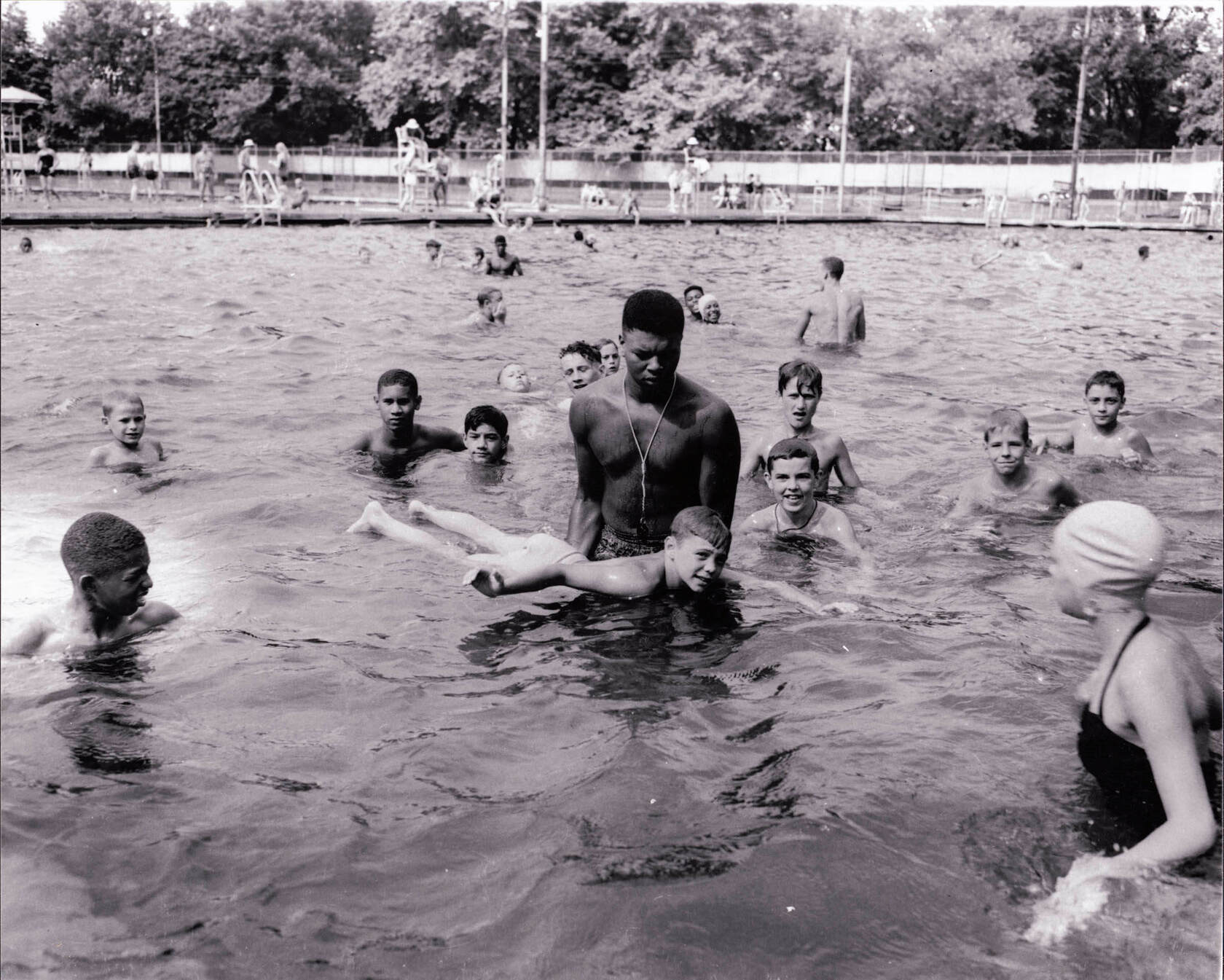
In the 1950s and 1960s, athletic facilities slowly yielded to public pressure to integrate, but the struggle was intense at times. For instance, a court order in 1952 led to the desegregation of Pittsburgh’s Highland Park Pool, but it came after violent intimidation “by a mob of nearly two hundred whites” had threatened African American swimmers in June 1950, which was preceded by decades of violent resistance to integration.14 Other facilities integrated more slowly. “It would take nearly a decade of protests to desegregate the city’s roller rinks,” write Joe Trotter and Jared Day.15
Basketball realized the most racial progress. In 1950, Duquesne University’s Chuck Cooper became the first African American to be drafted in the NBA, when the Boston Celtics took him in the first round. But even his success was not without its struggles. During his freshman year, Duquesne had planned to play Tennessee University at McKeesport High School, but Tennessee refused to play against Cooper, the only African American in the game. The entire Duquesne team “didn’t want to play unless Chuck played,” according to David Finoli. Tennessee held firm. So, an official “announced that the game would be canceled and sent the Volunteers home.”16 In 2019, Cooper was elected to the Naismith Basketball Hall of Fame.
The post-integration period provided more opportunities for individual Black athletes to excel, but it came at a cost to the communities which could no longer support Black-only teams. “The integration of the major leagues in April 1947 had plunged black baseball into an immediate crisis,” writes Ruck, as the Negro National League ceased operations at the end of the 1948 season.17 Even superstars like Roberto Clemente “endured both racial hostility and relative neglect throughout his first fifteen years in the major leagues.”18 But Clemente’s breakout performance came in the 1971 World Series as an integral member of the Pirates “most heavily integrated team,” according to George Skornickel.19 By 1979, the entire city, Black and white, sang along with Sister Sledge’s “We are family” as the Pirates won the 1979 Series behind its African American captain, Willie Stargell.
Though teams and audiences are fully integrated today, gone are many of the sporting locations which defined African Americans’ contribution to sport, as many Black communities suffered the physical and social disruptions of urban renewal. For instance, the Hill’s Washington Park succumbed to the wrecking ball; the Civic Arena, another sporting palace built in 1961, took its place until it, too, was demolished in 2010. Sam Black writes that “It is easy to forget that the racial and gender integration of sports we see today has not always been the case. Nor was it an easy transition from segregated sports to the integration of the stadium, arena, field or pitch that we are so accustomed to today.”20 From public fields to pro sport stadiums, Pittsburgh’s numerous sandlots, tracks, fields, and other recreational locations served as important third spaces and sources of pride for its African American residents.
Dan Holland is the 2025-2026 Post-Doctoral Fellow at the Center for Africanamerican Urban Studies and the Economy (CAUSE) in the History Department at Carnegie Mellon University. He is also an Adjunct Professor of History at Duquesne University.
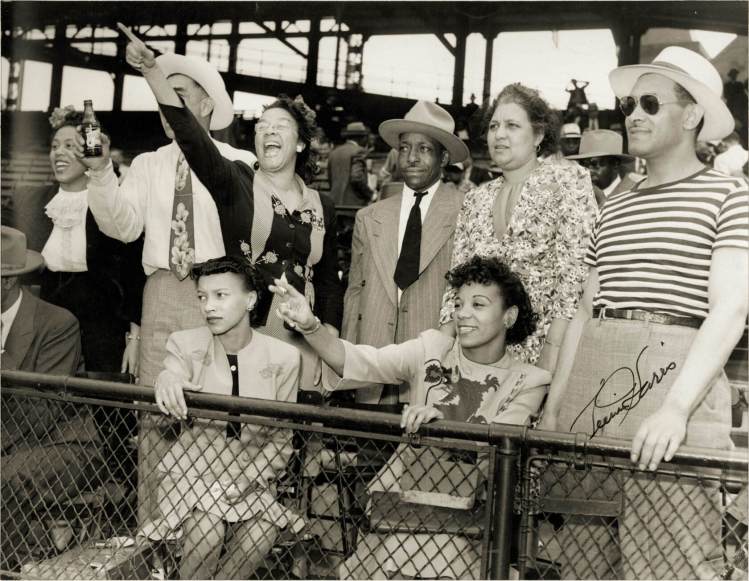
Featured Image (at top): Charles “Teenie” Harris. Group of spectators, including woman wearing suit with dragon applique, gathered at Forbes Field, c. 1944. Forbes Field in Oakland was one of the few areas where African Americans were welcomed. Accession No. 1996.55.8. Second Century Acquisition Fund and gift of Milton and Nancy Washington. Copyright © Carnegie Museum of Art, Pittsburgh.
- ESPN News Service, “NFL Says Draft in Pittsburgh Set Attendance Record” ESPN.com. April 25, 2026. https://www.espn.com/nfl/story/_/id/48595922/nfl-says-draft-pittsburgh-set-attendance-record ↩︎
- Rob Ruck, Sandlot Seasons: Sport in Black Pittsburgh. (Urbana and Chicago: University of Illinois Press, 1987), 192. ↩︎
- Calling Greenlee “Big Red,” Mark Whitaker explains that Greenlee organized the Negro National League in the winter of 1933 after the collapse of a rival East-West League organized by Cumberland Posey. See chapter 4, “The Rise and Fall of ‘Big Red’” in Mark Whitaker, The Untold Story of Smoketown: The Other Great Black Renaissance. (New York: Simon & Schuster, 2018). ↩︎
- Peter Gottlieb, Making Their Own Way: Southern Blacks’ Migration to Pittsburgh, 1916-30. (Urbana and Chicago: University of Illinois Press, 1987), 69. ↩︎
- Joe William Trotter, Jr., Building the Black City: The Transformation of American Life. (Berkeley: University of California Press, 2024), 154-155. ↩︎
- Rob Ruck, “Black Sandlot Baseball: The Pittsburgh Crawfords,” Western Pennsylvania History, 1983, 50.
↩︎ - An earlier stadium, Central Amusement Park, was constructed in the 1920s by the African American entrepreneurs, Alexander and Stanley Williams, who were brothers. David S. Rotenstein, “Erased And Forgotten Sports History In Pittsburgh’s Crossroads Of The World,” The Metropole, January 18, 2023, https://themetropole.blog/2023/01/18/erased-and-forgotten-sports-history-in-pittsburghs-crossroads-of-the-world/ ↩︎
- Ruck, Sandlot Seasons, 5.
↩︎ - John L. Clark, “The Rise And Fall Of Greenlee Field,” The Pittsburgh Courier (1911-1950); Dec 10, 1938; ProQuest Historical Newspapers: Pittsburgh Courier, pg. 17. ↩︎
- PHMC Marker Search, https://share.phmc.pa.gov/markers/. ↩︎
- Samuel W. Black, “James A. Dorsey and the Support of Black Sport in Pittsburgh,” Western Pennsylvania History, Winter 2004, 44. Dorsey’s wife, Zerbie Turfley “played on the Della Robbia Girls basketball team that was organized at Washington Park in 1913.” ↩︎
- Jason Cato, “The great race: John Woodruff’s gold-medal run in 1936 set stage for equality in sports,” Pittsburgh Tribune-Review, July 25, 2021, https://triblive.com/local/regional/the-great-race-john-woodruffs-gold-medal-run-in-36-set-stage-for-equality-in-sports/. ↩︎
- Daniel L. Bonk, “Ballpark Figures: The Story of Forbes Field,” Pittsburgh History, Summer 1993, 56.
↩︎ - “‘Mayor’ Stewart Promises Protection to Swimmers,” The Pittsburgh Courier (1911-1950); Jul 1, 1950; ProQuest Historical Newspapers: Pittsburgh Courier, pg. 3; David S. Rotenstein, “Segregated History of Highland Park Pool Highlights ‘Pittsburgh’s Brand of Apartheid'” Nextpittsburgh.com June 17, 2024. https://nextpittsburgh.com/pittsburgh-for-all/segregated-history-of-highland-park-pool/ ↩︎
- Joe W. Trotter and Jared N. Day, Race and Renaissance: African Americans in Pittsburgh Since World War II. (Pittsburgh: University of Pittsburgh Press, 2010), 89.
↩︎ - David Finoli, “Duquesne University Opens Its Doors,” in The Association of Gentleman Pittsburgh Journalists, eds., Integrating Pittsburgh Sports. (Charleston, SC: The History Press, 2023), 83-84.
↩︎ - Ruck, Sandlot Seasons, 181.
↩︎ - Ruck, Sandlot Seasons, 190.
↩︎ - George Skornickel, “Characters with Character: Pittsburgh’s All-Black Lineup,” The Baseball Research Journal, 40:2 (Fall 2011), 42.
↩︎ - Sam Black, “Foreword,” in The Association of Gentlemen Pittsburgh Journalists, eds., Integrating Pittsburgh Sports. (Charleston, SC: The History Press, 2023), 1 ↩︎


Dan,
Well written – I remember walking to Highland Park and swimming in the pool as a youth. Keep spreading the word!
LikeLike
Thanks for this excellent piece. Analyzing historic urban recreation venues properly highlights crucial racial community solidarity milestones.
LikeLike