
This is the fifth post in our themed series, Cities at Play.
By Ahmadu Abubakar
From Playground to Panopticon: Colonial Youth Welfare and the Shaping of Urban Leisure in Lagos and Nairobi
In the late 1940s, colonial authorities in Nairobi began to express growing concern about what they referred to as “the presence and increasing number of unattended youth and young people in the towns,” which were connected to an increased incidence of crime and disorder.1 At the same time, a couple of thousand kilometers further south in the Lagos suburb of Yaba, a newly built football pitch that had previously been used as wild scrub land was hosting football matches with a group of adult African supervisors trained by the British colonial authority.2
Although they are approximately 4,000 km apart, Lagos and Nairobi also had a similar colonial rationale. Both cities grew rapidly in the years after World War II; both cities were home to growing numbers of young migrants who were increasingly agitated against their colonizers; and both cities became testbeds for Britain’s postwar welfare programs that aimed to use leisure as an instrument of social discipline. These two different scenes are typically documented separately in colonial archives. However, when viewed together, they demonstrate that a coercive reality existed for many during the anxious years of the 1940s and 50s. As colonial officials confronted the dual crises of rapid city growth and increasing anti-colonial unrest, the development of park areas, playing fields, and youth clubs was used as an instrument of social control. Colonial authorities developed this type of recreational facility to direct restless populations out of potentially politically subversive channels and into the ordered, productive rhythms of a developing labor force.
The Crisis of the Detribalized Youth
The urgency of the project grew out of an emergency. Between 1931, when Lagos had a population of 126,108, and 1950, when its population had exploded to 267,000, Nairobi also saw its African population almost triple, growing from approximately 24,000 in 1938 to over 70,000 by 1955.3 Many new residents, mostly young people who were unconnected with their clans, settled in areas such as Pumwani in Nairobi and Ebute Metta in Lagos. To colonial officials, these “detribalized” youth made up a dangerous group; they were seen as a potential recruitment pool for nationalistic movements.4
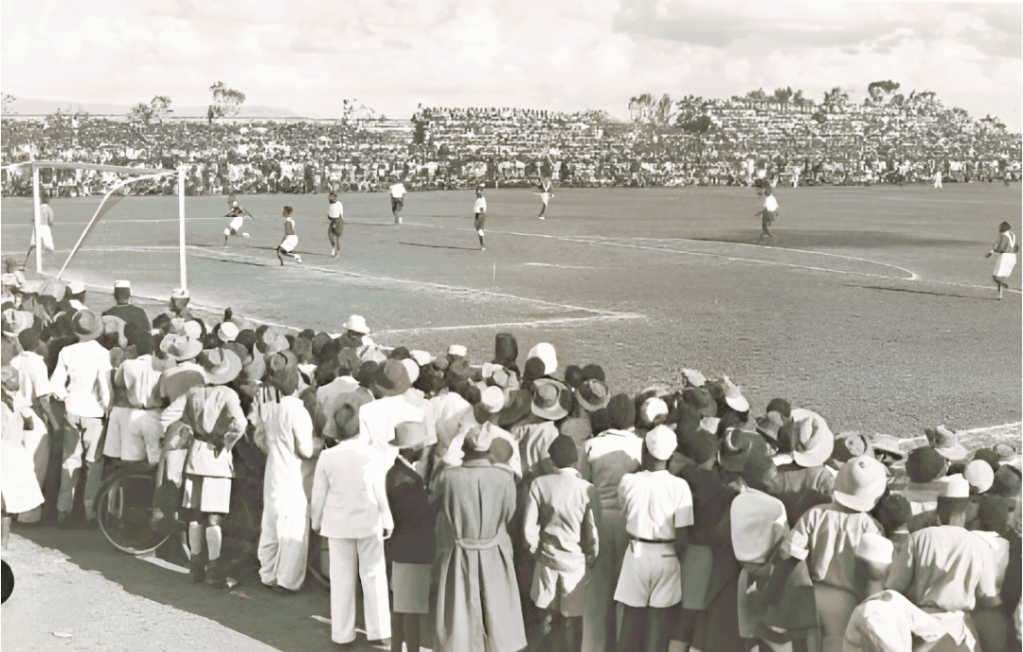
Credit: Photo via Wikimedia and The National Archives (Open Government Licence v1.0)
The colonial government in Lagos was particularly worried about the National Council of Nigeria and the Cameroons (NCNC) under the leadership of Nnamdi Azikiwe, whose members used their daily paper, The West African Pilot, to rally thousands of Nigerian youths for boycotts of British-made goods, and also for general strikes that would take away much-needed money for colonial administration. In Nairobi, it was the Mau Mau Land and Freedom Army that created the most concern among colonial administrators. The Army drew heavily from urban jobless youth in places such as Pumwani and Kaloleni, where these unemployed youth were utilized as spies, weapons carriers, and supply lines to support fighters operating out of the forests. Colonial administrators did not just worry about these movements’ desire to be free of colonial rule; they were also fearful that young urban Nigerians were able to create independent organizations outside the colonial government’s authority and were able to convert areas that had been neglected or unpoliced by the colonial government into centers for anti-colonial resistance. Colonial documents such as those created in letters or annual district reports from both colonies make this fear explicit. The District Annual Reports for 1954 from Nairobi stated “the insidious influence of subversive elements amongst urban youths.”5 In Lagos, the Colonial Office’s 1948 report expressed the same fear by stating that unemployed youths posed an immediate threat to public safety and the ability to collect revenue.6 As a result, this new fear transformed idle youth from a social problem into direct political danger.
In addition to the Mau Mau Uprising in Nairobi (1952-1960), which further heightened these anxieties, the Mau Mau led the colonial administration to adopt youth clubs as a tool in their overall counter-insurgency effort. The Mau Mau uprising was a bloody anti-colonial war fought primarily by the Kikuyu people against British rule in Kenya. In response, the British colonial government declared a state of emergency, arrested over 100,000 suspected supporters without trial, executed over 1,000 convicts, and detained hundreds of thousands in fortified villages and concentration camps.7 British forces burned forests, poisoned water sources, and used torture to extract information.8 The uprising demonstrated to colonial officials that young, urban Kikuyu men in Nairobi were actively supplying the forest fighters with weapons, medicine, and intelligence. By creating clubs that provided “structured” and “supervised” recreational activities, the administration sought to prevent young urban migrants from associating with the Land and Freedom Army.9
Similarly, the colonial administration in Lagos faced the labor strikes of 1945 and 1950, both of which crippled the city. By shutting down the railways, ports, and public services, the 37-day general strike of 1945 prevented commerce from moving throughout the colony. All ships that had arrived at the ports for loading or unloading remained idle. All passenger and freight trains were stopped. All government buildings were shuttered. The food was sold out at the markets. And the economic life of the colony came to an abrupt halt. The 1950 strikes by railway workers and government employees further paralyzed the city, preventing the collection of taxes, the delivery of mail, and the movement of colonial troops. These strikes proved that organized African workers could shut down the colonial state entirely. Alongside the rise of the National Council of Nigeria and the Cameroons (NCNC), these labor actions convinced colonial officials that idle youth could be weaponized against British rule. A 1948 colonial report on Lagos stated that it was essential to create youth programs that would provide an alternative to idleness and help create productive colonial subjects.
Remaking the Urban Landscape
Some land was designated for recreational uses in selected areas. For example, the colonial authorities in Nairobi developed public places such as the Kaloleni Social Hall (completed in 1944), and the playfields of the Pumwani housing estate.10 The social hall’s architecture and design included a large space with a stage at its center, which enabled large gatherings for instruction and assembly. Additionally, the social hall’s large space made it difficult for people to be in contact without being seen. Similarly, in Lagos, the Lagos Town Council used grant funding from Colonial Development and Welfare to construct a playing field on Lagos Island and to enlarge King George V Park.11 These two parks were strategically located near major markets and transportation routes to control or regulate worker mobility.
The way these areas were laid out made sure that there would be a new way of thinking about time. Unlike the informal, all-night celebrations of traditional festivals or informal markets, British colonial recreation grounds had formal schedules with set hours of operation and specific activities. For example, the recreation ground may have been open after work and then locked up when it got dark. Similarly, specific activities such as playing football or running drills were scheduled and could only take place within very narrow time windows. In 1948, colonial recreation rules issued in Nairobi, Kenya stated that all recreation areas designated as “sports” in an African location had to close by sundown, which included being rotated on the hour by club leaders. This scheduling was done intentionally.12
Restrictive schedules for recreation were one element in a web of strategies colonial authorities used to control and disparage Africans. Historian Keletso Atkins has identified “Kafir time” as a colonial pejorative used by colonists to discipline African laborers.13 The word “kafir” was an insulting name used to describe Black people. The phrase “kafir time” is how white bosses and judges made fun of Black people’s sense of punctuality, accusing them of being chronically late as if it was part of being Black and therefore would always be inferior. This insulting attitude provided a justification to impose real controls: if an African worker showed up late to work at a mine, farm, railroad project, he was charged a fine, his wages deducted, or in some cases physically punished because of allegedly demonstrating his racial incompetence for working in modern times, thereby making clear that the conflict over time was also one form of resistance to colonialism.14
Therefore, the purpose behind the colonialist schedules was to remove what many European colonizers believed to be the “lazy” and “unproductive” aspects of “African time” and replace them with a schedule-based environment from which workers would be able to understand punctuality and successfully complete their jobs in factory settings using wage payment systems. However, as Atkins’ research has demonstrated, while African laborers did not simply accept this new way of understanding time, they did resist and negotiate it through their cultural rhythms. For instance, many African workers of colonial Natal requested their wages to be paid on a monthly basis using the lunar cycle as opposed to a European calendar month. Likewise, many African workers would walk off their jobs if an employer did not allow them to have their Sabbath rest day. In addition, many African workers were able to bargain collectively with their employers so they could negotiate for half-days on traditional ceremonial days. Atkins shows that this type of behavior forced employers to accommodate wage payments based on African temporal needs.15 In doing so, they transformed the very clock itself into a site of negotiation.
The Playground as Panopticon
The colonial record of 1948 indicates how this system was an example of the “panopticon” described by Michel Foucault as an instrument of voluntary self-demonstration. The African Affairs Department was responsible for enforcing municipal regulations requiring clubs to close at specific times, register their members, and wear uniforms. Yet Foucault’s panopticon assumed a prison where escape was impossible. Colonial recreation grounds were different; the watch could walk away and often did.16
Despite the British government declaring a state of emergency in Kenya, Kenyans did not respond passively. Young men from Kikuyu, Luo, and Kamba backgrounds utilized Nairobi’s Pumwani sports fields to create inter-ethnic social networks. According to historian Luise White, these areas provided opportunities for urban Africans to construct identity based on cultural constructs beyond the limits of colonial-imposed ethnic labels.17
The Enduring Legacy
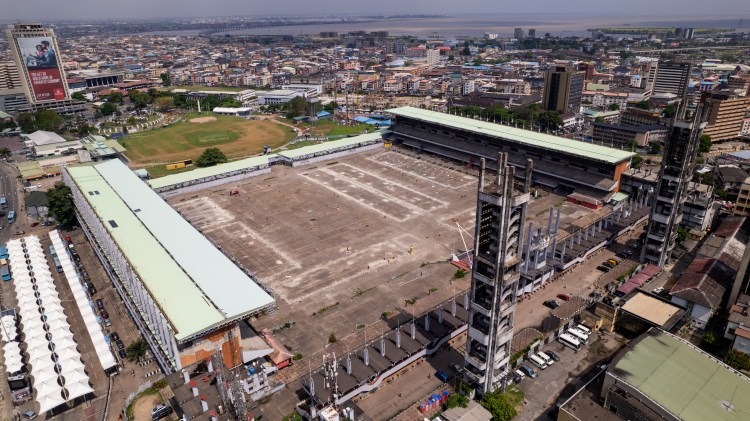
Kaloleni Social Hall in Nairobi today represents both a forgotten heritage and its contemporary status; similarly, the Tafawa Balewa Square in Lagos represents a disputed past.
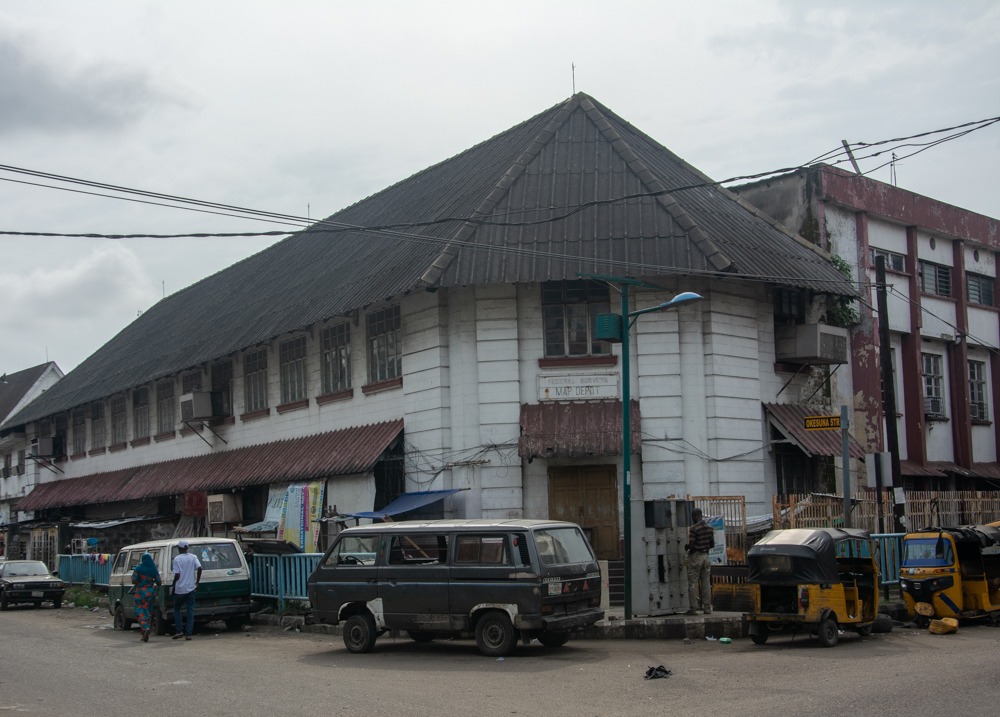
In today’s arguments about public park use and police enforcement of youth recreation spaces, we can see echoes of what was established within the colonial framework. When local authorities enforce the removal of street vendors or informal gathering spaces, they often mirror the colonial approach of establishing control over the urban population.
The daytime activities of the 1940s and 1950s in many African cities had two purposes: first, they kept young people engaged in some manner; second, they defined the ideal urban citizen. Today’s cities in the global south are struggling to cope with rapid urbanization and high youth unemployment. In this sense, the experiences of Lagos and Nairobi are instructive: the state shapes recreational play according to its own model of society. Yet the youth who organized ethnic-based groups on colonial sports grounds, who debated Azikiwe after club meetings, who wore uniform camouflage to disguise themselves while organizing resistance; these youths remind us that all instruments of control have limitations. Even recreation, which the government may intentionally use to instill discipline, contains the potential for freedom.
Therefore, the question facing today’s city planners and activists is not whether we should create parks and youth clubs, but rather, who will dictate the rules, times of operation, uses, and meanings of those spaces? A visit to the abandoned Kaloleni Social Hall today, or to Tafawa Balewa Square, where independence celebration events replaced horse racing, demonstrates not only a colonial legacy but an ongoing struggle to define what play is for, who it benefits, and who defines it. It appears that the game has always been about something other than simply playing the game.
Ahmadu Abubakar is a writer and researcher focusing on urban history and the politics of public space in West and East Africa. His work explores the intersection of colonial governance and everyday life in African cities.
Featured image (at top): Tafawa Balewa Square in Lagos, a historic civic venue. Credit: Photo by Isaacayodele32 via Wikimedia Commons (CC BY-SA 4)
- Kenya National Archives, Nairobi. “District Annual Report, Nairobi, 1948.” DC/NRB/1/12.
↩︎ - Kenya African Affairs Department. “Annual Report on African Vocational Training and Youth Supervision, 1948.” KNA, AB/1/12. Kenya National Archives, Nairobi. ↩︎
- For Lagos population data: Colonial Office, “Census of Lagos, 1931,” CO 583/276, The National Archives, Kew, records 126,108. The 1950 estimate of 267,000 is cited in Colonial Office, “Annual Report on Lagos, 1948-1950,” CO 583/276. For Nairobi African population: W.T.W. Morgan, Nairobi: City and Region (Oxford: Oxford University Press, 1967), documents growth from approximately 24,000 Africans in 1938 to over 70,000 by 1955.
↩︎ - Coleman, James S. Nigeria: Background to Nationalism. (University of California Press, 1958). ↩︎
- Nairobi District. “Annual Report, 1954.” DC/NRB/3/12. Kenya National Archives, Nairobi.
↩︎ - Colonial Office. “Annual Report on Lagos, 1948.” CO 583/276. The National Archives, Kew.
↩︎ - Elkins, Caroline. Britain’s Gulag: The Brutal End of Empire in Kenya. (London: Jonathan Cape, 2005), pp. 134-167.
↩︎ - Anderson, David. Histories of the Hanged: The Dirty War in Kenya and the End of Empire. (London: Weidenfeld & Nicolson, 2005), pp. 245-289. ↩︎
- The Land and Freedom Army was the self-designation of Mau Mau fighters. See Anderson, David. Histories of the Hanged. London: Weidenfeld & Nicolson, 2005, p. 12. ↩︎
- Kenya National Archives. “African Housing and Social Hall Construction, Nairobi, 1944.” KNA, AH/2/3.
↩︎ - Colonial Office. “Colonial Development and Welfare Act: Nigeria, 1945-1950.” CO 583/275. The National Archives, Kew. ↩︎
- Nairobi City Council. “Municipal Bylaws, African Locations, 1948.” NB/4/23. Kenya National Archives, Nairobi.
↩︎ - Atkins, Keletso E. “‘Kafir Time’: Preindustrial Temporal Concepts and Labour Discipline in Nineteenth Century Colonial Natal.” The Journal of African History 29, no. 2 (1988): 229-244. ↩︎
- Atkins, Keletso E. “‘Kafir Time’: Preindustrial Temporal Concepts and Labour Discipline in Nineteenth Century Colonial Natal.” ↩︎
- Atkins, Keletso E. The Moon is Dead! Give Us Our Money! (Portsmouth: Heinemann, 1993), chapters 4-5.
↩︎ - Foucault, Michel. Discipline and Punish: The Birth of the Prison. Translated by Alan Sheridan. (New York: Vintage Books, 1995). ↩︎
- White, Luise. The Comforts of Home: Prostitution in Colonial Nairobi. (Chicago: University of Chicago Press, 2001), pp. 87-112. ↩︎


.jpg)

