

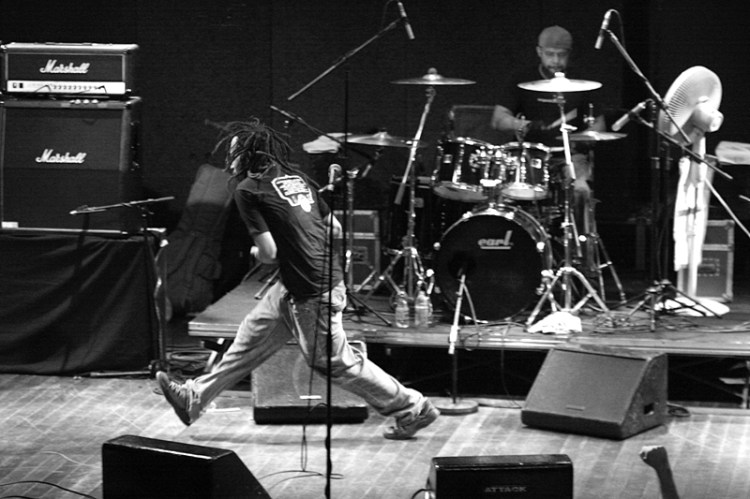
“We, we got ourselves
Gonna sing it, gonna love it, gonna
work it out to any length
Don’t worry, no worry, about
what the people say
We got ourselves, we gonna make it anyway
You! You can’t hurt me
Why? I’m banned in DC”Bad Brains, “Banned in D.C.” 1982
By Ryan Reft
A few years ago, I was attending a history conference in New York City and ran into an academic who had once been active at The Metropole. We exchanged pleasantries, discussed the general state of the world before the conversation turned to The Metropole. “It’s pretty much run its course hasn’t it,” they said to me, following up with something about how its utility was fading. I brushed it off, thanked them, and moved on.
Yet, that individual’s comments stuck with me. Was the blog’s value fading? Was it a diminishing entity? We had enjoyed record engagement during the pandemic, but to be fair, in the year or two after the pandemic, readership fell a bit. For a moment, I was in existential crisis (ok no I wasn’t but STAKES, folks!). However, I stumbled across a documentary on one of the streaming services exploring the hardcore punk movement of the early 1980s that followed the earlier punk trend of the late 1970s.
For what it’s worth, I was an active participant in the second half of that hardcore movement (1985-1990), when bands like the Cro-Mags emerged out of the then very rough streets of Alphabet City in New York City and channelled the fury of the earlier scene (1980-84), with greater musical and lyrical coherence. I probably saw every punk hardcore act to come through Chicago from 1988 to 1994, and even got beat up twice, once by skinheads and once by a drunk long haired hesher wearing a Testament Practice What You Preach Tour t-shirt. It was oddly invigorating.
My freshman year in college led to deep dives into hip hop, trip hop (it was a thing I promise you) and indie rock. After which I rarely looked back, but it would be wrong to discount my experience listening to Fugazi and D.R.I. albums during my junior high and high school days as inconsequential; it was anything but and I still throw on the occasional Fugazi and Cro-Mags albums. On a more philosophical level, the shows themselves drew me into the city, and everything that followed – roaming around various neighborhoods, grabbing food at diners, dipping into record stores and other establishments – was urban flirtation. You’d see the same folks at show after show and it’s hard not to strike up conversations in between sets or before the show. These social pinpricks built a sense of small “c” community, it was porous and very imperfect, but it was real and intertwined itself with my conception of the city.
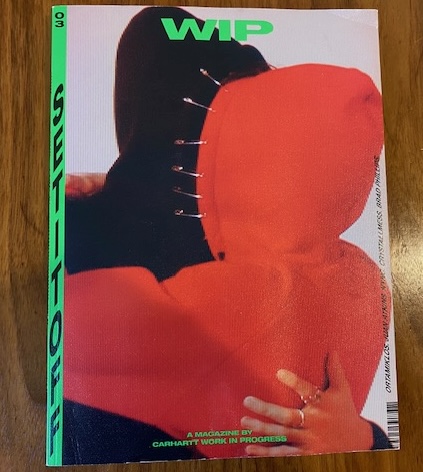
In my adulthood, I’ve thought about hardcore extensively, writing about it several times at Tropics of Meta (here about SoCal and here, about DC and Ian Sevonius) and once, at the request of Carhartt, for their European in-store fashion magazine (yes, Carhartt has an in-store fashion magazine in Europe). I once even tried to parse the politics of hardcore and thrash metal amid Paul Ryan’s love for Rage Against the Machine. The Metropole hasn’t ignored the topic either; see Mike Amezcua’s reflections on the activism of the band Los Crudos in Chicago’s Mexican community or Michael Carriere and David Schalliol’s piece on hardcore punk’s place in urban geography (both from the Metropole Bookshelf series, mind you).

All this is to say that when you delve into a subgenre that you know has no hope of broader popularity, you tend to stop thinking about such things. Instead you focus on what interests you, what questions you find compelling, what subjects you find fascinating. You build a community.
Which brings us back to The Metropole. One of the pioneering, some would argue THE pioneering acts, of the hardcore movement was Bad Brains. They played at light speed, defined the genre, and inspired countless acts. Never co-opted; they even alienated the hardcore movement years later when they started playing only reggae at performances, largely eschewing their hardcore classics.
For Bad Brains, and numerous other hardcore acts, it was always about the substance, the message. That’s been The Metropole’s purpose these last nine years. We offered an outlet for our fellow urbanist sickos, the kind of folks who want to discuss the triumphs, tragedies, and nuances of urban life, politics, and policy. Yes, we strove to reach the public with these explorations, but not at the expense of rigor and purpose. “Don’t worry, no worry, about what the people say/We got ourselves, we gonna make it anyway,” lead singer H.R. cries on their classic song, “Banned in D.C.” Indeed, that’s how I feel about The Metropole. It’s a ship at sea for all those who want to come aboard–climb the ladder. “We’ve got ourselves/Gonna sing it, gonna love it, gonna work it out at any length.”
If roaming the Chicago streets before and after hardcore – pressing our suburban noses up against the big city window- enlarged our world view, so too does engaging The Metropole lead to new discoveries and even opportunities. We’ve had numerous pieces turned into journal articles, reposted on other sites, or referenced by regional or national media. Others have led to podcasts and other media hits.
On a more elemental level, the act of writing itself remains a critical skill, even if it is discounted in the current moment by the prevalence of AI. Being able to explain ideas in writing builds better spoken arguments. Intellectual engagement spurs new ideas, growth, and, arguably, a better life. I always like to think of our publications as conversations; discussions extracted by Metropole writers from the din of history, speaking to urbanists’ questions, fears, reservations, and hopes. I hope we’ve helped writers move these conversations forward.
With the support of the gracious and kind, Timothy Neary, I co-founded this site, with the invaluable Avigail Oren (AO) in 2017. AO was the best. Deft at administrative tasks and with a sharp mind for promotion and great ideas for themes, she was a really great collaborator. Despite having co-founded Tropics of Meta with Alex Sayf Cummings (also exceptional) in 2012 (the blog turned ten in 2022) and having had a long history of such endeavors, I learned a great deal from AO.
A few years later, we brought on Angela Stiefbold. Angela’s gift for copy editing was a godsend. She also had a real gift for running the Graduate Student Blog Contest (GSB). (Angela is also a former winner, having won our 2018 contest with her essay about Buck’s County, PA). Under her stewardship, the contest drew more participants than ever before and since. Angela also graciously stepped in as co-senior editor when AO left in 2023. Angela left the blog in 2024; neither she nor AO got their just due; to borrow from NBA commentators, they never got their flowers. The biggest of ups to AO and Angela.
Others contributed mightily as well, including current copy editor and incoming senior editor Katie Uva (another GSB champ, winning in 2019 for her piece on the 1939 World’s Fair); Charlotte Rosen and Matthew Guariglia who oversaw our carceral state series, Disciplining the City, for several years; former assistant editors Kenneth Alysass, Francisco De Salvatore, Stephanie Frank, Malcolm Cammeron; and current assistant editors, Zeead Yaghi (be sure to check out Zeead’s work putting together our 2024 May theme, Cities of the Eastern Mediterranean), Matthew Adair, and Marianne Dhenin. A debt of gratitude to all the UHA executive directors over the years who certainly were part of The Metropole’s success: Peter Siskind, Hope Shannon, Allyson Moralez, and Daniela Sheinin. Finally thanks to current UHA president, A.K. Sandoval-Strausz and all those who came before – Heather Ann Thompson, Richard Harris, and Joe Trotter – for all their support. The blog could not have run if not for the efforts and collaboration of all these members.
Which brings us back to the beginning and that conference in New York. I wasn’t angry with said individual, not at all, more bemused. The blog persists because it’s useful, nay even valuable, as a source for urbanists and a hub for community. Perhaps for them, it no longer operated that way, but for others is does and will continue to do so.
It helps also that this year we’ve recorded our highest post-pandemic numbers and in fact exceeded our stats for the first year of the pandemic, 2020. It’s our third most successful year in the blog’s history, and this time, it’s not because people were stuck in their homes. I know I said that sort of thing isn’t the point, and it isn’t, but it also matters that we have lively discussions within this community and that others feel welcome to dive in and experience it. Moreover, a look at our top five most read pieces of 2025 demonstrates the diversity of thought (even if several focus on Los Angeles, they do so in very different ways on a variety of topics) that defines the site:
Most Read Pieces Published in 2025
“The Citizen, Film, and India’s Nation-Building Project: A Quest for Modernity” – Shruti Hassain (part of our February 2025, Celluloid City theme)
“MacArthur Park’s History of Surveillance, Refusal, and Radical Care” – Kimberly M. Soriano (part of our Los Angeles theme from May 2025, though the link takes you to all pieces published on the city)
“Engineering Nature, Igniting Risk: LA’s Fires and a Century of Landscape Manipulation” – Charlotte Leib (also part of the aforementioned L.A. 2025 theme; you can also read Charlotte’s winning GSB entry for 2025 here)
“The World Darryl Gates Made: Race, Policing, and the Birth of SWAT” – Aaron Stagoff-Belfort (also part of the L.A. theme; it’s been a tough year for the City of Angels, so it’s great to see folks delving into its history)
“The National Chicano Moratorium Anti-Vietnam March and Ruben Salazar Inquest: 55 Years Later” – Ryan Reft (this had nothing to do with the May 2025 theme, just me riffing. Most of my writing for the blog, with some exceptions, such as this piece on Mike Davis, this on Latina/o/x urban history, and this on Black nationalism and drug treatment in 1970s DC went unattributed. At the time I was into The Economist’s habit of having a sort of unitary editorial voice, not listing its writers, but now I think that’s stupid. Some call it maturation; others call it dumb.)
Want a sense of our all-time most read pieces? Done!
Most Read Pieces All Time:
“The Myth and Truth about Interstate Highways”– Sarah J. Peterson (this one actually turned into an edited collection on the topic, Justice and the Interstates: The Racist Truth about Urban Highways)
“The Big Fish and a Big Building: A Historic Pittsburgh Building’s Obituary” – David S. Rotenstein (though not part of our theme on the city in January 2023, we apparently love the ‘Burgh; see here. Davis has contributed numerous times to the blog, all of which can be seen here.)
“The Drug War in Baltimore: The Failure of the ‘Kingpin’ Strategy in Charm City” – Will Cooley (Baltimore has been a popular topic at the blog; see here)
“The Tyranny of the Map: Rethinking Redlining” – Robert Gioielli (this one sparked a lively response from Lawrence T. Brown, “Pair HOLC Maps with FHA Maps to Tell a More Complete Story”)
“’The Good Life in Shaker Heights’: Integrating One of Cleveland’s Most Iconic Suburbs” – Nichole Nelson (fun fact: this piece was our first to get national recognition when Clare Malone referenced it in a piece on Cleveland suburban politics for the now-defunct FiveThirtyEight website. We dig Cleveland also; see here)
With all this, I bid you a fond farewell as senior editor. It’s been an honor. While it’s been a lot of work to keep The Metropole running (and ignoring the countless numbers of AI slop emails we receive), it’s been a labor of love. I’ll still be contributing now and then, but in the meantime you can check out my work at The Saturday Evening Post, Tropics of Meta, the Legal History and Law Review, Unfolding History, and so on. Or you can ignore all of that and live your lives, which honestly is probably for the best, it’s all good in any case. Katie Uva, who loves Queens, will be taking over, and I leave wishing Katie best of luck.
As for me, just to close the Bad Brains loop, to quote the band, “So I’m sailin’, yeah, I’m sailin’ on/I’m movin’, yeah, I’m movin’ on/Sail on, sail on, sail on, sail on.” Be well everyone.
Featured image (at top) Bad Brains at Circo Voador, Rio de Janeiro, Brazil, Alex Carvalho, photographer, no date.
 The Metropole