
This is the first post in our theme series, “Selling the City.“
By Hannah Borenstein
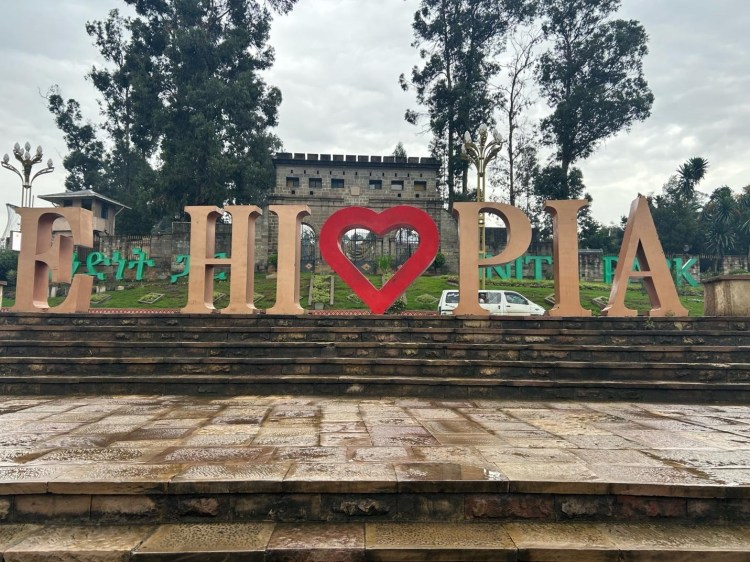
In front of Unity Park in Addis Ababa, Ethiopia, visitors can form the “T” in an “Ethiopia” sign, a photo opportunity reminiscent of Amsterdam’s “I amsterdam” landmark or Philadelphia’s “LOVE” sculpture. The selfie landmark invites visitors to publicly display their connection to Ethiopia.
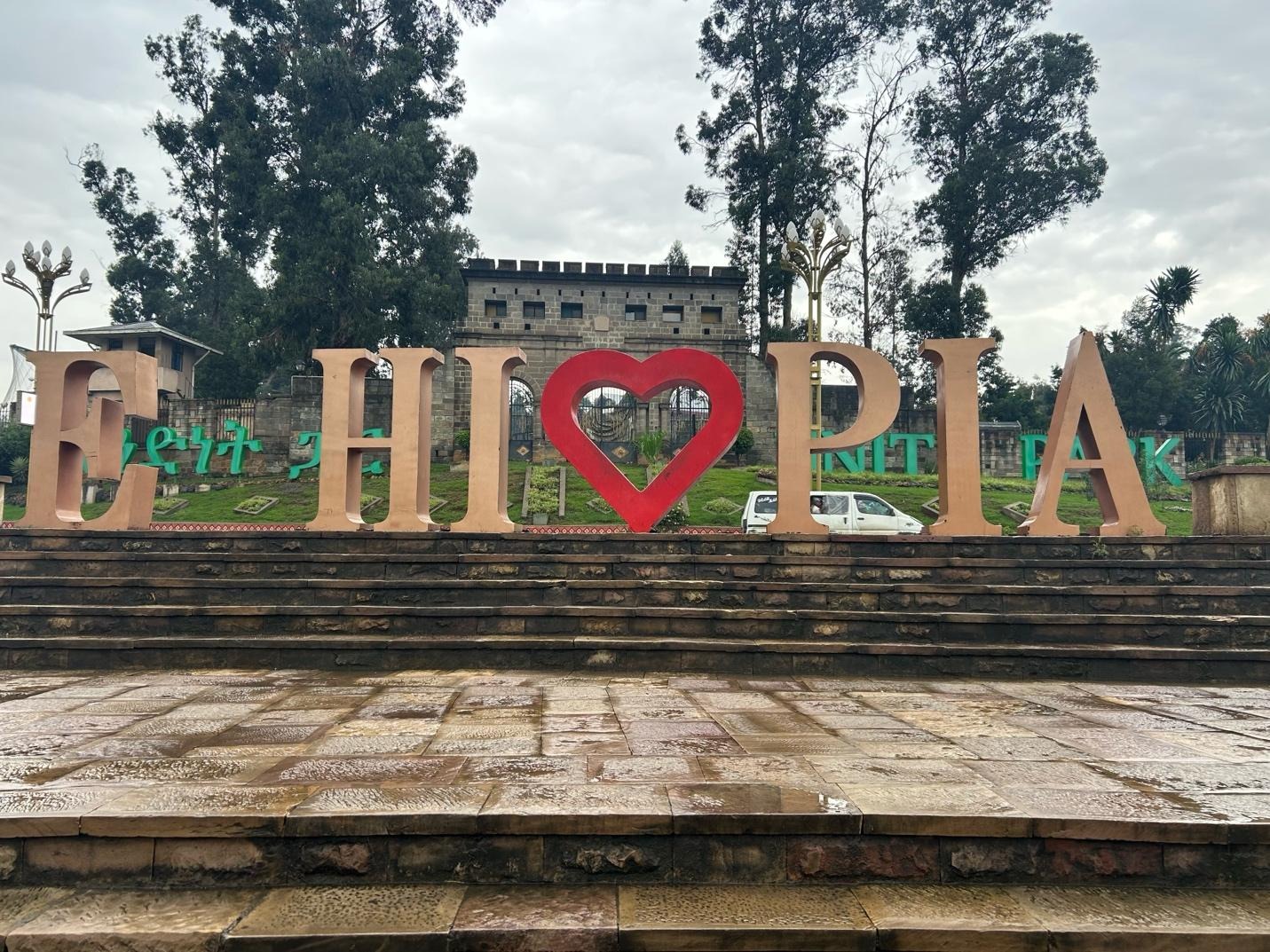
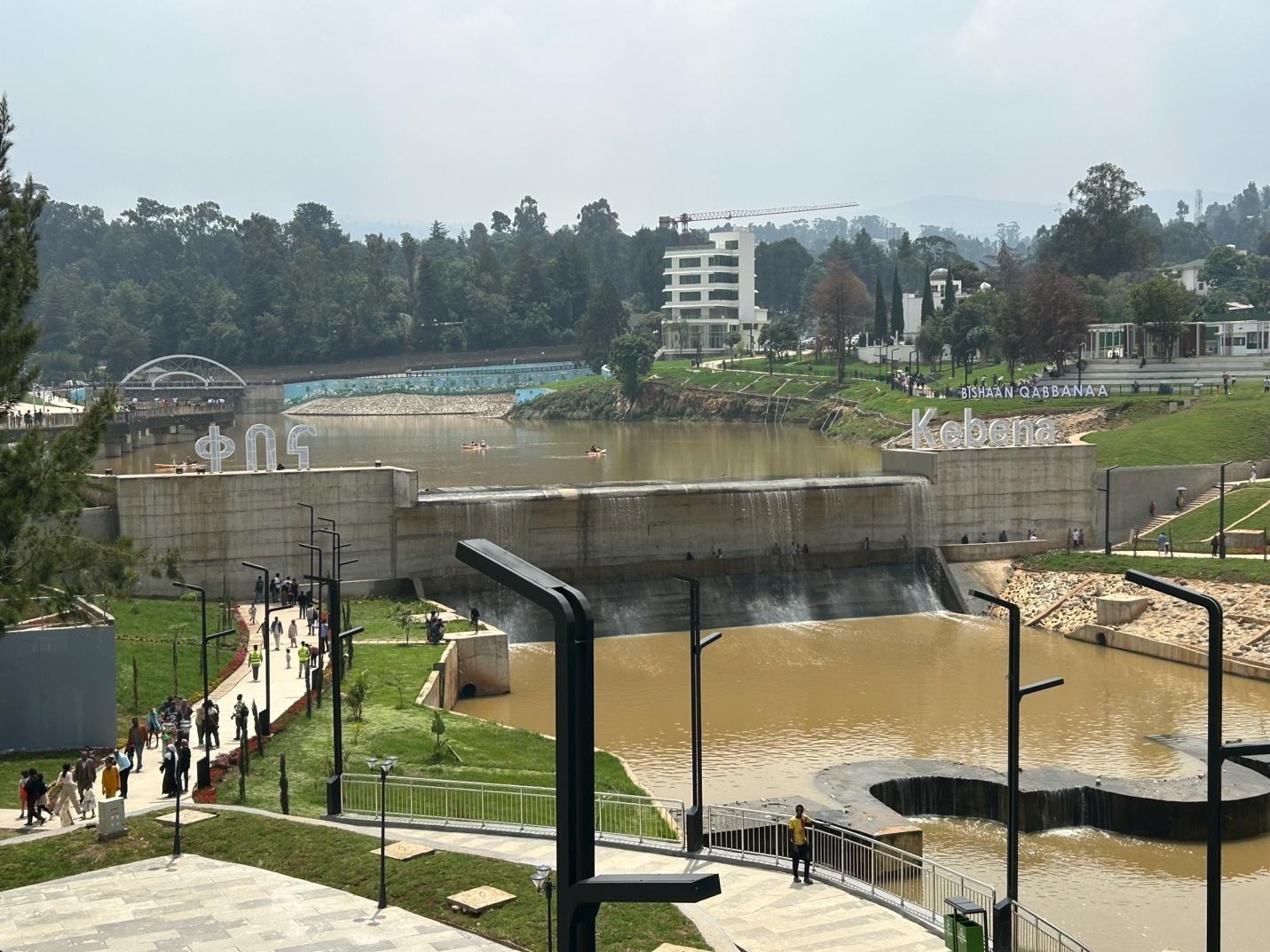
Unity Park is one of many newly built parks in Addis Ababa that is part of Prime Minister Abiy Ahmed’s 2019 “Beautifying Sheger” initiative. Shortly after Ahmed took office in 2018, he noted that changing the image of Addis Ababa would help sell the city. The Beautifying Sheger project and the related Addis Ababa Corridor Development Project are aimed to explicitly court foreign companies and embassies to support infrastructural efforts to change the image of the city, boost tourism, and encourage more Foreign Direct Investment (FDI).1
Visitors arriving in Addis Ababa today encounter a city in transformation. Newly paved roads cut through formerly congested districts. Former rows of informal housing and convenience stalls (suks) are being replaced with pedestrian promenades and bike lanes line major thoroughfares to make streets less crowded. Decorative lighting illuminates public squares, while parks and recreational spaces promise a greener future.
Yet beneath the language of beautification lies a more complicated story. While supporters celebrate cleaner streets and improved public amenities, critics point to demolitions, displacement, and the loss of long-standing neighborhoods.2 The redevelopment of Addis Ababa reveals a recurring tension in its longstanding and contentious urban history: efforts to market a city often depend upon deciding which histories, landscapes, and communities will be made visible and which will be pushed aside.
In Ethiopia, these debates are hardly new. Since its founding in the late nineteenth century, Addis Ababa has been a city built through competing visions of modernization, belonging, and political power.
Ethiopia and Liberia were the only two countries to avoid European colonization following the Berlin Conference of 1884, in which fourteen European powers met to discuss the partition of Africa. Although Italy sought to impose a protectorate over Ethiopia through a mistranslated treaty, Emperor Menelik II (1844-1913) rejected the Italian version in 1893.3 Then, Ethiopia’s victory at the Battle of Adwa in 1896 became a defining moment of national sovereignty when regional leaders from around Ethiopia worked to stop the Italian invasion.
Menelik II used his influence to centralize his rule in Ethiopia, renaming the capital city “Addis Ababa” (meaning “new flower” in Amharic), a move many Oromos indigenous to the land have felt was unjust.4 The name itself reflected an imperial project of state-building and territorial consolidation. Yet the area on which the city was built was not an empty landscape awaiting development. Oromo communities had long inhabited the region and referred to it as Finfinne, a name derived from the hot springs that characterized the area. The coexistence of these names reflects enduring disagreements about history, sovereignty, and who possesses legitimate claims to the city.
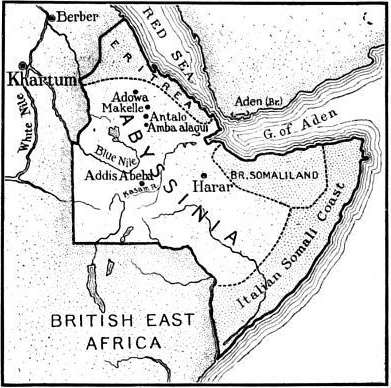
Throughout the twentieth century, successive Ethiopian governments sought to transform Addis Ababa into a symbol of national progress. Historian Bahru Zewde argues that after the Battle of Adwa, Ethiopia became attractive to European investors who hoped to gain profit and influence from the country’s independence and anticipated modernization. Under imperial rule, leaders like Menelik II and Emperor Haile Selassie built new roads, monuments, and administrative buildings to project an image of modernization which gave them leverage in negotiating concessions with European powers. So, too, did these politicians play rival powers against one another and use foreign expertise to pursue state-building goals. In essence, Ethiopian imperial leaders successively sold the city.
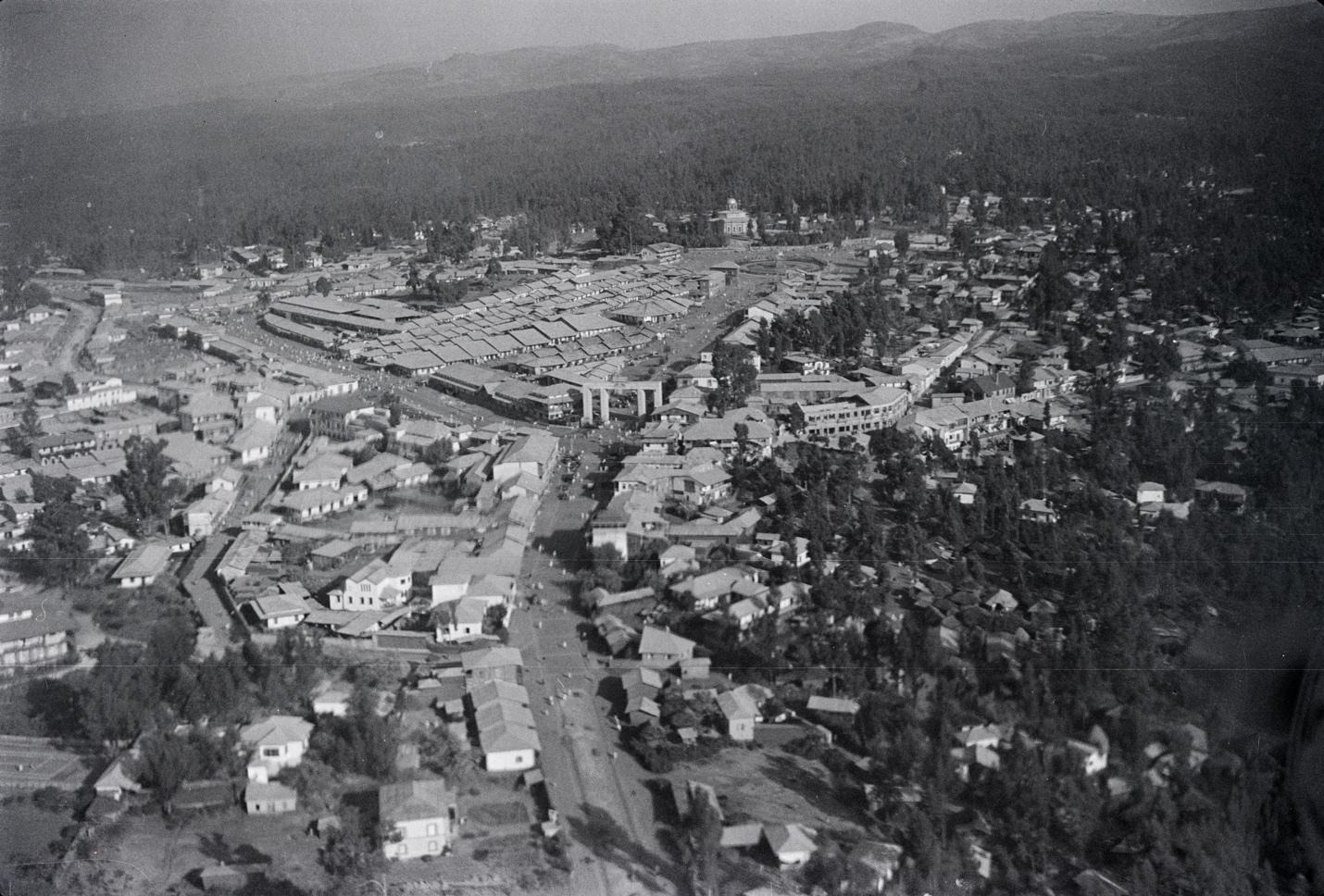
Successive governments—from the imperial era to the Derg and later the EPRDF—used urban planning to project visions of modernization and national transformation. While political ideologies shifted dramatically, Addis Ababa remained a stage on which competing governments performed their visions of Ethiopia’s future.
Across these political transitions, one theme remained consistent: Addis Ababa served as a stage upon which competing governments performed their visions of Ethiopia’s future. Urban development projects were rarely just about infrastructure. They were also about image-making, prestige, and attracting outside attention.
This dynamic became especially visible during debates surrounding the Addis Ababa Integrated Development Master Plan. Introduced during the 2010s, government officials again began developing a new master plan, which included annexing 1.1 million hectares of land from the Oromia region that surrounds Addis Ababa.5 The land was primarily to be leased to foreign companies, with a promise of increasing Ethiopia’s FDI. The Master Plan was itself a marketing device, signaling that Ethiopia was open for investment and prepared for rapid urban expansion.6
However, for many Oromo people, the plan represented another attempt to extend state control over land while marginalizing communities living on the city’s periphery. Resulting protests beginning in 2014 became some of the most significant political demonstrations in contemporary Ethiopian history.7 Protesters objected not only to land expropriation but also to broader questions of political representation, economic inequality, and historical recognition. At stake was more than urban planning. The controversy highlighted competing understandings of the city itself: Was Addis Ababa primarily a vehicle to sell national development for FDI, or was it a place whose future should be shaped by those who lived in and around it?8
These tensions continue to shape contemporary redevelopment efforts. The Sheger Beautification Project and Corridor Development Project are frequently presented through images of parks, green spaces, restored waterways, and modern transportation infrastructure. Official promotional materials emphasize tourism, environmental sustainability, and urban competitiveness. Public spaces such as Unity Park and Friendship Park have become symbols of a new Addis Ababa intended to appeal to both international visitors and domestic audiences.
But the audiences for these redevelopment projects are neither singular nor fixed. As writer Maaza Mengiste writes in Addis Ababa Noir, “Imagine that these varied, proud, and robust cultures have wound their way into Addis and made it home. There is a cosmopolitanism that is distinctly national as much as international.”9 Rooted in a long history of ethnic diversity and claims over the city, Addis Ababa remains composed of rich linguistic and cultural enclaves of groups from around the country, with differing desires of what they want this cosmopolitan city to become.
As a result, Addis Ababa residents and immigrants contend with these developments unequally. The demolition of the historic neighborhood, Piassa, to pave the way for wider roads and bike lanes, for instance, drew criticism rooted in fear, anger, and sadness. Piassa, long considered the cultural and commercial heart of Addis Ababa, became a flashpoint of criticism. Residents and shop owners were relocated to peripheral housing settlements, while historic streetscapes associated with Italian, Greek, and Armenian communities disappeared. The creation of attractive public spaces coincided with areas vanishing rapidly, leaving what Rachel Dubale has called “scant places to cling to.”10
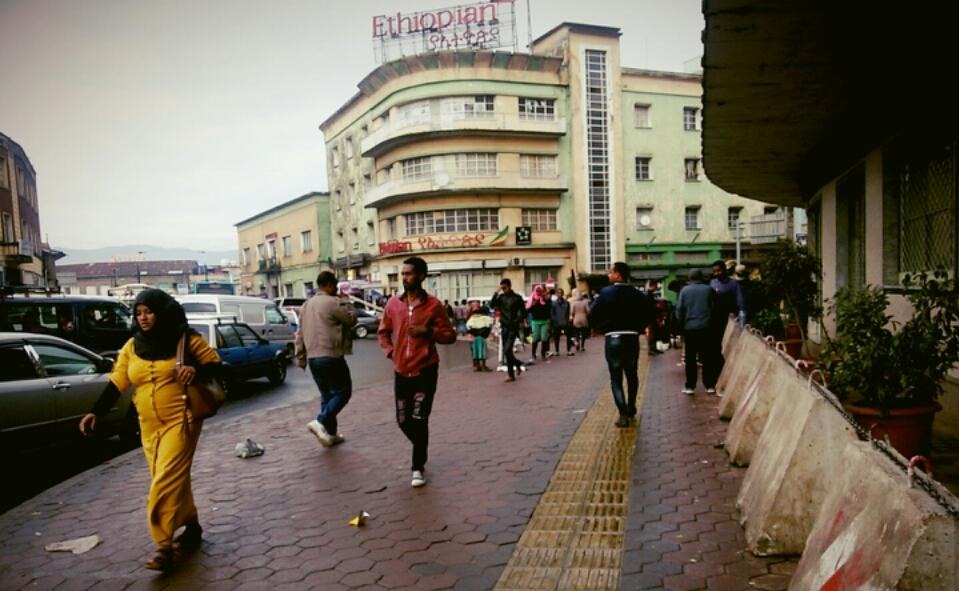
In Addis Ababa, these processes carry political significance because debates about urban development intersect with longstanding questions of ethnicity, land, and state power. The city occupies a unique position within Ethiopia’s federal system. It serves simultaneously as the country’s political capital, economic center, and a site of competing historical claims. Consequently, redevelopment projects become vehicles through which broader struggles over identity and belonging are expressed.
The conflicts surrounding contemporary redevelopment reveal that selling a city is never simply an economic project. It is also a political struggle over whose histories are preserved, whose claims to urban space are recognized, and whose vision of the future prevails.11
The transformation currently underway in Ethiopia’s capital therefore represents more than a simple story of modernization. It reflects a longer history of attempts to sell Addis Ababa—to investors, tourists, international audiences, and Ethiopians themselves. From Menelik’s “New Flower” to Abiy Ahmed’s beautification campaigns, Addis Ababa has repeatedly been marketed as a symbol of national renewal. Yet each attempt to sell the city has also generated disputes over belonging, memory, and power. The gleaming parks and new boulevards of contemporary Addis Ababa may symbolize one vision of progress, but they also reveal an enduring question that has shaped the city since its founding: who gets to define—and benefit from—the future of the city being sold?
Hannah Borenstein is an Assistant Professor of Anthropology at Florida International University. Her research and writing interests are centered around labor, race, and gender, with a particular focus in Ethiopia. For more, see: https://www.hannahborenstein.com/
- “Addis Ababa’s ‘Beautifying Sheger Program,” African Development Bank, November 17, 2022. https://www.afdb.org/en/news-and-events/addis-ababa-beautifying-sheger-river-development-project-56625.
↩︎ - Rachel Dubale, “Goodbye, Piassa,” Africa is a Country, April 2, 2024, https://africasacountry.com/2024/04/goodbye-piassa
↩︎ - The treaty had twenty articles written in two languages, Amharic and Italian, and there were significant differences in each version. In Article 17 of the Italian version of the treaty, Italy imposed a protectorate of Ethiopia; whereas in the Amharic version Ethiopia claimed the article allowed international diplomacy to be negotiated through Italy only at Ethiopia’s behest. For more, see: Tibebu, The Making of Modern Ethiopia; Zewde, “Concessions and Consession-Hunters.” ↩︎
- While Adwa is widely celebrated as a foundational moment of Ethiopian sovereignty, Menelik’s subsequent centralization policies—including the relocation of the capital to Addis Ababa—are understood by many Oromo scholars, activists, and community members as part of a broader project of imperial expansion and internal colonization of Oromo lands. These historical tensions continue to shape contemporary politics, fueling debates about federalism, land rights, and the meaning of national identity within Ethiopia’s multiethnic state. For more, see: Jalata, Oromo Nationalism and the Ethiopian Discourse; Holcomb and Ibssa, The Invention of Ethiopia; Markakis, Ethiopia: The Last Two Frontiers; Bulcha, “The Politics of Linguistic Homogenization in Ethiopia.”
↩︎ - “Ethiopia’s ‘Master Plan’,” Minority Rights Group, August 12, 2014. https://minorityrights.org/ethiopias-master-plan-good-for-development-damaging-for-minorities/
↩︎ - For more on the ways the Ethiopian government has altered national policy for international engagement, see: Bahru Zewde, “Concessions and Concession-Hunters in Post-Adwa Ethiopia: The Case of Arnold Holz,” Africa: Rivista trimestrale di studi e documentazione dell’Istituto italiano per l’Africa e l’Oriente 45, no. 3 (1990): 365–383.
↩︎ - https://minorityrights.org/ethiopias-master-plan-good-for-development-damaging-for-minorities/
↩︎ - Further, the Master Plan symbolized the importance of Addis Ababa to Ethiopia’s identity as an “emerging market.” Dubbed an Ethiopian Lion by the Brookings Institute in 2016, and known to be one of Africa’s fastest growing economies, the Master Plan was a promise to foreign investors to be a reliable and smart place to do business. See: Haroon Bhorat and Finn Tarp, Africa’s Lions, (Brookings Institution Press, 2016).
↩︎ - Maaza Mengiste, Addis Ababa Noir, (Akashic Books, 2020), 12-13.
↩︎ - Rachel Dubale, “Goodbye, Piassa,” Africa is a Country, April 2, 2024, https://africasacountry.com/2024/04/goodbye-piassa.
↩︎ - As David Harvey writes in “The Right to the City,” “The right to the city is not merely a right of access to what already exists, but a right to change it after our heart’s desire.” Harvey and others, including Ethiopians who have resisted dispossessive development, have continuously fought for the city as it’s being sold. They continue to demonstrate that fighting for the city is more than fighting for rights of access that the city provides – but claims to pride, dignity, and collective change. See David Harvey, “The Right to the City,”International Journal of Urban and Regional Research, 27(4) (2003), 939.).
↩︎

