
This is the third entry in our 10th Annual Graduate Student Blogging Contest, “Revolution.”
By Maria Rose Francis
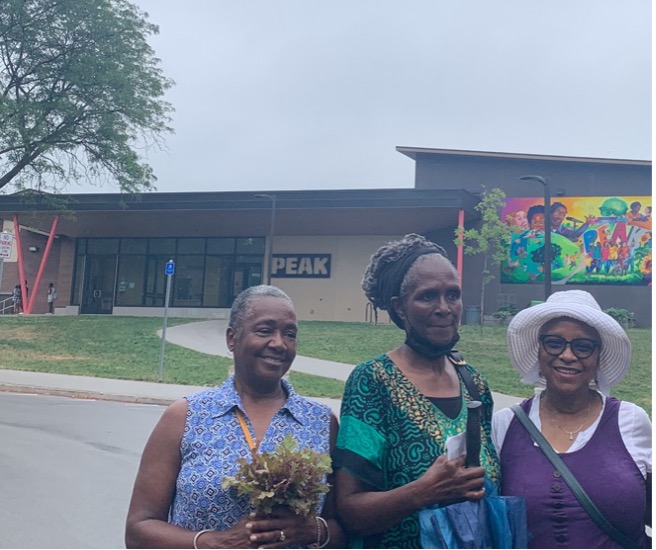
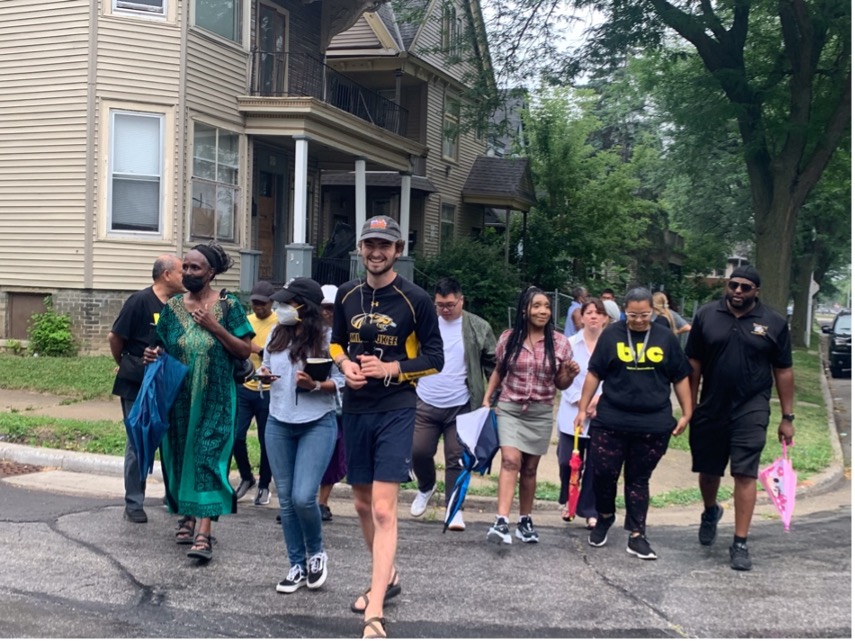
During a community-led walk through Milwaukee’s Midtown neighborhood in the summer of 2023, Ms. Betty Glosson, Ms. Talibah Mateen-Hooper, and Prof. Portia Cobb brought an earlier landscape back into view. At one corner, Ms. Betty recalled neighborhood efforts to stop stores from selling alcohol and cigarettes to children. At another, Ms. Talibah pointed to a community park and insisted, “The park is the people’s.” Their recollections linked Midtown’s streets to the Community Media Project and to the often-unrecognized labor through which three women made care, creativity, and public expression possible for the neighborhood’s children.1
That history unfolded in a neighborhood reshaped by displacement. Freeway construction and urban renewal disrupted Bronzeville, Milwaukee’s historic center of African American life, while expressway and Kilbourntown-3 clearances pushed African American and other minority residents into Midtown. Although the Midtown Conservation Project was presented as a conservation initiative, the plan submitted in 1965 proposed razing roughly 46 percent of the neighborhood’s structures. By 1975, 1,700 housing units had been razed while only 340 new units had been built. Housing disinvestment continued into the 1990s. In the broader Fond du Lac and North planning area that included Midtown, the city linked declining property values and low rents to limited maintenance and continuing physical deterioration.2 By the early 1990s, continued disinvestment shaped the physical and social conditions in which Midtown residents organized for their children.
In the early 1990s, Ms. Betty and Ms. Talibah were already working with Midtown’s children. Ms. Betty had moved to Milwaukee from Arkansas and participated in open-housing and welfare-rights activism before becoming deeply involved in neighborhood organizing. Ms. Talibah, who had lived in Midtown since 1981, also organized around housing, community space, and the needs of young people. Ms. Betty recalled that many children had little to do outside school: they fought among themselves and had not yet formed friendships. She and Ms. Talibah responded by organizing a youth group, block parties, bus trips, camping excursions, and overnight activities. These gatherings fostered friendships and dependable relationships with adults. Ms. Betty later remembered becoming concerned about young people’s access to alcohol and tobacco through neighborhood stores. That concern helped give the media project one of its central subjects.3
The Community Media Project (CMP) extended this work through Professor Cobb’s filmmaking practice. She came to the University of Wisconsin–Milwaukee in 1992 after earning a BA in Communications from Mills College and an MA in Film Production from San Francisco State University. Her earlier film No Justice, No Peace! Young, Black, ImMEDIAte had already used accessible video technology to center young Black perspectives.4 Ms. Betty recalled that Ms. Talibah contacted Cobb about working with Midtown’s children. Filmmaking offered a way to extend the activities the women had already created: the children would still gather within a dependable circle of adults, but they would also learn technical skills and investigate conditions around them. Cobb supplied filmmaking knowledge, equipment, and routes through which the children’s work could reach audiences; Ms. Betty and Ms. Talibah brought relationships, organizing experience, and knowledge of the neighborhood.
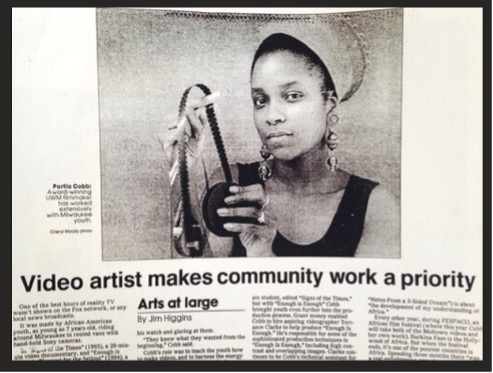
The response from young people exceeded expectations. Professor Cobb remembered arriving prepared to accommodate ten participants. Approximately thirty children appeared. “And if we were late,” she recalled, “they were outside looking at their watches.”5 A 1993 profile registered the same purposefulness. The children, Professor Cobb told Jim Higgins, “knew what they wanted from the beginning.” Waiting outside showed their anticipation: the workshop had become a place they expected to return to.6
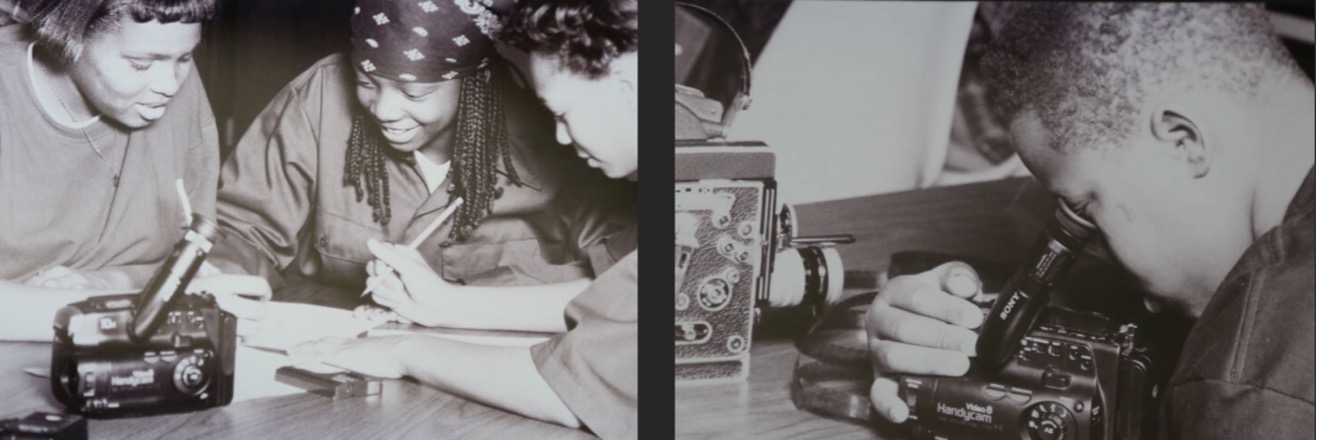
Their commitment was visible in what they did. The participants learned to operate cameras, develop scripts, conduct interviews, and decide what they wanted to document. Ms. Betty recalled that the adults fed the group every Saturday. She also remembered the children carrying cameras into the park, videotaping and talking to trees because they were so excited to use the equipment.7 Food, play, instruction, and dependable adult presence existed alongside one another. Technical learning was therefore inseparable from being welcomed, watched over, and taken seriously.
One result was the 1994 documentary Enough Is Enough: Time Out for the Sell Out!, created through the Community Media Project with the Midtown Neighborhood Association. The film begins with young people questioning cigarette and alcohol advertisements, then turns to investigation. A fourteen-year-old purchases cigarettes without being asked for identification. Later, a seventeen-year-old buys a forty-ounce bottle after disclosing his age; the clerk charges an extra dollar and tells him not to reveal the sale. The young filmmakers interview residents about licensing, picketing, churches, and collective action. Yet the film closes in another emotional register: “I believe in love. I believe in me. I believe in my friends. I believe in my family. I believe in trust. I believe in peace.” They were not only naming danger but imagining the relationships through which another future might be lived.8
The closing credits name twenty-three Midtown Youth Collective members as producers, Professor Cobb as artistic director, and Ms. Betty and Ms. Talibah as community consultants. Care here did not mean speaking in the children’s place. Adults provided equipment, instruction, food, accompaniment, and a dependable structure, while the young participants investigated their surroundings and became the documentary’s credited makers.
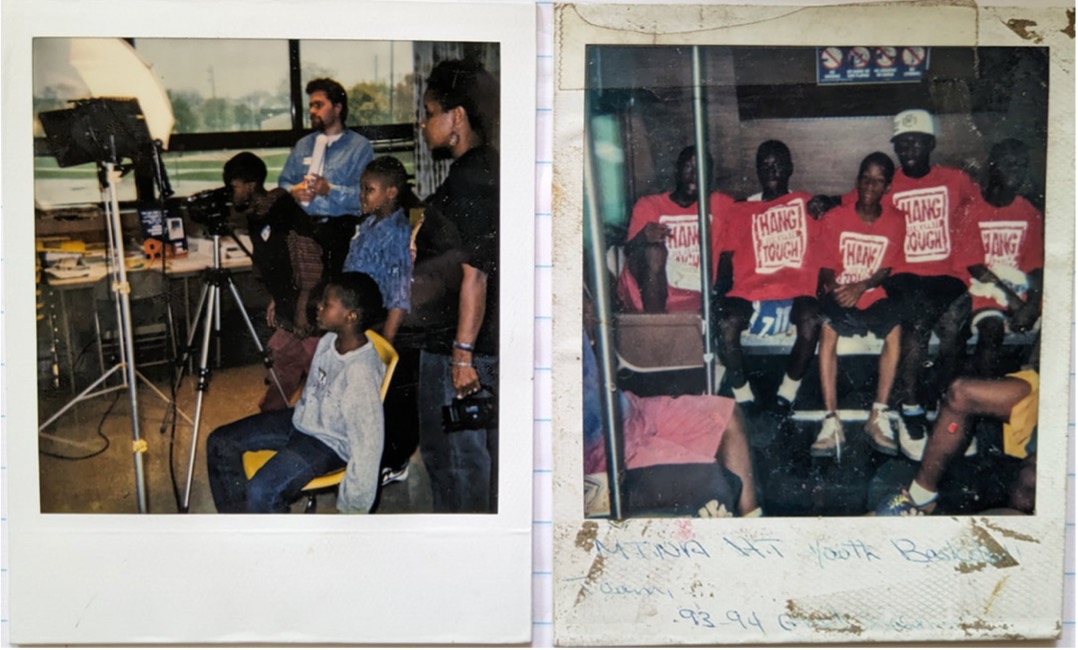
The documentary did not remain inside a workshop or community center. “We would take the video that they made, and we used it as a tool,” Professor Cobb recalled. “So it would go to the Common Council … to show what the issues were here.”9 The documentary also carried Midtown’s young filmmakers beyond Milwaukee. Cobb and other adult leaders accompanied a group of participants to Columbus, Ohio, where Enough Is Enough screened at the National Black Programming Consortium’s Prized Pieces Film Festival.10 According to Professor Cobb, for most of the young people, it was their first time traveling by airplane. The film won first prize. Cobb remembered watching the youth receive recognition at a professional film festival as “a monumental and revolutionary moment.” The award plaque remains with the Community Media Project archive at UWM.
CMP’s revolution cannot be measured by a municipal outcome alone. It rested on forms of women’s labor that policy-centered histories often overlook: recognizing children’s needs, organizing activities, preparing food, arranging outings, teaching skills, and continuing to show up. This work protected children without treating them as passive. Their authorship was not separate from care; it became possible through it.
The women also learned from one another. During the 2023 walk, Talibah Mateen-Hooper described how working beside Betty Glosson reshaped her own activism: “You can be trained and then you can be retrained, because I learned a lot from her. I mean, a lot.”11 In her oral history, Ms. Talibah placed this work within a longer tradition of neighborhood stewardship. She remembered older women cleaning the block, watching over children, and helping neighbors before she and Ms. Betty assumed similar responsibilities.12 What passed between these women was not a single organizing technique but an ethic of remaining present, recognizing people’s needs, and accepting responsibility for younger generations. That intergenerational ethic later shaped CMP, where caring for children meant not only keeping them safe and engaged but also trusting them with cameras, creative responsibility, and the authority to interpret their own neighborhood.
The walk and oral histories anchored this history in particular places. At one corner, Ms. Betty recalled neighborhood action against stores selling alcohol and cigarettes to minors. In her oral history, she also remembered organizing Lisbon Square tenants and bringing federal housing officials to inspect dangerous living conditions.13 Her albums, the surviving documentary, and the award plaque preserve the children’s faces, gatherings, and public work, forming a community-led archive of actions that the present landscape does not announce.
Ms. Betty remembered that friendships formed through the activities continued into adulthood and that some participants remained active in community life. She also emphasized the importance of traveling beyond Milwaukee and called CMP “the best thing to hit Midtown.”14 Her account is not a complete record of every participant’s later life, but it locates CMP’s endurance in friendship, pride, connection, and the pleasure with which she still remembered the children.15
Three decades later, CMP reveals a revolution that municipal records and conventional accounts of political change rarely recognize. It took shape through the affective labor of care: noticing that children had little to do, organizing activities and outings, feeding them, showing up each week, listening to them, teaching them, and trusting them with cameras. These repeated acts changed the relationships surrounding the children. The women’s recollections move from young people fighting and having few opportunities to children waiting eagerly for the adults, experimenting playfully with equipment, forming friendships, traveling together, and appearing in the film’s credits as producers. Professor Cobb’s media practice did not stand apart from Ms. Betty and Ms. Talibah’s care; it transformed that care into authorship and public circulation. This was therefore a media revolution, but also a revolution in the relationships that made media production possible. Care enabled the children to represent Midtown, and filmmaking gave their experiences a public form. When the young people ended Enough Is Enough by affirming love, family, friendship, trust, and peace, they named the affective world that the women’s labor had helped them create. CMP changed who possessed the authority to record the city while making visible the undervalued labor through which that authority became possible.
Maria Rose Francis is a PhD candidate in Urban Studies at the University of Wisconsin–Milwaukee. Trained as an architect and urban planner, her research examines community relationships, cultural practices, urban narratives and the everyday production of place. She is the author of “Role of Women in Milwaukee’s Fair Housing Marches and Civil Rights Movements: Recognizing the Unsung Heroines,” published in the Journal of Urban History. She is a member of UWM’s Buildings-Landscapes-Cultures Field School.
Featured image (at top): Talibah Mateen-Hooper, Betty Glosson, and Portia Cobb during a community-led walk in Milwaukee’s Midtown neighborhood, July 26, 2023. Courtesy of the Buildings-Landscapes-Cultures Archives, University of Wisconsin–Milwaukee.
This essay grew out of collaborative research conducted through UWM’s Buildings-Landscapes-Cultures Field School, including its community walk, oral-history work, and community archive in Midtown.
- Betty Glosson, Talibah Mateen-Hooper, Portia Cobb, and other community members, community-led walk and recorded conversation, Buildings-Landscapes-Cultures Field School, Milwaukee, July 26, 2023, 1:24–1:48 and 2:07–3:31, Buildings-Landscapes-Cultures Archives, University of Wisconsin–Milwaukee.
↩︎ - Niles W. Niemuth, “Urban Renewal and the Development of Milwaukee’s African American Community: 1960–1980” (master’s thesis, University of Wisconsin–Milwaukee, 2014), 4, 22; Matthew J. Honer, “The Unworkable Program: Urban Renewal in Kilbourntown-3 and Midtown, Milwaukee” (master’s thesis, University of Wisconsin–Eau Claire, 2015), 52–53, 59; City of Milwaukee Department of City Development, Fond du Lac and North Neighborhood Comprehensive Plan (Milwaukee, March 19, 2004), 21. ↩︎
- Betty Glosson, oral-history interview by Maria Rose Francis, July 21, 2023, 26:43–50:59, Buildings-Landscapes-Cultures Archives, University of Wisconsin–Milwaukee; Talibah Mateen-Hooper, oral-history interview by Aiyana Rockwell, 2023, Buildings-Landscapes-Cultures Field School; Aiyana Rockwell, “Talibah Mateen Hooper,” Buildings-Landscapes-Cultures Field School, accessed August 10, 2026, https://blcfieldschool2022.weebly.com/talibah-mateen-hooper.html.
↩︎ - Portia Cobb, “Curriculum Vitae,” “Artist Statement,” and “Community Media Project Legacy 1992–2013,” Portia Cobb: Interdisciplinary Art, Research, Collaboration & Production, accessed August 10, 2026, https://www.portiacobb.com/new-page-3, https://www.portiacobb.com/portia-cobb, and https://www.portiacobb.com/cmp/.
↩︎ - Community-led walk and recorded conversation, July 26, 2023, 3:31–4:02, Buildings-Landscapes-Cultures Archives.
↩︎ - Jim Higgins, “Video Artist Makes Community Work a Priority,” 1993, clipping reproduced in Cobb, “Community Media Project Legacy 1992–2013”; community-led walk and recorded conversation, 3:31–4:02.
↩︎ - Glosson, oral-history interview, 48:41–51:41.
↩︎ - Community Media Project and Midtown Youth Collective, Enough Is Enough: Time Out for the Sell Out!, 1994, video, https://vimeo.com/366536680.
↩︎ - Community-led walk and recorded conversation, 1:02–1:21, Buildings-Landscapes-Cultures Archives.
↩︎ - The National Black Programming Consortium established the Prized Pieces Film Festival in 1982 to showcase work by Black independent filmmakers; the festival concluded in 2004. Black Public Media, “About,” accessed July 17, 2026, https://blackpublicmedia.org/about/
↩︎ - Glosson, Mateen-Hooper, Cobb, et al., community-led walk, 2:07–3:30.
↩︎ - Mateen-Hooper, oral-history interview, Buildings-Landscapes-Cultures Field School.
↩︎ - Glosson, oral-history interview, 58:39–1:01:42.
↩︎ - Community-led walk and recorded conversation, 0:41–1:01, Buildings-Landscapes-Cultures Archives.
↩︎ - Glosson, oral-history interview, 42:19–44:49, 48:41–55:59.
↩︎

