
This is the first entry in our 10th Annual Graduate Student Blogging Contest, “Revolution.”
By Sarah Daisy Amador
Farmers in the Palouse, a pastoral region encompassing southeastern Washington and central Idaho, burned 11,057 acres of Kentucky bluegrass stubble after harvest on September 12, 1994. The following morning, an acute asthma attack claimed the life of 21-year-old Aaron Dittmer in Pullman, Washington. By September 14, Dan Greene of Moscow, Idaho, had written a letter to the Washington State Department of Ecology to notify the agency of Dittmer’s death. But with no direct evidence to prove the smoke caused Dittmer’s death, the agency’s only response was to add Greene to a mailing list about field burning. This series of events eventually led to a much larger policy debate about air pollution staged in the complex jurisdictional space of air quality management.1 After all, air pollution has no respect for city limits or state lines.
Later, in January 1995, a grassroots activist group met in Spokane, Washington, to advocate for limits on the amount of smoke produced by agricultural field burning throughout the Palouse. Patricia Hoffman, a veterinarian-turned-activist who was later honored as a Washington “Environmental Hero” for her work, led the group, called Save Our Summers, or SOS.2 The meeting minutes from that first gathering in 1995 reflect a long to-do list — contact the media, design and print bumper stickers, collaborate with healthcare professionals, establish a research committee, involve schools. The group’s goal was clear. It wanted to give “summers back to the citizens of Spokane.”3
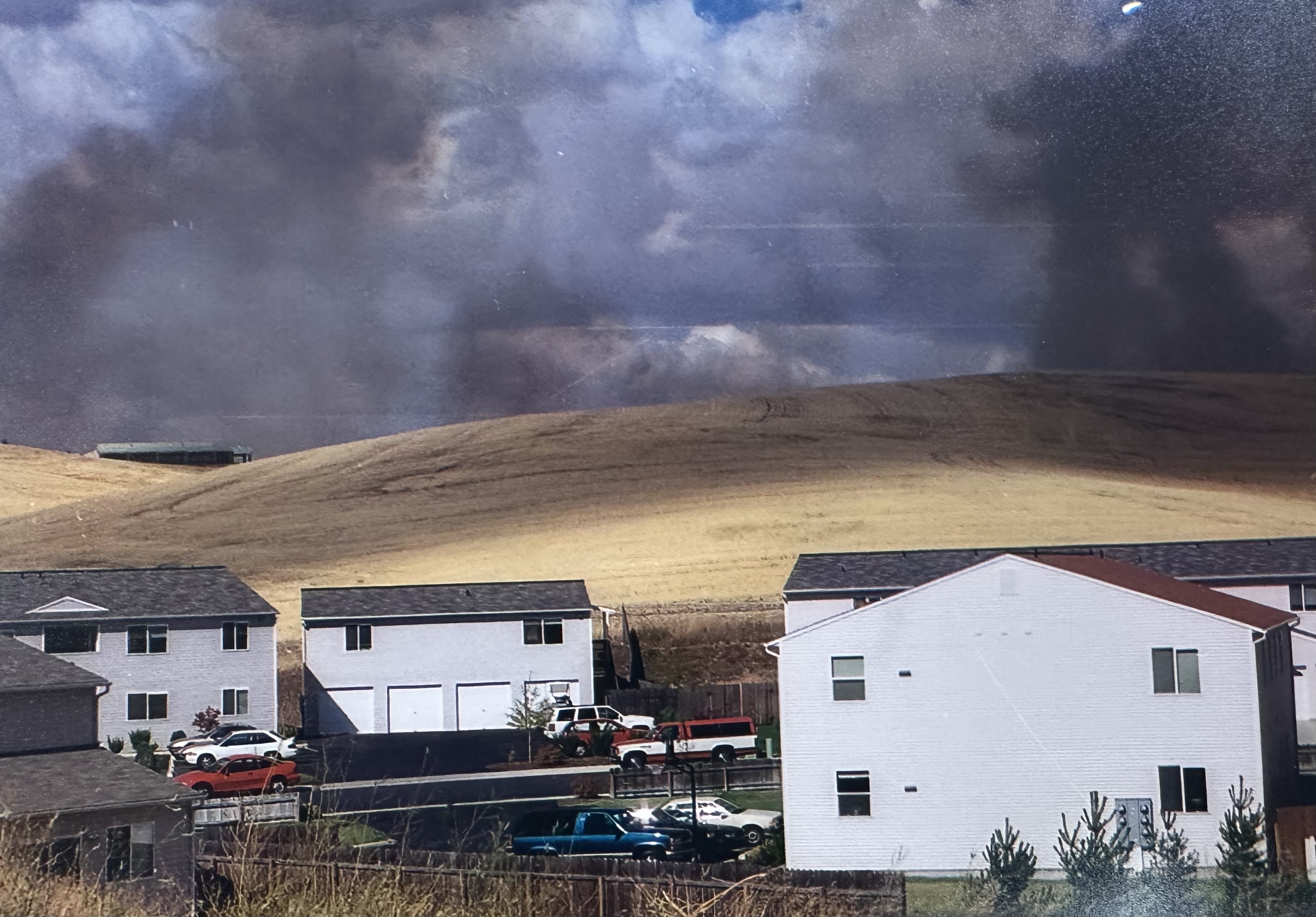
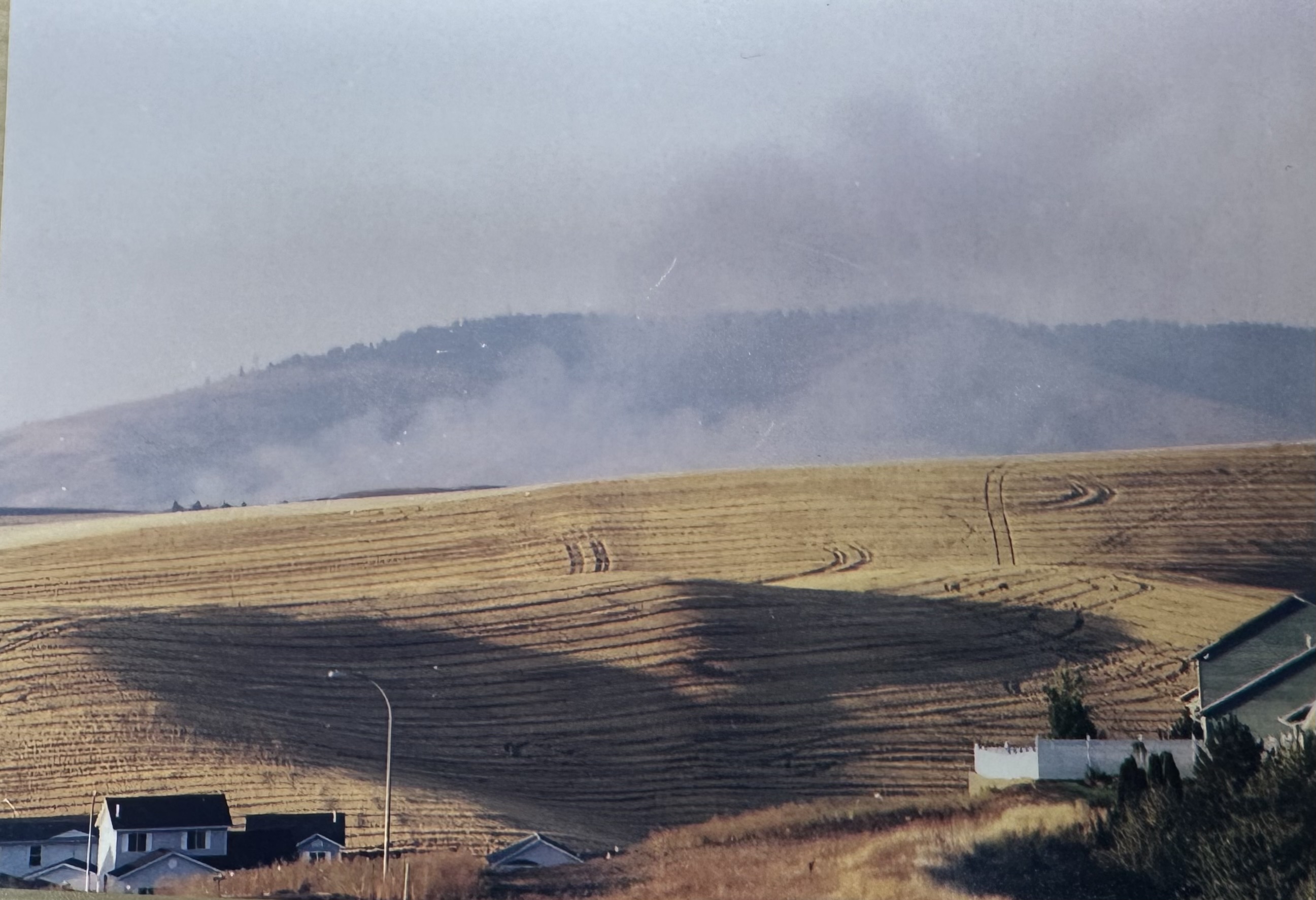
The group’s notes from that first meeting also reflected an important consensus: “We do not oppose farmers – we oppose grass smoke.”4 Nonetheless, SOS soon clashed with growers who burned the stubble left behind after harvesting bluegrass, wheat, and alfalfa to clear their fields. To the activists, greater regulation would protect public health in the region and improve the quality of life for residents of Spokane and surrounding cities, such as Pullman and Moscow.5 But farmers already had to navigate restrictions — some counties required permits to burn, while Spokane County banned grass burning in 1992 — and they didn’t want more.6
To preserve order, societies drew lines demarcating the boundaries between rural and urban landscapes. Cities are supposed to be where people live, not where food is grown. This allows urbanites to remain ignorant of the risks of a dry season or crop failure, just as they can avoid thinking about how a field is cleared and prepared for next year’s planting. In the same way, farmers can burn the remnants left on their fields, a practice that farmers in the Palouse claimed was more efficient than other alternatives in the 1990s, without considering the consequences for neighboring urbanites.
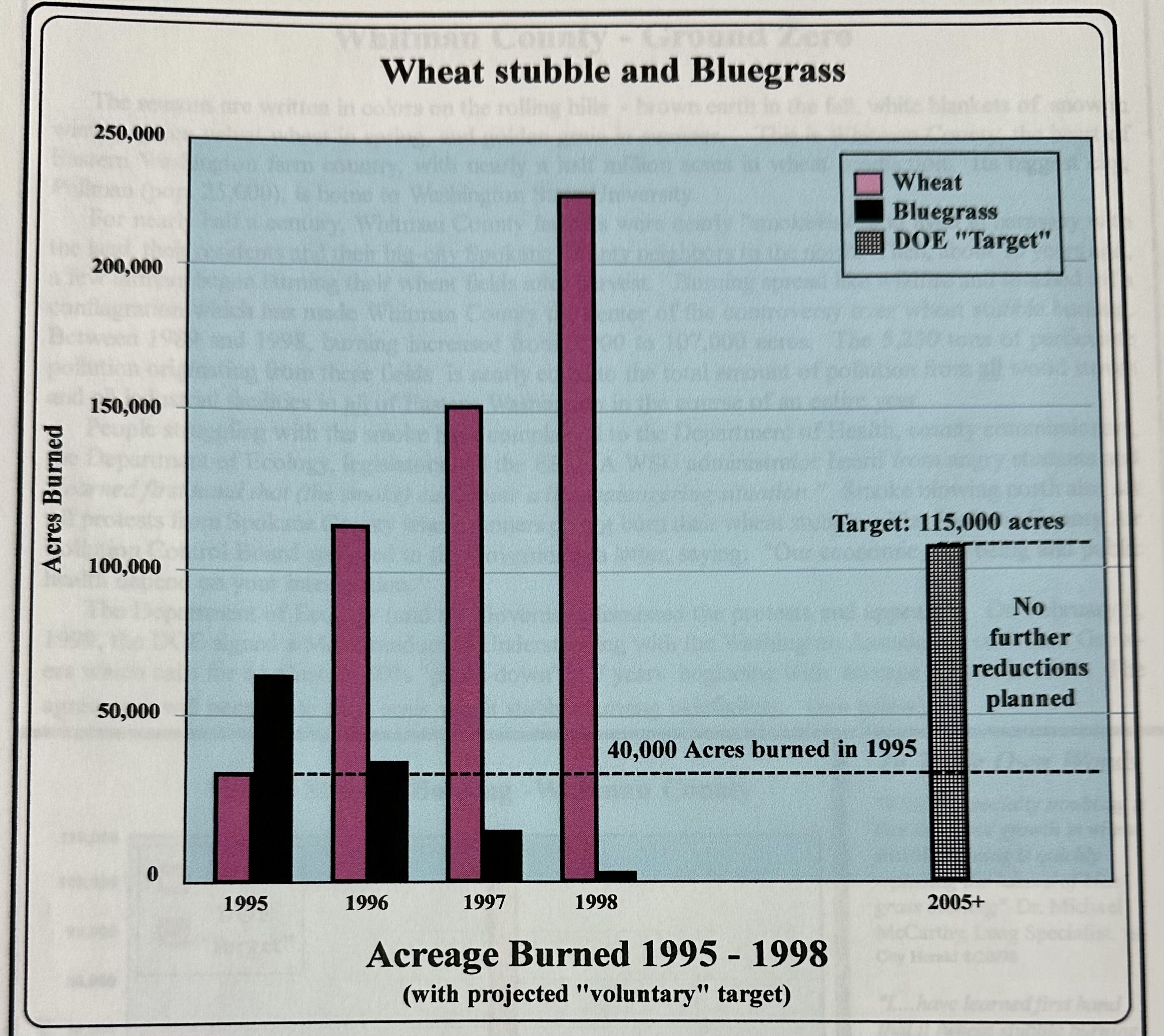
Despite the established regulations on burning bluegrass, activists argued wheat stubble burning was still on the rise in the mid-1990s. One SOS report, based on a Washington State Department of Ecology (DOE) survey, showed a sharp increase in wheat acreage burned from 1995 to 1996, growing from 40,000 to over 100,000 acres.7 Farmers disagreed. Alex McGregor, president of the Washington Association of Wheat Growers (WAWG), claimed in 1998 that burning was “not on the rise at all” and was “just one of the tools a farmer uses to control weeds and pests and prepare the land for planting soon after harvest.”8
The conflict over field burning did more than just reflect the tension between urban environmentalists and rural agriculturalists in the counties surrounding Spokane. It also raised serious questions about industrial agriculture and public health. When a conflict between these fields arises, who should regulate it? Who has the authority to regulate smoke? SOS’s advocacy highlighted questions about urban-rural boundaries, jurisdictional differences, and beliefs about land stewardship.9
The agricultural revolution allowed the first urbanites to sequester themselves in cities, but over time, modern urbanites accepted a paradoxical narrative of progress. The earliest cities were dependent on grain, not separate from it.10 Though the advent of fixed-field farming was framed as “revolutionary,” scholar James Scott describes it as a slow evolution that developed over thousands of years. In time, humans cultivated a relationship to the land that was based on trade.11 Settler agriculture in the modern era — and the notions of progress that came with it — transformed the landscape on the Palouse in just 175 years.12 Those changes were not evolutionary, but revolutionary. By the 1990s, the perspectives of both farmers and urbanites reflected an inherent incompatibility between the boundaries we created and the natural world.
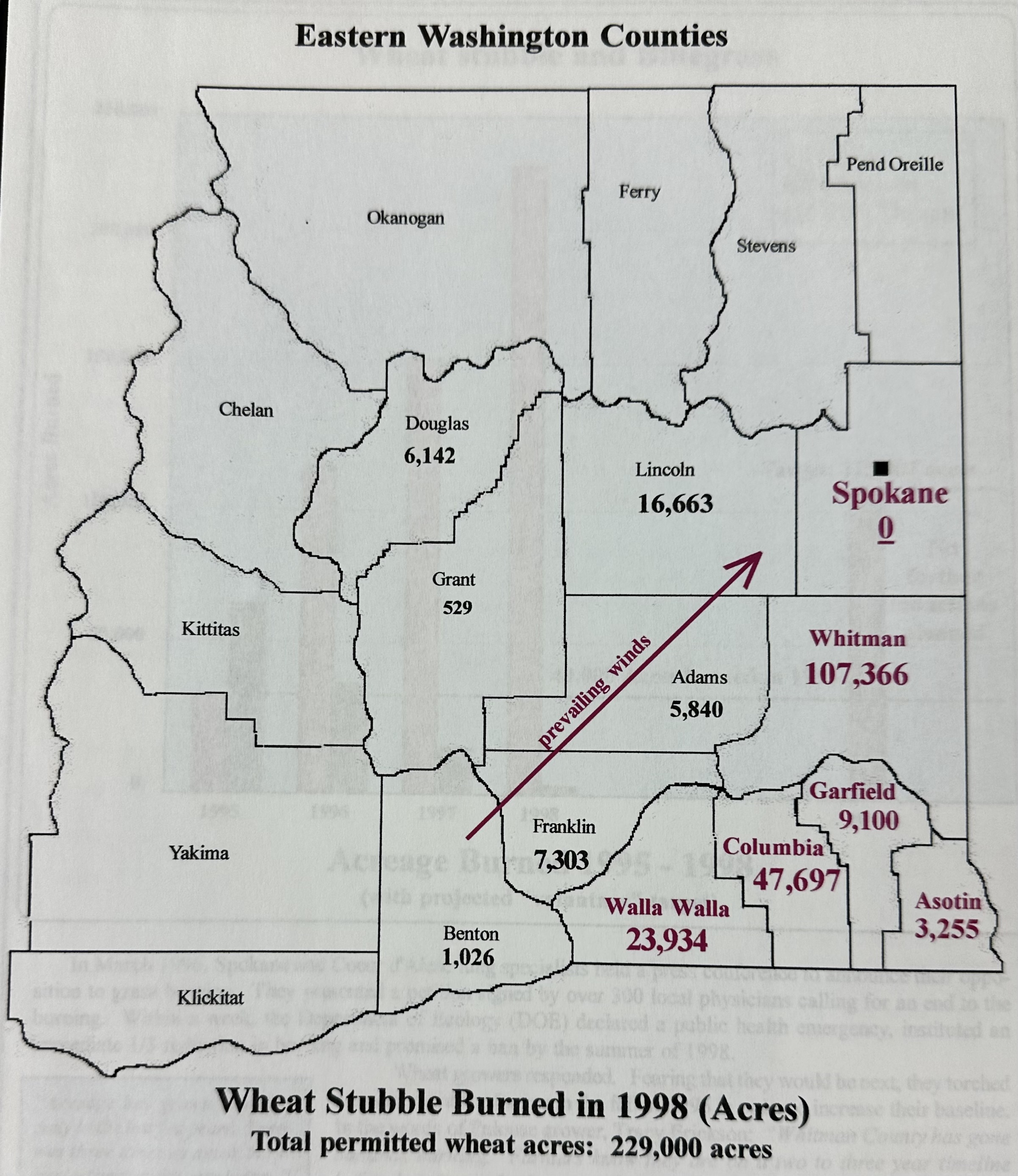
The conflict in Spokane also revealed the consequences of industrial agriculture’s need for efficiency. Burning was faster and thus necessary for farmers. While SOS had already helped usher in what was lauded in the press as a “total phaseout of bluegrass field burning in Washington,” in their first few years of organizing, the phaseout applied to only one type of grass. Farmers could still burn stubble from cereal grain fields, and approximately 230,000 acres of wheat were burned in the region in 1998.13 Plus, just across the border in Idaho, there were no prohibitions of any kind on agricultural burning.14
In the late 1990s, the nonprofit filed multiple lawsuits in federal courts against state agencies over field burning regulations. In Save Our Summers v. Washington State Department of Ecology, SOS requested the court “assume jurisdiction” and intervene in the field burning dispute by issuing an injunction to stop DOE from issuing burn permits during litigation. SOS argued that DOE violated the civil rights of two young people in Palouse who should be protected under the Americans with Disabilities Act of 1990 by failing to adequately regulate smoke. In invoking the ADA in this dispute, SOS and its legal team avoided mentioning environmental regulation, which differed across municipalities. Instead, they claimed the DOE issued permits “without consideration of public health or the impact on persons with breathing disabilities” as the defendants could not access public spaces during the burn season.15 SOS focused on building an argument they believed any reasonable person could agree with. Certainly, no one wants to watch an asthmatic child suffer, right?
When the court denied their request for an injunction in September 2000, it was sympathetic to SOS — at least in part. The court stated that it would have granted a temporary injunction if it could have, as the smoke was harmful.16 But Judge Robert Whaley said, “the Court believes that it has no jurisdiction to entertain the claims.”17 Ultimately, Judge Whaley questioned the plaintiff’s invocation of the ADA, affirming that his court lacked jurisdiction over the dispute. To Whaley, the Clean Air Act “strikes two vital balances.” First, the act was not intended to undermine state rights. Second, the judge argued there was a tenuous relationship between conservation and modern agriculture. He posited that “a certain amount of pollution is a necessary by-product of our industrialized society,” even while the government also needed to “preserve public health and welfare.”18 SOS appealed, hoping to capitalize on the government’s responsibility to citizens and their health.
Though SOS and their coalition filed this suit based on a human-centered legal argument, the crux of the issue was disagreements over how to regulate field burning and who had the authority to do so. While SOS ultimately wanted a policy that capped burning per acre to limit total smoke, wheat growers wanted to set an emissions baseline for smoke and reduce it over time. Both SOS and farmers agreed that the DOE should be involved in regulating the smoke.19 SOS records note they were growing tired of the struggle, but ultimately “want[ed] to keep the process going,” so they attended mediation with DOE and the wheat growers.20 Ahead of a decision in Save Our Summers v. Washington State Department of Ecology, the parties reached an agreement in 1999 to reduce smoke from field burning by 50 percent over the following seven years.21
By the 2000s, Spokane’s population was growing, and the area was urbanizing. The city’s newcomers would not tolerate field burning to the same degree.22 For newer residents, smoky summers in Spokane were not a sacrifice worth making. The 1999 compromise between SOS and WAWG meant the DOE would be the arbiters of wheat stubble burning, ending what had been a jurisdictional nightmare.23 Plus, with the help of meteorological technology, farmers could confine their burning to days with favorable winds when smoke would rise into the atmosphere and away from communities, mitigating the effects of air pollution on residents, while allowing farmers to use the most time-efficient tool they had.24
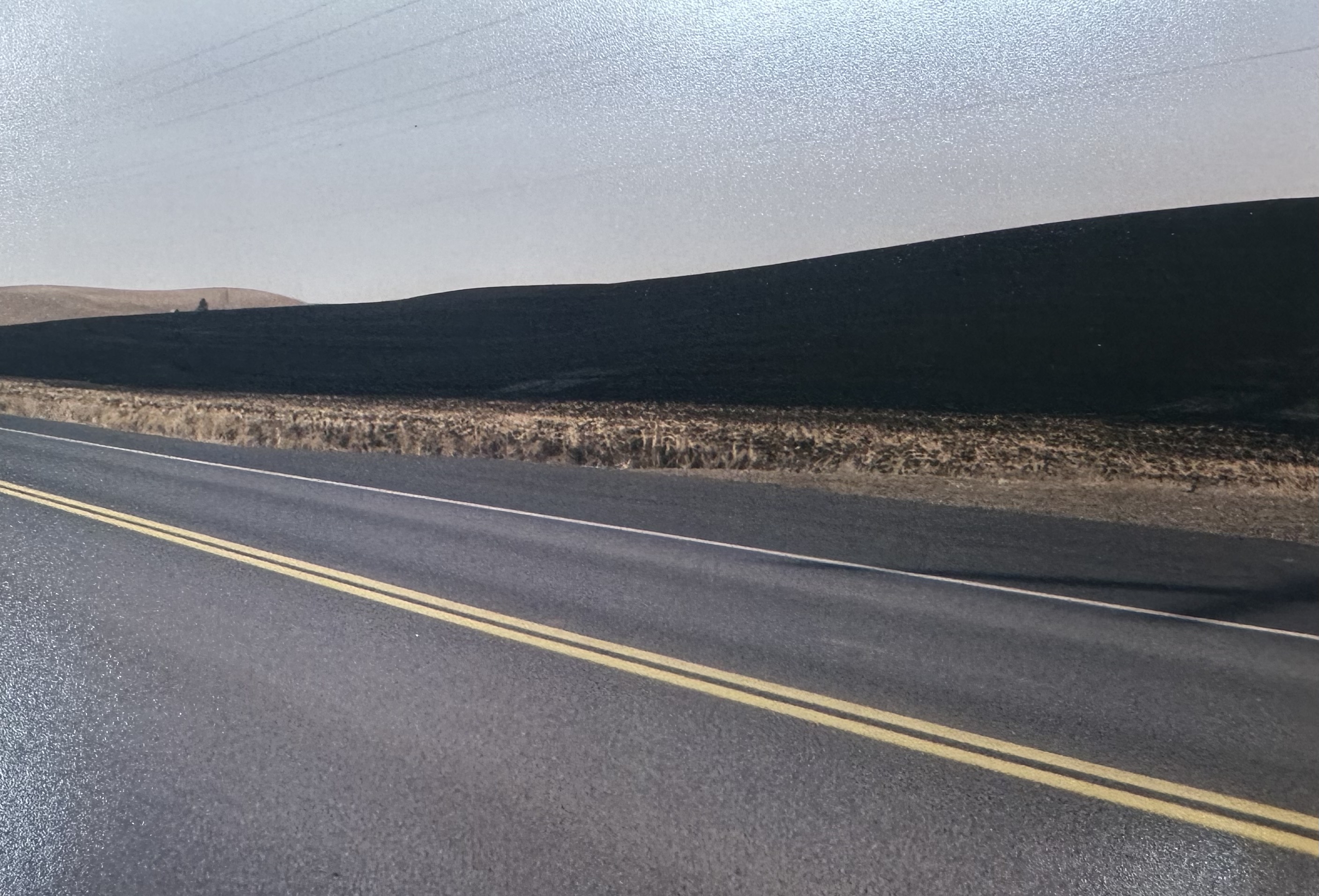
Both intentional and unintentional, the ideas imparted by industrial agriculture drastically altered our relationship to nature.25 While SOS escalated the issue of field burning to the federal courts to hold someone responsible for mediating a local problem, agriculture was never just a rural concern. SOS proved that the byproducts and historical legacies of the industrialization of agriculture are not confined to rural areas. Neither is smoke, which can be both natural and unnatural. It does not abide by the laws we set.
Humans have altered the environment for their benefit since at least the agricultural revolution. But despite the industrialization of agriculture and efforts to conquer nature, farming remains a natural process that cannot be completely controlled, just like the smoke that crosses borders between rural fields and city limits. In a decidedly rural area like the Palouse, commercial agriculture revolutionized the way residents think about the environment.
Two decades later, Spokane is still dealing with seasonal smoke and a growing threat of dangerous wildfires that creep further into urban areas each year. This summer, the Spokane Complex fires destroyed over 800 structures, offering a sobering reminder that our modern lifestyle conceals the risks of an estrangement from nature.26 Like fire, bureaucracy is a tool that can be destructive or restorative. Lands may be zoned as industrial, suburban, or rural, but fire and the smoke it produces remind us that these human boundaries are temporary, ever shifting, and even imagined. SOS’s compromise reminds us that ultimately, local problems require local solutions.
Sarah Daisy Amador is a doctoral student at Washington State University where they study 20th century Los Angeles and the relationships between race and space. Prior to attending WSU, they graduated with an MA degree in Social Sciences and Comparative Education from UCLA and have worked as an educator for the last ten years. They recently shared their work on educational and policing history, “Responses to Policing and Surveillance of Youth in Los Angeles Communities and Schools, 1965-93,” at the 2025 NACCS Pacific Northwest Foco Regional Conference in Portland, Oregon and are currently working on a community study of Venice, California using race and the environment as central points of focus.
Consulted Works
Archival Sources
Save Our Summers records, 1975-2004, Manuscripts, Archives, and Special Collections, Washington State University Libraries, Pullman, WA.
Local Periodicals
“Breath of Fresh Air; Cooperation was Key to Field-Burning Agreement: [All Zones Edition].” Spokesman-Review, B6, April 20, 2006.
Gibson, Nick. ” The Aftermath of a Firestorm Firefighters, Elected Leaders and Wildfire Experts Struggled to Comprehend.” Spokesman-Review, August 15, 2026.
Hagengruber, James. “Field Burning Dispute Likely Settled: Washington Sides Agree on Rules to Help Disperse Smoke.” Spokesman-Review, April 19, 2006.
LaCombe, Allan. “More than just Smoke to Field Burning Issue: [Valley Edition].” Spokesman- Review, V2, October 2003.
Mulick, Chris. ” Easing Of Grass-Burning Ban Snuffed Out House Committee Refuses To Vote On Limiting State Phaseout.” Spokesman-Review, March 6, 1997.
Suderman, Hannelore. “Groups Sue USDA Over Wheat Fires They Say Federal Agency Failed to do Environmental Report: [Spokane Edition].” Spokesman-Review, B1, August 20, 1998.
Steele, Karen Dorne. “Pullman Man’s Death Ignites Policy Debate.” Spokesman-Review, February, 25, 1996.
Steele, Karen Dorne. “Pact to Cut Smoke from Wheat Fields but Details Differ for Growers, Clean-Air Group: [Spokane Edition].” Spokesman-Review, B1, October 31, 1998.
Steele, Karen Dorne. “Activists Honored For Environmental Work Spokane’s Hoffman, Osborn Awarded ‘Hero’ Citations.” Spokesman-Review, December 12, 1996.
Steele, Karen Dorne. “Clean-Air Group Asks for Burn Ban Save our Summers Appeals Denial of Field Burning Trial: [Spokane Edition].” Spokesman-Review, B2, July 10, 2001.
Legal documents
Iceberg v. Martin, CASE NO. C15-1232JLR (W.D. Wash. Jan 27, 2017)
League of Wilderness Defenders-Blue v. Zielinski, 187 F.Supp.2d 1263 (D. Or. 2002)
Save Our Summers v. Wash. State Dept. of Ecol., 132 F.Supp.2d 896 (E.D. Wash. 1999)
Publications
Bessire, Lucas. Running Out. S.I.: Princeton University Press, 2021.
Black, Megan. The Global Interior: Mineral Frontiers and American Power. First Harvard University Press paperback edition. Cambridge, Massachusetts: Harvard University Press, 2022.
Boyd, Robert T., ed. Indians, Fire, and the Land in the Pacific Northwest. Updated edition. Oregon State University Press, 2021.
Cram, Shannon. Unmaking the Bomb: Environmental Cleanup and the Politics of Impossibility. Oakland, California: University of California Press, 2023.
Demuth, Bathsheba. Floating Coast: An Environmental History of the Bering Strait. First edition. New York: W.W. Norton & Company, 2020.
Davis, Cleve. “The Palouse Prairie, A Vanishing Indigenous Peoples Garden.” Journal of Native Sciences 1, No. 1 (February 2019): 1-17.
Duncan, Colin A. M. Centrality of Agriculture: Between Humankind and the Rest of Nature. Montreal: MQUP, 1996.
Hämäläinen, Pekka, “The Politics of Grass: European Expansion, Ecological Change, and Indigenous Power in the Southwest Borderlands,” The William and Mary Quarterly 67, no. 2 (2010): 173–208. https://doi.org/10.5309/willmaryquar.67.2.173.
Hernandez, Jessica. Fresh Banana Leaves: Healing Indigenous Landscapes through Indigenous Science. North Atlantic Books, 2023.
Jacobson, Mark Z. Atmospheric Pollution: History, Science, and Regulation, Cambridge: Cambridge University Press, 2002.
Nash, Linda Lorraine. Inescapable Ecologies: A History of Environment, Disease, and Knowledge. Berkeley: University of California Press, 2006.
Navarrete Hunter, Yesenia. “AUGUST ON MY BACK: Rhythms of Issei Motherhood and Labor on the Yakama Reservation.” In Nature Unfurled, edited by Connie Y. Chiang, 118-144. University of Washington Press, 2024. https://doi.org/10.1515/9780295753188-007.
“Operating Permits.” EPA, December 8, 2025. https://www.epa.gov/title-v-operating-permits/basic-information-about-operating-permits.
Russell, Edmund P. “Lost Among the Parts Per Billion: Ecological Protection at the United States Environmental Protection Agency, 1970–1993.” Environmental History 2, no. 1 (1997): 29–51. https://doi.org/10.2307/3985560.
Scheuerman, Richard D, and Alexander C McGregor. Harvest Heritage: Agricultural Origins and Heirloom Crops of the Pacific Northwest. First edition. Pullman, Washington: Washington State University Press, 2013.
Scott, James C. Against the Grain: A Deep History of the Earliest States. Yale University Press, 2017.
White, Richard. The Organic Machine. New York: Hill and Wang, 1995.
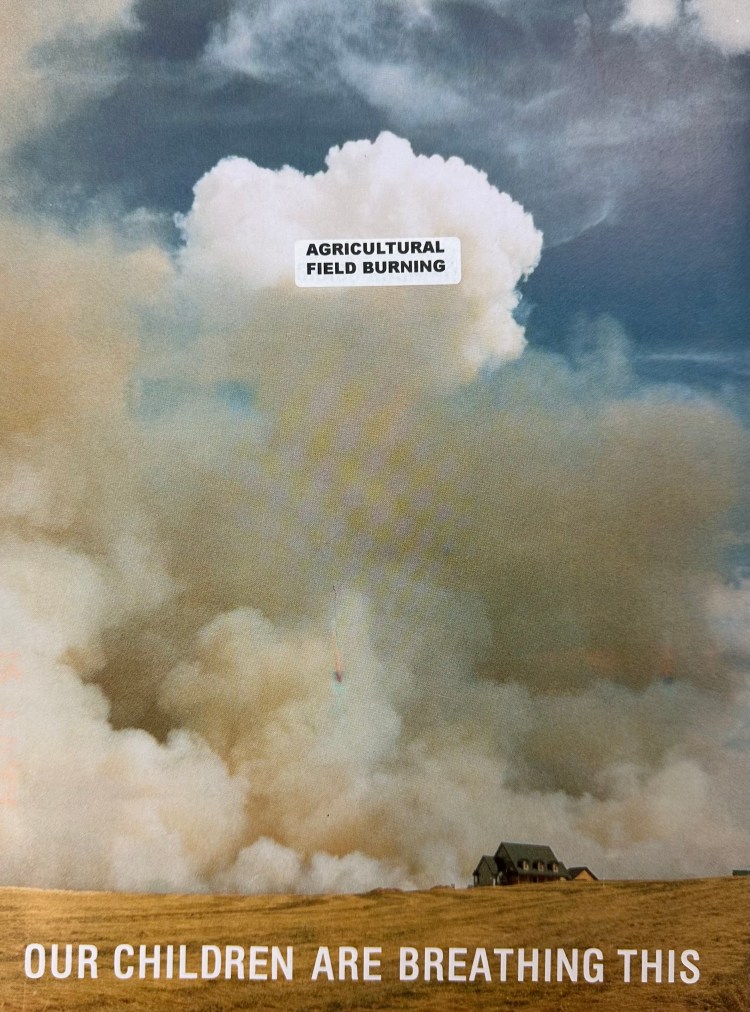
Featured image (at top): Cover page of informational booklet “Agricultural Field Burning: Our Children Are Breathing This,” by Save Our Summers. Photo courtesy of Save Our Summers records, 1975-2004, Manuscripts, Archives, and Special Collections, Washington State University Libraries, Pullman, WA.
- Karen Dorne Steele, “Pullman Man’s Death Ignites Policy Debate,” Spokesman-Review, February, 25, 1996.
↩︎ - Karen Dorne Steele, “Activists Honored For Environmental Work Spokane’s Hoffman, Osborn Awarded ‘Hero’ Citations,” Spokesman-Review, December 12, 1996. ↩︎
- Meeting Minutes January 5, 1995, Save Our Summers records, 1975-2004, Manuscripts, Archives, and Special Collections, Washington State University Libraries, Pullman, WA.
↩︎ - “Meeting Minutes January 5, 1995,” Save Our Summers records, 1975-2004, Manuscripts, Archives, and Special Collections, Washington State University Libraries, Pullman, WA.
↩︎ - “Agricultural Field Burning: Our Children Are Breathing This,” Save Our Summers records, 1975-2004, Manuscripts, Archives, and Special Collections, Washington State University Libraries, Pullman, WA, 6. ↩︎
- “Agricultural Field Burning: Our Children Are Breathing This,” Save Our Summers records, 1975-2004, Manuscripts, Archives, and Special Collections, Washington State University Libraries, Pullman, WA, 6. ↩︎
- “Agricultural Field Burning: Our Children Are Breathing This,” Save Our Summers records, 1975-2004, Manuscripts, Archives, and Special Collections, Washington State University Libraries, Pullman, WA, 7. ↩︎
- Hannelore Suderman, “Groups Sue USDA Over Wheat Fires They Say Federal Agency Failed to do Environmental Report: [Spokane Edition],” Spokesman Review, B1, August 20, 1998. ↩︎
- “Agricultural Field Burning: Our Children Are Breathing This,” Save Our Summers records, 1975-2004, Manuscripts, Archives, and Special Collections, Washington State University Libraries, Pullman, WA, 6. ↩︎
- James C. Scott, Against the Grain: A Deep History of the Earliest States. (New Haven: Yale University Press, 2017), 23.
↩︎ - Scott, Against the Grain, 90.
↩︎ - William G. Robbins, “Landscape and Environment: Ecological Change in the Intermontane Northwest,: in Indians, Fire, and the Land in the Pacific Northwest, ed. Robert T. Boyd (Updated Edition, Oregon State University Press, 2021), 232-233. ↩︎
- “James Hagengruber,” Field Burning Dispute Likely Settled: Washington Sides Agree on Rules to Help Disperse Smoke,” Spokesman-Review, April 19, 2006.
↩︎ - “James Hagengruber,” Field Burning Dispute Likely Settled: Washington Sides Agree on Rules to Help Disperse Smoke,” Spokesman-Review, April 19, 2006.
↩︎ - Save Our Summers v. Wash. State Dept. Of Ecol., 132 F.Supp.2d 896 (E.D. Wash. 1999).
↩︎ - “Chronology Report,” Box 1, Save Our Summers records, 1975-2004, Manuscripts, Archives, and Special Collections, Washington State University Libraries, Pullman, WA.
↩︎ - Save Our Summers v. Wash. State Dept. of Ecol., 132 F.Supp.2d 896 (E.D. Wash. 1999).
↩︎ - Save Our Summers v. Wash. State Dept. of Ecol., 132 F.Supp.2d 896 (E.D. Wash. 1999).
↩︎ - Karen Dorn Steele, “Pact to Cut Smoke from Wheat Fields but Details Differ for Growers, Clean-Air Group: [Spokane Edition],” Spokesman Review, B1, October 31, 1991.
↩︎ - “Chronology Report,” Box 1, Save Our Summers records, 1975-2004, Manuscripts, Archives, and Special Collections, Washington State University Libraries, Pullman, WA.
↩︎ - “Breath of Fresh Air; Cooperation was Key to Field-Burning Agreement,” 2006, Spokesman Review, B6, April 20, 2006. ↩︎
- Allan LaCombe, “More than just Smoke to Field Burning Issue: [Valley Edition],” Spokesman Review, V2, October 2003.
↩︎ - James Hagengruber, “Field Burning Dispute Likely Settled,” April 19, 2006.
↩︎ - “Breath of Fresh Air; Cooperation was Key to Field-Burning Agreement, 2006,” Spokesman Review, B6, April 20, 2006. ↩︎
- Pekka Hämäläinen, “The Politics of Grass: European Expansion, Ecological Change, and Indigenous Power in the Southwest Borderlands,” The William and Mary Quarterly 67, no. 2 (2010): 173.
↩︎ - Nick Gibson, “The Aftermath of a Firestorm Firefighters, Elected Leaders and Wildfire Experts Struggled to Comprehend,” Spokesman-Review, August 15, 2026.
↩︎

