
By Anna Rose
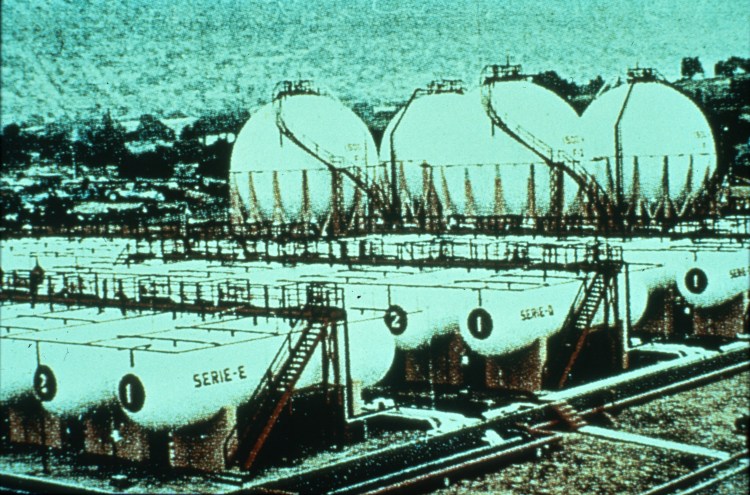
The night before the explosion, the air in San Juanico felt heavy and hot, as though it was boiling.1 But that feeling was nothing new. The residents of San Juanico, a neighborhood on the northern outskirts of Mexico City, had long lived with hot, stagnant air and the pungent smell of gas. They often fell asleep to the sounds of hissing steam and the occasional blowtorch-like roar of fire. That’s what life was like in a neighborhood built around a plant that stored liquified petroleum gas (LPG). Always looming in the background of their lives, sitting high above the tangle of makeshift houses with corrugated tin roofs, were six giant metal spheres of LPG. What should have been unmistakable signs of danger had instead become part of everyday life in San Juanico. Danger and fear had become normal. When the tanks exploded on the morning of November 19, 1984, the danger residents had learned to live with finally consumed the community.
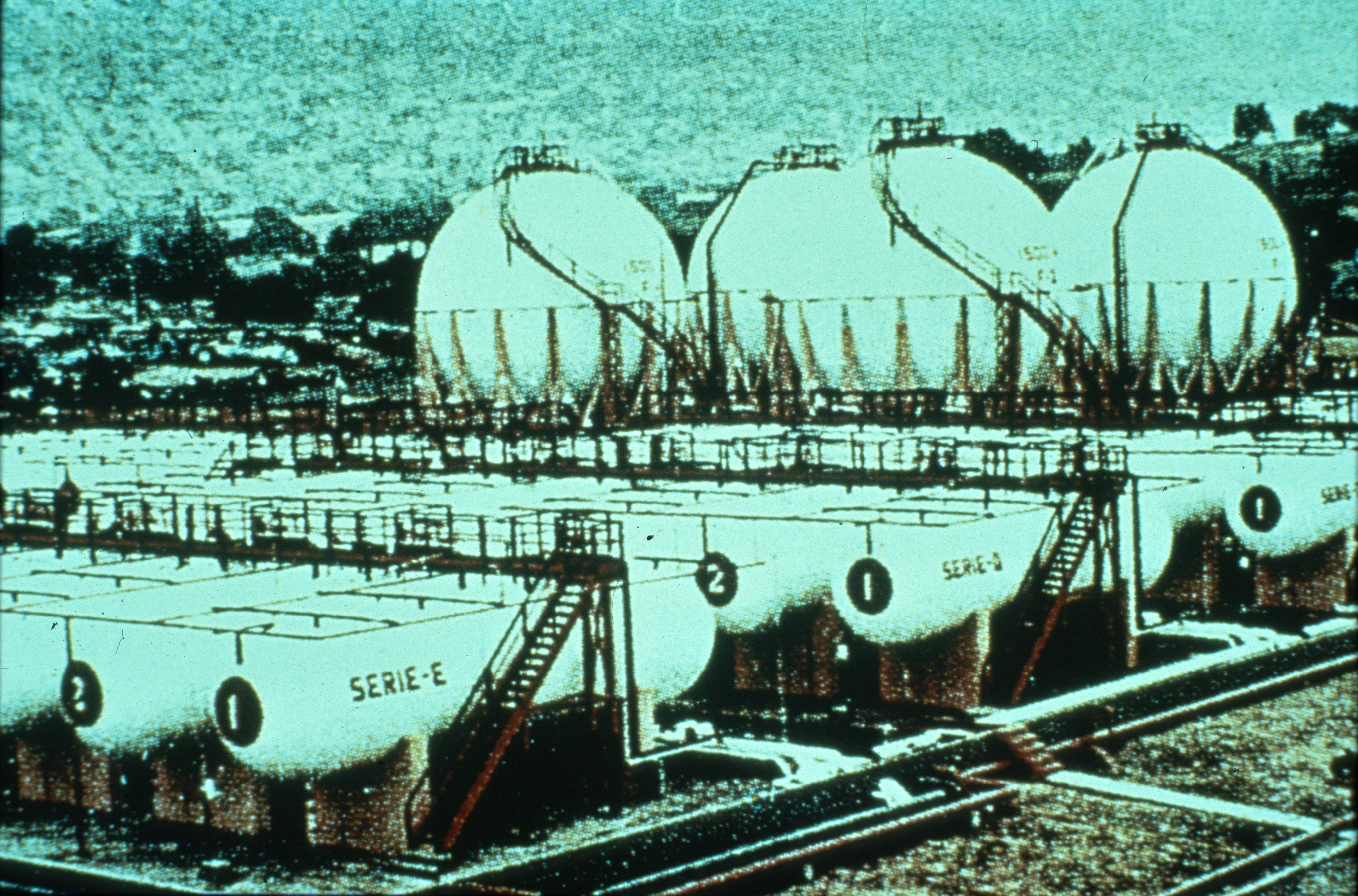
The conditions that made San Juanico dangerous were part of Mexico City’s explosive mid-century urban growth. In the four decades preceding the explosion, the capital swelled from a city of 1.7 million people into a metropolis of 13 million. The most hazardous industries found homes just over the Mexico City border in places like San Juanico.2 Ironically, San Juanico had once been an ejido, part of the promising post-Revolutionary land reforms intended to redistribute land to local residents. But by the 1950s, portions of that land were already being taken over to house the state’s industrial infrastructure.3 In 1962, when Petróleos Mexicanos, or Pemex, built the LPG storage plant, San Juanico was sparsely populated.
Pemex built it, and they came. It wasn’t that San Juanico came to house a minor storage facility; rather, one of Mexico’s major epicenters of energy infrastructure took root there. The plant operated around the clock, receiving gas from multiple states in underground pipelines and from hundreds of tanker trucks each day.4 Gas distributors, chemical industries, alcohol processing factories, and warehouses arrived to support the plant, while rural migrants poured into the area looking for work.5 The site was not prepared for the population boom that followed, nor were officials willing to ensure it met basic safety standards.
A vulnerable underclass emerged. By 1984, roughly 45,000 people lived in San Juanico, or nearly 100,000 counting those who overflowed into the surrounding hillsides. A crowded migrant and squatter settlement surrounded the plant. The Los Remedios River that once ran clear and supplied water to the community had turned black from industrial and human waste. The village had no water pipes, and all water for drinking, bathing, and fighting fires had to be brought into the area by donkeys or water trucks.6 A testimony from longtime resident Mario Zavaleta López explains, “we don’t have firefighters, even though we live surrounded by danger. We don’t have telephones to communicate when some tragedy happens.”7 By 1984, many homes stood only 300 feet from the plant, which was exactly the situation federal safety regulations were written to prevent.8 When the tanks exploded, San Juanico was engulfed by five or six massive fireballs, the largest stretching more than 1,000 ft in diameter. No one inside the fireballs survived.
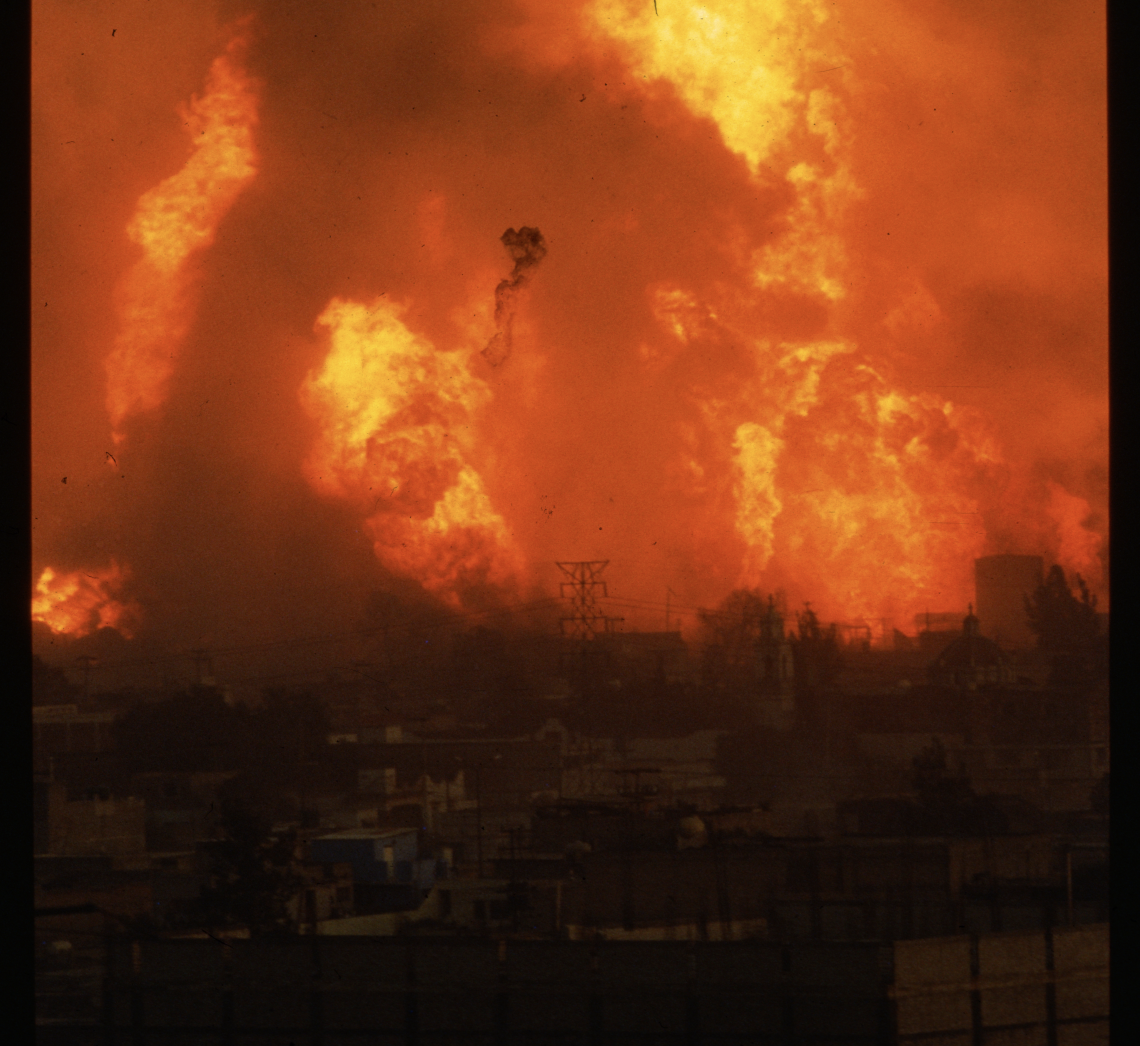
The explosion was sudden. The danger was not. Officials had known about the dangers for years, yet little was done to address them. Residents reported a major gas leak to officials in 1972 and were told that the cloud drifting toward homes was “fog, not gas.”9 Two years before the explosion, Fire Chief Saturino Ramos Soto helped investigate the Pemex facility and called it a “time bomb that can explode at any time.”10 In an interview, Ramos Soto explained that the San Juanico plant had no plans for maintenance and inspection, it had no gas alarms or water sprinkler systems, and there was no emergency plan in place for the employees or nearby residents. Pemex’s own experts warned the company three times in the months leading up to the explosion. Inspections in September, October, and November of 1984 revealed leaks in the pipelines, corrosion of the storage tanks, broken fire hydrants, and valves without pressure gauges, among other concerns.11 That morning one-third of Mexico’s entire liquid petroleum supply exploded.
The repeated exposure to flames, hissing steam, and the smell of gas made the danger feel ordinary. As Rob Nixon argues, such dangers often accumulate gradually over time, especially in communities on the margins.12 Residents were aware of the risks. According to Carlos Monsivais, residents knew their environment was hazardous and recounted that days before the explosion the smell of gas was stronger than normal.13 The increased smell of gas was unusual, not the gas itself. Years of living alongside the plant had blurred the line between everyday risk and impending catastrophe.
For officials, too, danger appears to have become routine. Inspection reports documented leaks, corrosion, broken hydrants, and malfunctioning equipment, yet little changed. The warning signs were so commonplace that they no longer signaled urgency. In the grand scheme of things, it wasn’t the small, daily tallies of injustices or facility mishaps that made people care; it took a spectacular catastrophe. Only after the San Juanico plant exploded and killed between 500 and 700 people and injured 7,000 more did the dangers residents had long lived with become impossible to ignore.
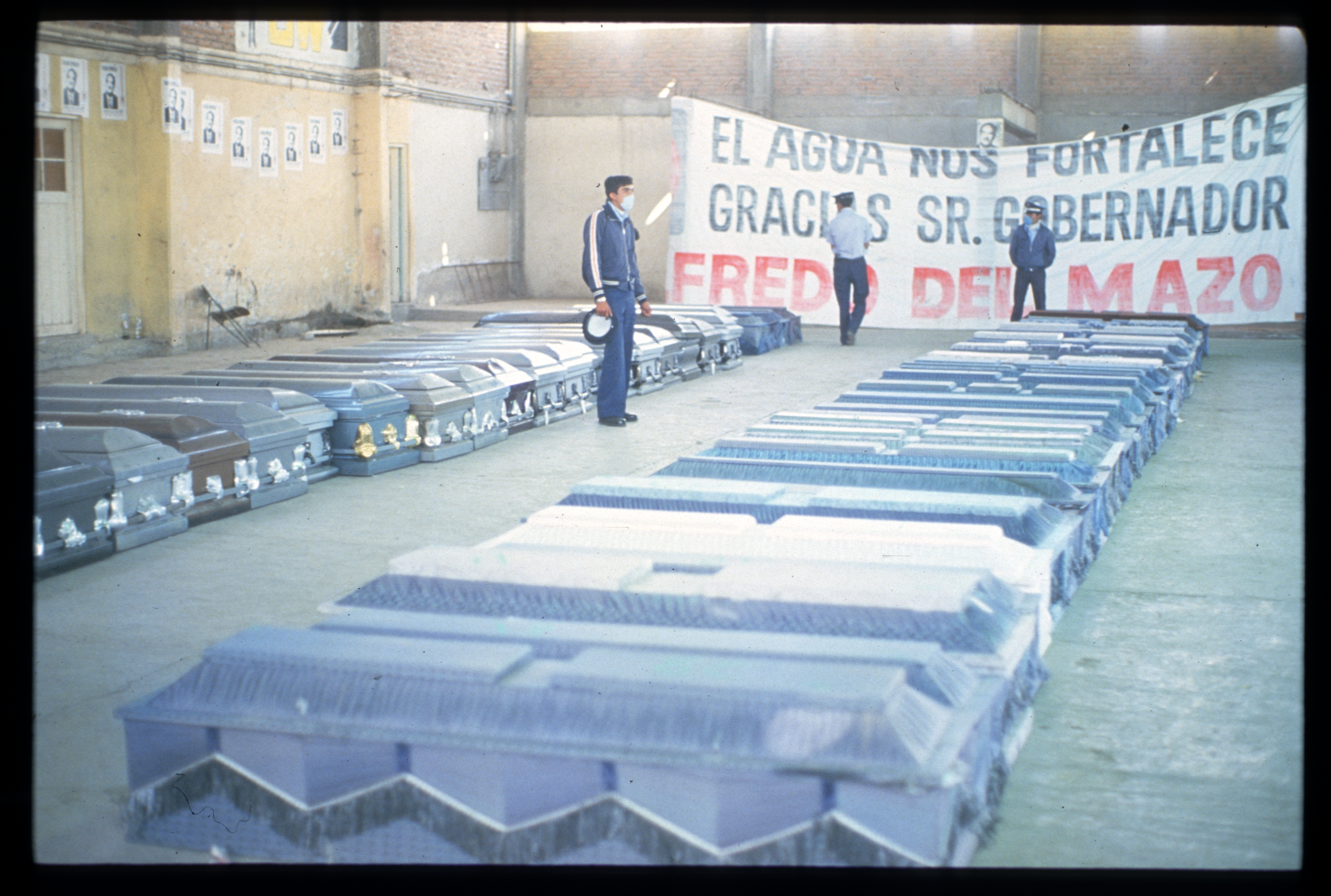
San Juanico was not uniquely dangerous. The dangers that surrounded it had become part of an urban landscape that remains familiar today. From refinery corridors in Louisiana to petrochemical towns in India to the world’s most climate-vulnerable communities, people learn to live with danger. At least until there’s a breaking point. For San Juanico, that came when entire families were burned alive in their beds. When the whole neighborhood became an inferno. When so many bodies had been so badly charred that only twenty-five victims could be positively identified before being buried in a mass grave. In a cruel twist of fate, many of the victims of the explosion had spent their lives on the margins, ignored in discussions of urban planning and safety regulations. Their deaths may have drawn international attention, but their bodies did not all recover their names.
Anna Rose is Professor of Latin American urban and environmental history at California State University, East Bay. She is the author of City on Fire: Technology, Social Change, and the Hazards of Progress in Mexico City, 1860–1910 (University of Pittsburgh Press, 2016) and is currently writing a book about the 1984 San Juanico disaster outside Mexico City.
- Germán Pérez García, El Día Que Madrugó El Diablo (México: Editorial Universo, 1985), 13.
↩︎ - Priscilla Connolly, “The Case of Mexico City, Mexico,” in Understanding Slums: Case Studies for the Global Report on Human Settlements 2003 (Nairobi: United Nations Human Settlements Programme, 2003), 5. ↩︎
- “Decreto que expropia por causa de utilidad pública una superficie de 1.32-03 hectáreas del poblado San Juan Ixhuatepec, en Tlalnepantla, Méx., en favor de la Secretaría de Marina,” Diario Oficial de la Federación (Mexico City), 9 de diciembre, 1959, 3–4. ↩︎
- Declaración de Israel Quiroz Franco, jefe de operaciones de la Terminal de Gas Licuado de Pemex en San Juan Ixhuatepec, 21 de noviembre de 1984, Dirección Federal de Seguridad (DFS), Explosión en San Juan Ixhuatepec (San Juanico), 19-Nov-1984, leg. 3/7, fols. 124–133, Archivo General de la Nación (AGN), Ciudad de México.
↩︎ - Miguel Cabildo, Homero Campa, and Emilio Hernández, “San Juanico Ya Era Viejo Cuando Pemex Puso Allí Su Planta,” Proceso 421 (25 de noviembre, 1984).
↩︎ - José Valderrama, “Está Apagado el Mechero de Seguridad de Pemex… A Ver si no Truena Eso,” Excélsior, 22 de Noviembre, 1984, Biblioteca Miguel Lerdo de Tejada, Mexico City.
↩︎ - Humberto Vivero Hernández, “El Siniestro de San Juan Ixhuatepec de 1984-1985: Cobuertura Médica y Sus Implicaciones Políticas, Sociales e Institucionales” (Licenciado en Historia y Sociedad Contemporanea, Universidad Autónoma de la Ciudad de México, 2015), 62, https://www.repositorioinstitucionaluacm.mx/jspui/bitstream/123456789/304/3/Humberto%20Vivero%20Hern%C3%A1ndez_HSC.pdf. ↩︎
- Instructivo para la Proyección y Ejecución de Obras e Instalaciones Relativas a Plantas de Almacenamiento de Gas Licuado de Petróleo, Diario Oficial de la Federación (Mexico City), 21 de diciembre, 1970, cap. III, “Ubicación, Linderos y Colindancias,” art. 1, https://dof.gob.mx/nota_to_imagen_fs.php?cod_diario=204162&pagina=0&fecha=21/12/1970 ↩︎
- “Boletín de Prensa,” emitido por vecinos de San Juan Ixhuatepec, 6 de diciembre de 1984, Dirección Federal de Seguridad (DFS), Explosión en San Juan Ixhuatepec (San Juanico), 19-Nov-1984, leg. 4/7, fols. 59–61, Archivo General de la Nación (AGN), Ciudad de México. ↩︎
- Alfredo Ramos Ramos, “Operan en el Centro Tlalnepantla Sustancias Altamente Explosivas,” Excélsior (11 de Mayo de 1982), 26-A. ↩︎
- Miguel Ángel Granados Chapa, “Tres Veces Desoyó Pemex la Voz de Alarma de sus Peritos,” Proceso, no. 423 (10 de Diciembre, 1984): 6–10. ↩︎
- Rob Nixon, Slow Violence and Environmentalism of the Poor (Cambridge: Harvard University Press, 2013).
↩︎ - Carlos Monsiváis, “Crónica de San Juanico: Los Hechos, Las Interpretaciones, Las Mitologías,” Cuadernos Políticos 42 (enero–marzo 1985): 96–97. ↩︎


Normalization of deviance is the silent killer in industrial safety.
LikeLike