


Editor’s note: This month we are featuring work by historians that extend Beyond the Urban. This is our second post in the series.
by Antonio Ramirez
My community college students and I have been documenting the history of Latinx people in Chicago’s suburbs since 2015. We call these sprawling, Latino-dense communities on the outskirts of the city “Chicagolandia.” Today, the majority of the Chicagoland’s Latinx population lives in these suburbs, not the city of Chicago. This massive Latinx suburbia has been dubbed by one scholar as “the Latino capitol of the Midwest.”[1] Over the years, our oral history work has become the Chicagolandia Oral History Project, an online multimedia archive designed to be accessible to broad public audiences.[2]
Our research has uncovered some incredible stories from the symbolic and geographic periphery of metropolitan America. This includes an interview I conducted with Mexican immigrant Rosendo Burciaga Saucedo in March 2020 in a small room of our local public library. When I first contacted Burciaga via WhatsApp, he immediately expressed an interest in sharing his story. He was politically active in Mexico but had to flee in the 1980s, eventually settling in Elgin, Illinois, where he’s lived as a well-known member of the community for decades. His interview brims with zeal and purpose.
A few days after my March interview with Burciaga, the nation shut down due to the COVID-19 pandemic. For more than a year after the interview, Burciaga filtered a steady stream of conservative Catholic memes, right-wing screeds, pro-Trump videos, and other kinds of propaganda in Spanish and English into our WhatsApp conversation. He even sent video in Spanish alleging COVID-19 was a hoax. I recoiled at most of it, but retained warm feelings towards Burciaga, after all there is no denying that his personal story remains incredible, almost unbelievable. Despite the fact that we disagreed on nearly every issue, during our several hours of conversation he seemed to be an impassioned man who loved his family and was proud of his activism in Mexico and the United States.
The fact that Burciaga brought his virulent, activist conservatism from Mexico to the United States shouldn’t have shocked or surprised me. Large segments of a variety of immigrant groups, including Poles, Vietnamese, and South Asians, have carried conservative political and social identities from their home countries to the United States. Scholars have shown that these transnational political actors create a consciousness that flows back and forth between their countries of origin and the United States, influencing and reshaping both.[3] Latin Americans and their American-born children are no exception, and studies of Hispanic conservatives make up some of the most exciting frontiers in Latinx historiography.[4]
During our interview, Burciaga told me how he and his brother Lorenzo were some of the oldest militants of the Partido Acción Nacional (PAN), Mexico’s national conservative political party.[5] Lorenzo’s activism began in 1952, not long after the party was founded. Rosendo joined the party in 1963 and founded the PAN in the northern Mexican state of Coahuila.[6]
In the 1930s and 40s, the PAN was led by Catholic loyalists, business elites, and middle-class sympathizers who were opposed to the left-wing populism of Mexican President Lázaro Cárdenas and his hegemonic Partido Revolucionario Institucional (PRI). PAN members trumpeted the classical liberal principles of free markets, religious freedom, and liberty but remained on the political margins for nearly a half century. It was not until the victory of Vicente Fox in the 2000 presidential election that the PAN became a truly national force.[7]
In the decades before Fox’s victory, Rosendo Burciaga and other panistas in Coahuila raised alarms about the corruption of Mexico’s long-dominant PRI party. The PRI’s power under the one-party system in Mexico, though, allowed it to ignore or bury most complaints. Burciaga said he had been imprisoned by PRI loyalists in almost every jail in every municipality of Coahuila. That included the rat-infested basement of the Museo Coahuila y Tejas, where Mexican independence leader Miguel Hidalgo was once held prisoner in the nineteenth century.[8] In that jail, Burciaga said, municipal police officers tied his hands behind his back and plunged his head into the prisoners’ toilet. They “waterboarded” him with mineral water. Later, he remembered, PRI officials offered him stacks of bills and blank checks to cease his political activities. Authorities would often arrest him on a Friday to prevent him from engaging in political activity over the weekend, he said.[9]

It was not until 1987, though, that Burciaga became a national figure of panismo during one of the most consequential presidential elections in modern Mexican history.[10] In October of that year, ten days before both the national election (and a local election in which he was a mayoral candidate), local police officers aligned with the PRI government kidnapped Burciaga. They beat him, stabbed him, and tortured him for hours. At one point, Burciaga said, they locked him in a cage with a lion. Fortunately, he eventually realized that the lion was old and harmless when it began softly licking the blood from his battered body. After torturing him, the officers left Burciaga for dead in the middle of a highway. He was naked and covered in stab wounds. His head was split open and bones protruded from his body. [11]
According to his oral history interview, numerous newspaper reports, and PAN propaganda, passersby found him barely alive. Doctors later declared him dead and covered him with a sheet. Hours later, while examining his “corpse,” a teenaged medical intern discovered faint vital signs. She alerted medical authorities who saved his life.[12]
Burciaga fled to the Chicago suburb of Elgin in 1988. In the 1980s and 90s, Elgin’s Mexican community was growing rapidly, as were Mexican immigration communities across the Chicago suburbs. Chicago’s Latino Institute showed that the region’s Latinx population grew 42 percent while the non-Hispanic population grew only 2.5 percent during the same years.[13] The suburban Latinx community grew three times as fast as that of the city in the 1980s. By 1990 one third of all Latinx residents of metro Chicago lived in the suburbs. In the 1990s more than 200,000 new Latinxs arrived in Chicago and 368,000 in the Chicago suburbs.[14] In fact, from the late twentieth century to the present, metropolitan Chicago’s suburban Latino communities have grown larger and faster than those in the city of Chicago, providing new challenges and opportunities for the area’s Latina/os.[15] When he arrived in Elgin in the late 1980s, Rosendo Burciaga joined this growing and vibrant Latinx community. His oral history is a window into the rapidly expanding and politically complex world of “Chicagolandia,” the Latinx-dense suburbs of greater Chicago.
Burciaga applied for political asylum and, in a case that was extremely rare for Mexican applicants, the US government granted it. His attorney described it as a “miracle.”[16] After spending several years recovering from his injuries, Burciaga founded the “Pro-PAN de Elgin,” an organization made up of PAN sympathizers in the Elgin area. The organization later became “Pro-PAN de Illinois” and was one of the first panista organizations based in the United States.[17] The party celebrated his story and nicknamed him the “icon of the PAN.” For decades the party deemed Burciaga the PAN’s “official representative” or its “president” in the United States.[18] His personal slogan, “rompieron mis huesos, pero mi espíritu jamás,” (they broke my bones, but can never break my spirit), became a PAN mantra. Burciaga even had it printed on his business cards.[19]
Though a lifelong committed panista and conservative Catholic, in Elgin Burciaga aligned himself with Democratic Party activists. Over three decades, he worked with organizations that successfully pushed to win drivers’ licenses and in-state college tuition for undocumented immigrants in Illinois. He supported campaigns for progressive Democratic candidates in the Elgin area (Figure 2). His wife Griselda led a group of parents who sued the Elgin school district for racial discrimination against both bilingual students and Black students.[20]
Burciaga did all this while simultaneously and proudly retaining his allegiance to the deeply Catholic social and economic conservatism of the PAN. During our interview he also expressed his support for Donald Trump.[21] Crossing a national border, though, seemed to allow Burciaga to advocate for causes associated with political liberalism in the United States while maintaining his Mexican right-wing religious and political ideologies.

Rosendo Burciaga’s story is a remarkable transnational tale that intertwines significant developments in US Latinx and Latin American politics. Like the stories of most working-class Latinx people in Chicagolandia, however, his is mostly unknown. After arriving in Elgin, he worked for decades as a school janitor. As a low-wage worker with five children to support, he normally worked between eighty and ninety hours a week. His schedule was so grueling his coworkers gave him the nickname “Mr. Overtime.”[22]
Stories like Burciaga’s rarely exist in official archives. But the power of these direct, one-on-one connections and conversations are the strength of the archive of oral histories of Chicagolandia that my students and I have created. Historian María Cotera argues that historical praxis—especially oral history—and the creation of an archive should be a process of encuentro (an encounter) rather than simply a repository of artifacts that are to be engaged by some unknown people in the future. This praxis challenges the traditional disciplinary markers of history, Cotera writes, and undermines traditional claims of objectivity.[23] Through the process of recuperation, through encuentro, we challenge the image of the archival collection as a permanently imposing, closely guarded, barely accessible building. The process of creating alternative archives also shines light on people and events left out of more traditional historical materials. The encuentro, Cotera suggests, is based around listening rather than telling. It is a dialogue between equals. And though, as Cotera warns, digital archives often reinforce existing social inequities, making history and archives available online can also highlight stories that have been silenced.[24]
The power of these encuentros forms the backbone of the Chicagolandia Oral History Project. An oral history interview places the narrator and interviewer in an intimate closeness—an acompañamiento—that is full of potential promise and pain.[25] In Fall 2020 I stopped receiving right-wing videos on WhatsApp from Rosendo Burciaga. I began to worry and decided to investigate. I learned from friends and Mexican news coverage that he had contracted COVID-19 in Mexico and was very ill. Soon after, he died in a Texas hospital.[26]
Burciaga was one of many dead. The pandemic, which had began around the time of my interview with him, laid bare the fact that immigrant workers in Chicagolandia were deemed “essential,” meaning they risked their health and lives to continue to do trivial, but profitable, work, such as packaging bags of nuts, taco seasoning, and snack cakes. These workers contracted COVID-19 at rates eight to nine times higher than white residents. They were hospitalized and died at significantly higher rates as well. By December 2020 the Kane County Health Department reported that in a county that was 33 percent Latinx, nearly 75 percent of COVID-19 deaths under age sixty were among Latinx residents.[27]
These workers, past and present, ensure the profitability of suburban industries. Their labor is the key component in the spiral of production and exploitation that is the primary reason these Latinx communities came to exist in the Chicago suburbs. Our Chicagolandia Oral History Project interviews show that the long history of contract labor in the region, combined with the deindustrialization of Chicago, the suburbanization of light manufacturing, and the rise of immigration from Latin America, led to the creation of a suburbanized, racialized Latinx precariat. Today this precariat subsidizes wealthy white suburban communities through a massive network of offices, industrial parks, and service industries whose profitability is made possible by Latinx labor.
Of course, though, the history of Chicagolandia is not just one of pain and exploitation. Interviews in the Chicagolandia Oral History Project show that the thousands of Latinx people who have lived and worked in the Chicago suburbs also worked hard, built sturdy lives, and consistently stood up for their own dignity. Together, they permanently remade one of largest metropolitan areas in the United States. Their lives are important. Their voices deserve to be heard and should be remembered.
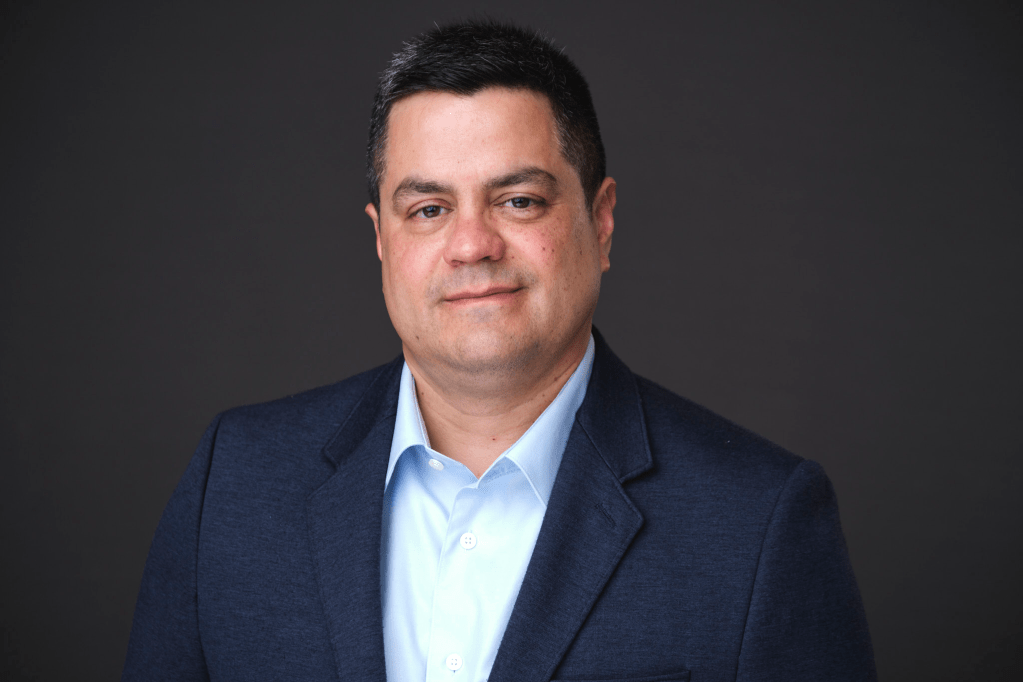
Antonio Ramirez is an associate professor of history at Elgin Community College in Illinois. He has worked as a historical consultant for the National Park Service, journalist, bilingual high school teacher, and educator of migrant agricultural workers. Ramirez also served as director of outreach and leadership development at a transnational migrant rights legal center in central Mexico and as a low-wage worker organizer in Chicago. His written work has been published in The Harvard Journal of Hispanic Policy, The Chronicle of Higher Education, The Nation, The Progressive, and others. He currently directs the Chicagolandia Oral History Project and the Center for Civic Engagement at Elgin Community College.
Featured image (at top): Latinx residents now make up nearly 10 percent of the suburb of Oak Park, Illinois, (pictured) and far greater numbers in other surrounding communities. “Oak Park neighborhood in suburban Chicago, Illinois” (ca. 1980-2006), Carol M. Highsmith, photographer, Prints and Photographs Division, Library of Congress.
[1] Timothy Ready and Allert Brown-Gort, The State of Latino Chicago: This is Home Now (South Bend: Institute for Latino Studies, Notre Dame, 2005), 6-14. John P. Koval, “Suburban Chicago: The Latino Capital of the Midwest,” Diálogo 14, no. 1, article 6 (2011). Notable treatments of Latinos, mostly Mexicans, in the Midwest are: Gabriela Arredondo, Mexican Chicago: Race, Identity, and Nation, 1916-39 (Urbana: University of Illinois Press, 2008); Zaragosa Vargas, Proletarians of the North: A History of Mexican Industrial Workers in Detroit and the Midwest, 1917-1933 (Berkeley: University of California Press, 1993); Dennis Nodín Valdés, Al Norte: Agricultural Workers in the Great Lakes Region, 1917-1970 (Austin: University of Texas Press, 1991); Juan R. García, Mexicans in the Midwest, 1900-1932 (Tucson: University of Arizona Press, 1996); Dennis Nodín Valdés, Barrios Norteños: St. Paul and Midwestern Mexican Communities in the Twentieth Century (Austin: University of Texas Press, 2000); Gilberto Cárdenas, ed. La Causa: Civil Rights, Social Justice, and the Struggle for Equality in the Midwest (Houston, TX: Arte Público Press, 2004); Gina M. Pérez, The Near Northwest Side Story: Migration, Displacement, and Puerto Rican Families (Berkeley: University of California Press, 2004); Lilia Fernández, Brown in the Windy City: Mexicans and Puerto Ricans in Postwar Chicago (Chicago: University of Chicago Press, 2012); Andrew Sandoval-Strausz, Barrio America: How Latino Immigrants Saved the American City (New York: Basic Books, Hachette Book Group, 2019).
[2] Chicagolandia Oral History Archive, chicagolandiaoralhistory.org.
[3] Dominic Pacyga, American Warsaw: The Rise, Fall, and Rebirth of Polish Chicago (Chicago: University of Chicago Press, 2019); Kieu-Linh Caroline Valverde, Transnationalizing Viet Nam, Community, Culture, and Politics in the Diaspora (Philadelphia: Temple University Press, 2012); and Sangay K. Mishra, Desis Divided: The Political Lives of South Asian Americans (Minneapolis: University Of Minnesota Press, 2016).
[4] See, for example, Geraldo Cadava, The Hispanic Republican: The Shaping of An American Political Identity, From Nixon to Trump (New York: Harper Collins, 2021) and Jerry Gonzalez, In Search of the Mexican Beverly Hills: Latino Suburbanization in Poswar Los Angeles (New Brunswick, NJ: Rutgers University Press, 2018). On moderate and far-right Latinx political actors, see Mike Amezcua, The Making of Mexican Chicago: From Postwar Settlement to the Age of Gentrification (Chicago: University of Chicago Press, 2022) and Cecilia Márquez, “The Long and Violent History of Anti-Black Racism in the Latino Community,” New York Times, May 12, 2023.
[5] Rosendo Burciaga Saucedo, interviewed by Antonio Ramirez, March 4, 2020, Chicagolandia Oral History Project archive.
[6] The party was founded by middle-class Mexicans in 1939 as a close affiliate of the Catholic Church, whose power was seriously challenged by the Mexican Revolution. Guy Poitras, “The Rise of the PAN,” Law and Business Review of the Americas 9, no. 2 (2003); “Reaffiliation of Don Lorenzo Burciaga Saucedo to the PAN,” video, in author’s possession; “Reportan muerte de Rosendo Burciaga,” Zócalo Monclova, October 31, 2020, https://www.facebook.com/watch/?v=266603011453401.
[7] Poitras, “The Rise of the PAN,” 2003.
[8] Secretaría de Cultura de Coahuila/Ayuntamiento de Monclova, “Datos Generales: Museo Coahuila y Tejas,” http://sic.gob.mx/ficha.php?table=museo&table_id=470.
[9] Burciaga interview, 2020.
[10] In 1988 Carlos Salinas de Gotari “defeated” Cuauhtémoc Cárdenas Solórzano, only son of Lázaro Cárdenas, by the narrowest margin since the 1917 constitution was established. The election was widely recognized as fraudulent, and Cárdenas founded the PRD the following year, while Salinas de Gotari implemented a brutal neoliberal austerity regime culminating in NAFTA in 1994. In 1988 the PAN’s candidate was Manuel Clouthier, a Mexican businessman who, despite placing third, cultivated PANista Vicente Fox, who eventually became the first non-PRI candidate to win the presidency after the Mexican Revolution. See Poitras, “The Rise of the PAN,” 2003 and David A. Shirk, Mexico’s New Politics: The PAN and Democratic Change (Boulder, CO: Rienner, 2005).
[11] Carmina Danini, “Mexican dissident gets asylum in U.S.,” San Antonio Express-News, November 17, 1991.
[12] Burciaga interview, 2020; Melita Marie García, “Tortured Activist Sees Hope,” Chicago Tribune, December 10, 1991; John Conroy, “Torture: A Center for the Treatment of Torture Victims Has Opened in Uptown,” Chicago Reader, August 4, 1988.
[13] “Latino Data Book: Vol. 1,” Latino Institute, 1991.
[14] In 2000 the Chicago CMSA had 9.2 million people; 1.5 million were Latinx. Suro and Singer, “Latino Growth in Metropolitan America”; Sandoval-Strausz, Barrio America, 230.
[15] Latino Policy Forum, Latinos in the Suburbs: Challenges & Opportunities (Chicago, 2023).
[16] Taylor Kristine Levy, “In Search of Refuge: Mexican Refugees and Asylum Seekers to the U.S. from 1980 to the Present,” (PhD diss., University of Texas at El Paso, 2014), 62-63.
[17] Fernanda Rivera, “Rosendo Burciaga: Perseguido Político,” entrevista con el reconocimiento Mérito Voluntario, Facebook video, April 2, 2020, https://www.facebook.com/watch/?v=251501845885923.
[18] PAN internal party documents in author’s possession.
[19] Business card in author’s possession.
[20] Burciaga interview, 2020; Emily Krone, “Families Added to the U-46 Bias Suit,” Daily Herald, May 13, 2006.
[21] Burciaga interview, 2020.
[22] Burciaga interview, 2020; “Especial: La historia de un asilado político,” magazine profile of Rosendo Burciaga, no date, in author’s possession.
[23] Cotera, “Nuestra Autohistoria,” 2018.
[24] Cotera, “Nuestra Autohistoria,” 2018.
[25] The concept of acompañamiento was developed in liberation theology and revolutionary circles in Central America, but is described best in English in Staughton Lynd, Accompanying: Pathways to Social Change (Oakland, CA: PM Press, 2013).
[26] Lidiet Mexicano, “Muere por Covid-19 Rosendo Burciaga, reconocido panista de Coahuila,” Vanguardia, October 30, 2020, https://vanguardia.com.mx/articulo/muere-por-covid-19-rosendo-burciaga-reconocido-panista-de-coahuila.
[27] “Deaths in Persons 60 Years and Younger,” PowerPoint Presentation, Kane County Health Department, December 16, 2020.
 The Metropole
It is very interesting to read an account of people you knew and interacted with. I knew Rosendo, (and Mike Noland before he was elected to the IL State Legislature) back in the day…I am sorry to hear of Rosendo’s passing. He was immediately likeable with a great smile and had a soft-spoken manner. The description of his seemingly split personality was not surprising. It seemed evident to me shortly after our first meeting that he had an agenda. He became involved in the local LULAC Council in Elgin and made countless efforts to pull the group in directions we were not interested in pursuing. The local LULAC Council #5236, no longer operating, wanted to address mostly local issues. Somehow Rosendo was able to offer a few Elginites an all-expense-paid trip, to join him at a meeting in Washington D.C. Short on details, a few or us went, including me. It turned out to be sponsored by a foreign religious cult. I think it was the “Moonies.” The best I can recall is that the speeches were delivered in a foreign language, so we all had earphones for English translation, but the rhetoric was scare and I took off the earphones and walked out as soon as I could. I wish I could remember more of the details, but it must have been somewhere around the late 1990s. He was driven by his deep convictions. May he rest in peace.
Dr. Antonio Ramirez continues to flesh-out and record and report the history of Latinos in the suburbs. Stories that would otherwise be lost forever. Thank you!
LikeLike