

In order to further the ability of emerging historians to use online platforms to teach beyond the classroom, market scholarship, and promote the enduring value of the humanities, The Metropole/UHA established the Graduate Student Blogging Contest in 2017. This year, our theme was Stumble; we asked students to submit pieces about efforts in urbanism that have stumbled and fallen; times when a stumbling block was overcome to implement a project or initiative; instances when communities or organizations stumble across an unexpected solution to an urban problem; or a time when you stumbled upon unexpected information in your research.
We were pleased to have a record number of entries; they represented a wide variety of not only topics and geographies, but interpretations of what a blog post can be. An online publication can provide an outlet for writing that enables creativity and experimentation—approaches that go beyond the standard journal article format. Online outlets can also serve as a place to discuss the process of research and writing, new and newly found sources and how to use them, and ideas and interpretations that are still in “testing” mode.
Our winning piece this year provides an example of this type of writing. According to our judges, Fauziyatu Moro’s essay Yan Zongo: A Research Note on Accra’s Strangers is, above all, “elegantly written” and “says so much about how we think about cities [and] how we write about people inhabiting and shaping these spaces.” It provides a glimpse into the historian’s method and an innovative methodology, as well introducing us to new ways to think about cities and write about people, while being “transnational in conceptualization and methodology.”
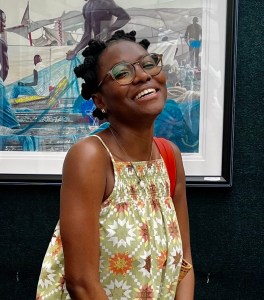
In a clear link to the contest’s theme, “Stumble,” Moro explains how a chance discussion about a photograph with an interview subject led her to better define her dissertation topic and research. As one of our judges stated, she “used some very basic material culture [the photograph] to open a portal to the everyday lives of migrants and their quotidian amusements.” And as another judge observed, her study “eschews the usual practice of privileging Eurocentric colonial archives” and their focus on labor relations and class “as primary sources in research on African urbanization,” and instead “shifts the focus to the leisure ideas and cultural practices of newcomers to the city…the lives of Accra’s poor and working residents.” Moro proceeds to tell us more about what she has learned, “making some really important points about migration and what we too often miss when studying it, from the actual destination of most migrants to the micro-level, non-economic, experiential aspects of human mobility.”
While there can only be one winner, the judges were impressed with the overall quality of the submissions and were particularly enamored with those that were able to connect history with the present—another important role of online writing. They pointed to Julia Haltom’s “Jackrabbiting” Away from Urban Spaces as “fresh, visually rich research” showing how a failed policy of the past lingers in the landscape, for us to “stumble across,” and were impressed with her use of historic and recent images illustrating its “[ramifications] in the built environment.” And the judges praised Bridget Kelly’s Annexation Politics & Manufacturing Blight in a Black St. Louis Suburb, because it “links past and present [and] engages deeply with the [local] space while also offering comment about how we might think about suburban development broadly.” One judge noted that Kelly “critically analyzes the motivations of white Kirkwood residents…and rejects [their] popular narrative of the process,” providing yet another example of “what historian Keeanga Yamahtta-Taylor describes as ‘predatory inclusion.’”
We really appreciate the work of our judges—Joe W. Trotter, Andrew Sandoval-Strausz, and Nancy Kwak—who read through all the entries and provided valuable feedback about what makes good online writing. Many of our graduate student authors will be presenting their work at the UHA conference in Pittsburgh later this month; we hope you will be able to join us there and learn more from them and our many other speakers.
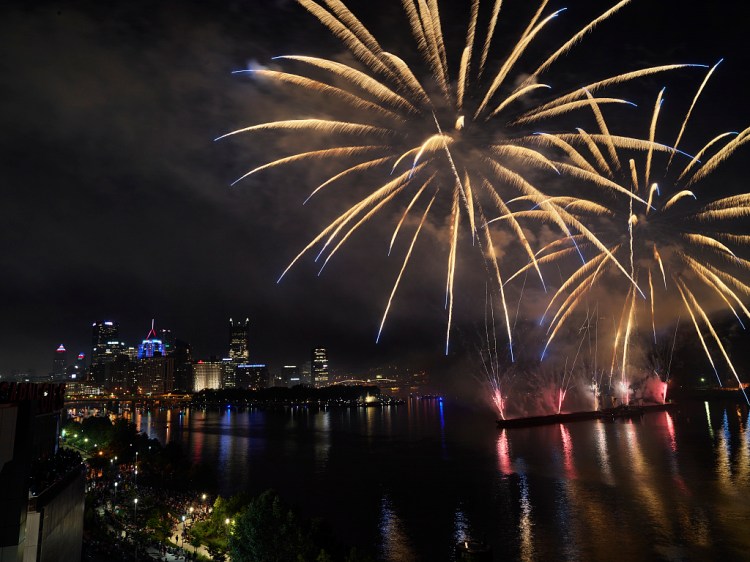
Featured image (at top): “Pittsburgh, Pennsylvania’s, renowned Independence Day (July 4) fireworks display erupts from barges towed to the area in Ohio River at The Point, where the Allegheny and Monongahela Rivers converge to form the Ohio. The pyrotechnics illuminate the city skyline and one of Pittsburgh’s two famous inclines up Mount Washington. Image taken from the Carnegie Science Center” (2019), Carol Highsmith, photographer, Prints and Photographs Division, Library of Congress
 The Metropole