


The theme for our 2023 Graduate Student Blogging Contest is “Stumble.” Our sixth entrant, Katelin Penner, discusses how leaders in real estate and finance forced New York City government to stumble into a relationship with them that has led the city to subsidize private development projects while reducing public services that support working-class residents. To see all entries from this year’s contest check out our round up here.
In 2019, Hudson Yards, a twenty-eight-acre megaproject hosting gleaming residential towers, a high-scale shopping mall, commercial space for financiers like BlackRock, and the Vessel, an architectural sculpture best known for its lack of suicide-prevention measures, opened its doors to the public.[1] Now home to some of the most exclusive real estate in New York City, with penthouse apartments listing for as much as $32 million, Hudson Yards received a $6 billion cocktail of public subsidies, including tax breaks, infrastructure improvements, and other development incentives, to create a playground for billionaires on Manhattan’s Far West Side.[2] Despite New York’s generous financial contributions to Hudson Yards, Stephen Ross, the billionaire real estate magnate behind the project, has been quick to criticize the city for “wasteful spending” and not caring enough about the wealthy.[3]
Yet Stephen Ross is not alone in his quest to shift New York City’s priorities towards protecting the profits of the rich and powerful—he is part of a larger movement of business executives, real estate developers, and Wall Street power brokers pushing the city to invest in profit, not people. Since the city’s dance with bankruptcy in the mid-1970s, elites like Stephen Ross have capitalized on crises to push forward a neoliberal economic agenda, characterized by tax breaks, public subsidies, and incentives for the rich, that leaves everyday New Yorkers behind. By issuing threats of bankruptcy, revenue loss, or even the complete withdrawal of capital, powerful executives in real estate and finance have successfully forced New York’s government to stumble into an unnaturally close relationship with the city’s economic elite, a relationship that has actively harmed generations of working-class New Yorkers.
For much of the twentieth century, New York City considered services such as firefighting, libraries, parks, healthcare, garbage collection, and high-quality public schools to be public goods, as they promoted social welfare.[4] The city’s public university system, CUNY, was once tuition free, allowing working-class students to get a high-quality education.[5] Public hospitals and clinics across the five boroughs allowed people from diverse communities to access healthcare at neighborhood-based facilities.[6] NYCHA, the city’s public housing authority, provided hundreds of thousands of New Yorkers with generally decent, well-managed housing at a low cost.[7] New York’s sprawling subway system provided transit access far superior to any other American city, allowing New Yorkers without a car to get around with relative ease.[8] Furthermore, civil rights protections for Black, Latine, and Asian New Yorkers, while still woefully inadequate, were much stronger than in the rest of the nation.[9] These diverse social programs helped to support the city’s most vulnerable residents, from single parents to recent immigrants to the working poor.
Despite its successes, by the mid 1970s, the city had stumbled in its efforts to maintain its social safety net as stagflation and a national recession threatened the city’s financial solvency. Many industries that supported the city’s tax revenues, like office construction, manufacturing, and securities, were particularly impacted by the recession, leaving New York City more vulnerable to default than other municipalities.[10] The final nail in the coffin was the emergence of an anti-urban federal government under president Richard Nixon, which cut community development programs by nearly $16 billion, forcing municipalities like New York to find new, risky forms of revenue to fund operations.[11]
As the city’s coffers had diminished over the previous decade, New York had become reliant on the sale of tax and bond anticipation notes, tradable financial assets sold by the city to access projected tax or bond revenues when these funds are not yet available, to balance its checkbook.[12] As New York became increasingly dependent on these sales, investment banks, the primary market for tax and bond anticipation notes, began to leverage their power to balance the municipal budget to win concessions from the city.[13] Executives at Merrill Lynch, Chase Manhattan, and First National Bank began threatening to withdraw from the tax and bond anticipation note sales if the city did not agree to high interest charges on the notes, deepening the city’s growing debt obligations.[14] Banks also began threatening divestment from the monthly tax and bond anticipation sale if the city did not make major cuts to social safety net programs like public hospitals, despite the fact that Chase Manhattan, one of the city’s two largest banks, had no issues selling two billion dollars of New York City bonds during the mid 1970s.[15]
In February of 1975, the city stumbled into a very different relationship with its financial institutions when a young banker named Charles Sandford pulled Banker’s Trust out of its deal to purchase tax anticipation notes.[16] As a result, the city’s major banks, who were not satisfied by efforts to cut municipal spending, came to a consensus that they, too, would join Banker’s Trust in refusing to purchase anticipation notes.[17] This coordinated refusal to purchase tax anticipation notes resulted in a financier-manufactured fiscal crisis, as New York City was left without the money it needed to meet its debt obligations for the first time.[18] That March, despite bank sales of approximately $2.3 billion in New York City securities between the summer of 1974 and March of 1975, no bank made a bid on the city’s tax and bond anticipation notes.[19] By refusing to bid on tax and bond anticipation notes, New York City financiers intentionally exacerbated the city’s financial crisis, both reducing the city’s immediate access to funds and elevating concerns about the city’s financial outlook.
Almost immediately, real estate executives, bankers, and insurance magnates began collaborating, hoping to take advantage of the fiscal crisis that they had created to gain substantial influence over the city’s operations. Investment banker Felix Rohaytn of Lazard Freres and insurance executive Richard Shinn of Metropolitan Life became directly involved in drafting state legislation that authorized the Municipal Assistance Corporation (MAC).[20] MAC, which was created through state law in June of 1975, was a semi-private corporation with the power to issue bonds and execute significant police power over the city’s finances and budget.[21] Most of the individuals appointed to MAC were power brokers in the financial industry, like Felix Rohaytn, former Bankers Trust director William Ellinghaus, investment banker George Gould, and retired New York Stock Exchange President John Coleman, leaving everyday New Yorkers without a voice in an institution vested with the power to reshape their city’s budget.[22] Newly vested with expansive powers, MAC mobilized the risk of potential default to push for draconian cuts to the city’s social spending, including a four-week furlough for municipal workers, a transit fare hike, the introduction of tuition charges at CUNY, and mass layoffs.[23]
Yet, to investment bankers, these cuts were only the beginning of the interventions necessary for the capitalist class to gain control over the city. While public sector unions invested in MAC bonds with their pension funds, many investors refused to purchase MAC bonds, believing the city had not yet done enough to cut its budget.[24] As a result, MAC’s bond capabilities proved to be inadequate to meet the city’s financial needs, and New York continued to careen towards financial insolvency, giving financiers leverage to advocate for harsher budgetary controls.[25] By September of 1975, the financiers effectively carried out a coup of the city government by pushing the state to authorize the Emergency Financial Control Board (EFCB), a seven-person body with final approval over city revenues, labor contracts, agency spending, and fiscal priorities.[26] Three out of the EFCB’s seven members were representatives of private industry, and these individuals naturally advanced an agenda that would increase their own bottom lines. Led by Rohaytn, these unelected power brokers, who even had the power to remove the democratically elected Mayor from office, forced the city to slash social spending, reduce taxes, and create economic incentive programs, laying the groundwork for a city that prioritized private profit over general welfare.[27]
Ironically enough, members of the EFCB did little to stop Mayor Abraham Beame from pushing for the renewal of New York City’s 421-a program in 1975, a near-total, multiyear tax abatement benefitting real estate developers who were constructing residential housing in New York City.[28] Instead, the capitalist class ardently supported major tax breaks for development, arguing that these “incentives” kept jobs in the city, despite the fact that many of these new projects displaced blue collar manufacturing jobs from the city.[29] The city’s J-51 program, a tax break initially intended to support the repair of distressed low-income housing, played a particularly large role in pushing out manufacturers; an expansion to the program at the end of 1975 allowed developers to obtain the benefit if they converted manufacturing, office, or hotel space to residential use.[30] By 1982, the year New York City produced its first balanced budget, these tax abatements had cost the city $2.3 billion in foregone tax revenues.[31]
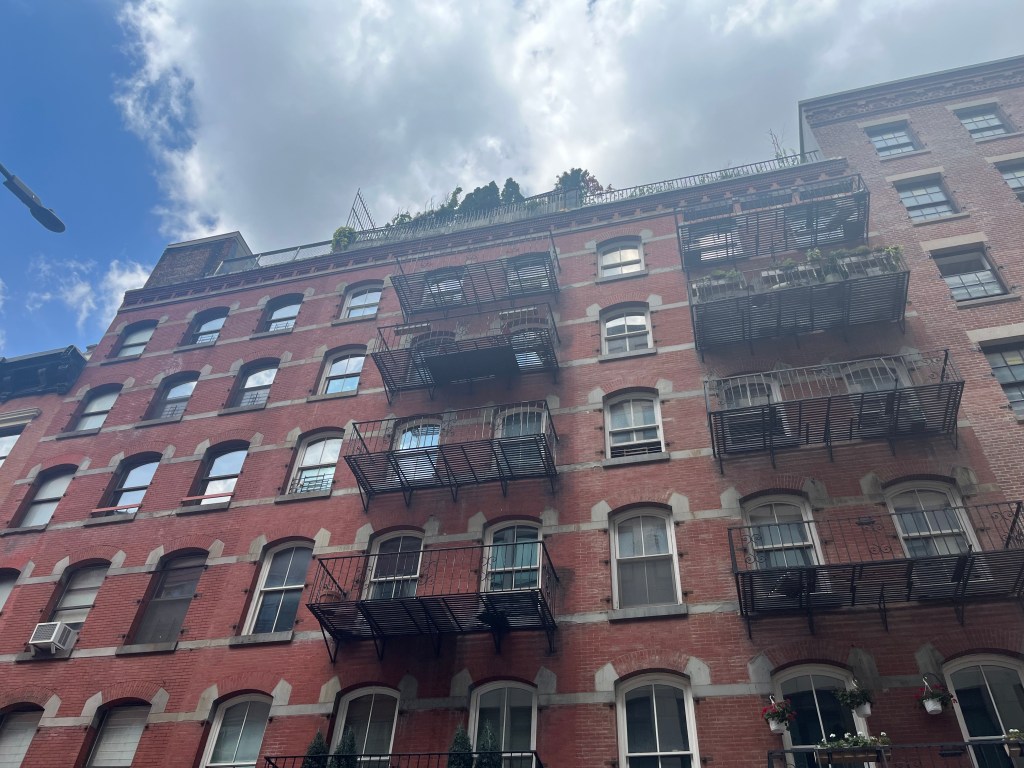
While the city continued to gut affordable housing programs, J-51 tax abatements were being passed out to developers on the Upper West Side to convert single room occupancy (SRO) hotels into luxury housing, essentially subsidizing the gentrification of an increasingly desirable neighborhood.[32] In traditionally industrial neighborhoods, like TriBeca and SoHo, and Long Island City, J-51 tax abatements incentivized property owners to convert warehouses into loft apartments, accelerating the decline of manufacturing across the five boroughs at a time when unemployment rates among non-college educated workers were continuing to rise.[33] To make matters worse, many of the city’s wealthiest developers received large tax abatements at a time when the city was still struggling to balance its budget—Donald Trump famously received a $50 million 421-a abatement for the construction of Trump Tower, a sixty-story luxury building by the southeastern end of Central Park, in 1984.[34]
At the same time, poor and working-class New Yorkers were struggling to find safe, affordable homes. Cuts to affordable housing programs at the city, state, and federal levels deeply limited New York’s low-income housing stock, and gentrification was beginning to ravage many neighborhoods.[35] Between 1975 and 1984, median rents nearly doubled, skyrocketing from $171 to $330 a month, while the rental vacancy rate hit a fifteen-year low.[36] Tenants in gentrifying neighborhoods with high concentrations of J-51 conversions, like the Lower East Side, Chelsea, and SoHo, often faced horrifying harassment from their landlords, who withheld repairs and even meddled with building locks in the hopes of emptying out their buildings.[37] While the city subsidized gentrification, countless New Yorkers moved in with family members to make rent, were displaced from their communities, or even faced homelessness, all while real estate profits rose to record highs.[38]
Almost fifty years after the fiscal crisis, New York City’s transformation by the forces of capital remains largely in place—the city’s investments still disproportionately benefit the wealthy, the powerful, and the elite. While massive, luxury developments like Hudson Yards still get multibillion-dollar tax abatements, the city has made few investments to protect vulnerable tenants in rapidly gentrifying neighborhoods like Bushwick, Chinatown, and Bedford-Stuyvesant.[39] While Wall Street profits continue to grow, CUNY is still charging tuition, despite the fact that up to 55 percent of CUNY students now report experiencing housing insecurity.[40] Mayors like Ed Koch, Rudy Giuliani, Michael Bloomberg, and Eric Adams, all of whom were elected in the decades following the financial crisis, became major boosters of the austerity agenda, seeking to court big business and real estate to the city instead of keeping working-class New Yorkers from losing their homes. After all these years, New York City is still investing in profit, not people.
Katelin Penner is a second-year graduate student at CUNY-Hunter College’s Masters in Urban Planning program studying social housing, community organizing, and vacant land in New York City. Her writing has been featured in the Hunter Urban Review, Next City, and City Limits. She is a proud resident of North Brooklyn, an amateur urban gardener, and an enthusiastic member of her local community board.
Featured image (at top): Hudson Yards, 2023, photo by Katelin Penner
[1] Amir Farjoun, “Dead Ascending a Staircase,” The Baffler, November 15, 2022, https://thebaffler.com/latest/dead-ascending-a-staircase-farjoun.
[2] Matthew Haag, “Amazon’s Tax Breaks and Incentives Were Big. Hudson Yards’ Are Bigger,” New York Times, March 9, 2019, https://www.nytimes.com/2019/03/09/nyregion/hudson-yards-new-york-tax-breaks.html.
[3] David Gelles, “The Billionaire behind Hudson Yards Thinks New York Is Too Expensive,” New York Times, August 27, 2020, https://www.nytimes.com/2020/08/27/business/stephen-ross-related-corner-office-trump.html.
[4] Kim Phillips-Fein, Fear City: New York’s Fiscal Crisis and the Rise of Austerity Politics (New York: Picador, 2018), 14-18.
[5] Phillips-Fein, Fear City, 244.
[6] Phillips-Fein, Fear City, 17.
[7] Nicholas Dagen Bloom, Public Housing That Worked: New York in the Twentieth Century (Philadelphia: University of Pennsylvania Press, 2009), 3-7.
[8] Nicholas Dagen Bloom, The Great American Transit Disaster: A Century of Austerity, Auto-Centric Planning, and White Flight (Chicago: The University of Chicago Press, 2023).
[9] Kim Moody, From Welfare State to Real Estate: Regime Change in New York City, 1974 to the Present (New York: New Press, 2007), 17.
[10] Moody, From Welfare State to Real Estate, 25.
[11] Keeanga-Yamahtta Taylor, Race for Profit: How Banks and the Real Estate Industry Undermined Black Homeownership (Chapel Hill: The University of North Carolina Press, 2021), 215-216.
[12] Phillips-Fein, Fear City, 42-43.
[13] Phillips-Fein, Fear City, 79-81.
[14] Phillips-Fein, Fear City, 81.
[15] Julian Brash, “Invoking Fiscal Crisis: Moral Discourse and Politics in New York City,” Social Text 76 (2003): 59–83, 64.
[16] Phillips-Fein, Fear City, 85-86.
[17] Phillips-Fein, Fear City, 84-86.
[18] Brash, “Invoking Fiscal Crisis,” 65.
[19] Securities were valued at $14,234,294,117.65 in 2023 dollars. Brash, “Invoking Fiscal Crisis,” 65; Phillips-Fein, Fear City, 86.
[20] Moody, From Welfare State to Real Estate, 35-36.
[21] Moody, From Welfare State to Real Estate, 36-37.
[22] “Missed Opportunity: Urban Fiscal Crises and Financial Control Boards,” Harvard Law Review 110, no. 3 (1997): 733–50, https://doi.org/10.2307/1342244, 740.
[23] Joshua Benjamin Freeman, Working-Class New York: Life and Labor since World War II (New York: New Press, 2001), 264-265.
[24] William K. Tabb, The Long Default: New York City and the Urban Fiscal Crisis (New York: Monthly Review, 1982), 26.
[25] Moody, From Welfare State to Real Estate, 37-38.
[26] Freeman, Working-Class New York, 265.
[27] Jonathan M. Soffer, Ed Koch and the Rebuilding of New York City (New York: Columbia University Press, 2012), 119.
[28] Benjamin Holtzman, The Long Crisis: New York City and the Path to Neoliberalism (New York: Oxford University Press, 2023), 171.
[29] Robert Fitch, The Assassination of New York (New York: Verso Books, 1993), 42-45.
[30] Matthew L. Schuerman, Newcomers: Gentrification and Its Discontents (Chicago: The University of Chicago Press, 2019), 63-64.
[31] Holtzman, The Long Crisis, 190-193.
[32] Holtzman, The Long Crisis, 174-175.
[33] Fitch, The Assassination of New York, 44-48.
[34] Holtzman, The Long Crisis, 188-189.
[35] Freeman, Working Class New York, 296-297.
[36] Holtzman, The Long Crisis, 185.
[37] Michael Decourcy Hinds, “The Bitter Battles over Harassment,” New York Times, May 27, 1984, https://www.nytimes.com/1984/05/27/realestate/the-bitter-battles-over-harassment.html.
[38] Freeman, Working Class New York, 296-297.
[39] Neil Smith, “Gentrification and the Rent Gap,” Annals of the Association of American Geographers 77, no. 3 (1987): 462-465, https://doi.org/10.1111/j.1467-8306.1987.tb00171.x, 462.
[40] David Brand, “Nonprofit’s Proposal Would Provide Apartments to Homeless CUNY Students,” City Limits, July 20, 2021, https://citylimits.org/2021/07/20/nonprofits-proposal-would-provide-apartments-to-homeless-cuny-students/.
 The Metropole