

We had an amazing response to our call for submissions to the Seventh Annual Graduate Student Blogging Contest. Our theme this year, Stumble, resonated with nine scholars, who embraced our challenge to write about efforts in urbanism that have stumbled and fallen; times when a stumbling block was overcome to implement a project or initiative; instances when communities or organizations stumble across an unexpected solution to an urban problem; or a time when you stumbled upon unexpected information in your research. Beginning tomorrow and extending over the next five weeks, we will be presenting their work.
Our authors delve into the history of a diverse range of subjects, including: anti-urban homesteading in the mid-twentieth century; tourism and the ways cities welcome and discourage different types of visitors; the mid-twentieth-century origins of religious conservatism; methodologies for studying intra-Africa migration; race and suburban development; the influence of finance and real estate interests on New York City’s budget priorities; and Progressive Era settlement houses—as well as commemorating the yet-overlooked work of a nineteenth-century architect and a Progressive-Era playground advocate.
If you haven’t been able to do much summer travel, these pieces will take you along on research trips to Rome and Florence, Italy, and Accra, Ghana, and transport you into the history of Dallas; New York City; Evanston and Canton, Illinois; Pittsburgh; suburban St. Louis; and the Mojave Desert. We hope you join us on this journey!
We also would like to thank our contest judges, Joe W. Trotter, Andrew Sandoval-Strausz, and Nancy Kwak, who will have their work cut out for them this year, as well as our team of assistant editors for their insightful help polishing these pieces. And of course, this contest would not exist without the research, writing, and revision done by our innovative and creative graduate student members.
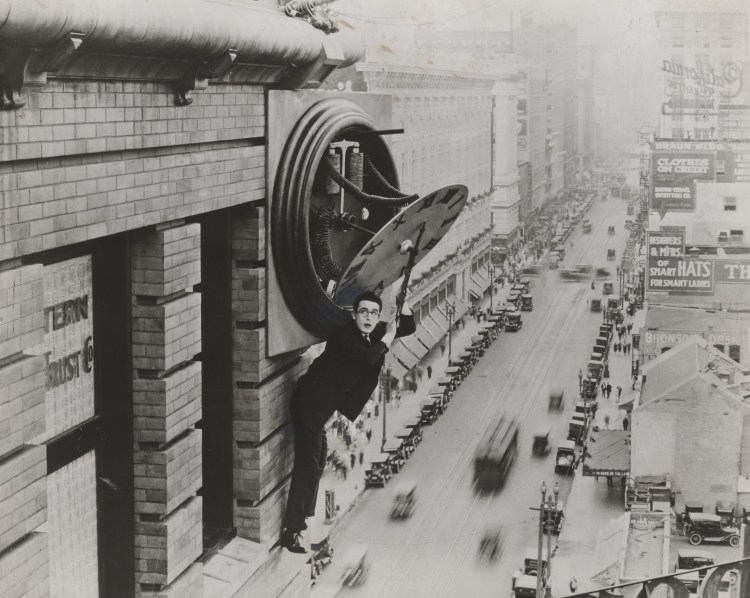
Featured Image (at top): Harold Lloyd in Safety Last (1923). National Portrait Gallery, Smithsonian Institution.
 The Metropole