Holtzman, Benjamin. The Long Crisis: New York and the Path to Neoliberalism. New York: Oxford University Press, 2021. Reviewed by Claire Dunning The notion of “crisis” may feel overplayed these days but remains pertinent when upheavals related to climate, democracy, health, and white supremacy continue to go unchecked. As governments respond too slowly or not […]
Diamond, Andrew J. and Thomas J. Sugrue, eds. Neoliberal Cities: The Remaking of Postwar Urban America. New York: New York University Press, 2020. Reviewed by Tracy Neumann Compared to their urbanist counterparts in other disciplines, urban historians—or at least Americanists—have been slow to grapple with neoliberalism. Some avoid the terminology because very few historical actors […]
“He sits upon the landlord’s operating table, the needle of the nation sucking his soul.” —Henry Dumas Taylor, Keeanga-Yamahtta. Race for Profit: How Banks and the Real Estate Industry Undermined Black Homeownership. Chapel Hill, NC: The University of North Carolina Press, 2019. By Eric Michael Rhodes When Michael Bloomberg blamed the end of redlining for […]
Samuel Stein. Capital City: Gentrification and the Real Estate State. Brooklyn, NY: Verso, 2019. By Amanda Boston The process of exclusionary development we know as “gentrification”—and the working-class communities and cultures it displaces—has preoccupied urban residents and other stakeholders for decades. Scholars have explored transformation of the process from a scattered residential phenomenon into a […]
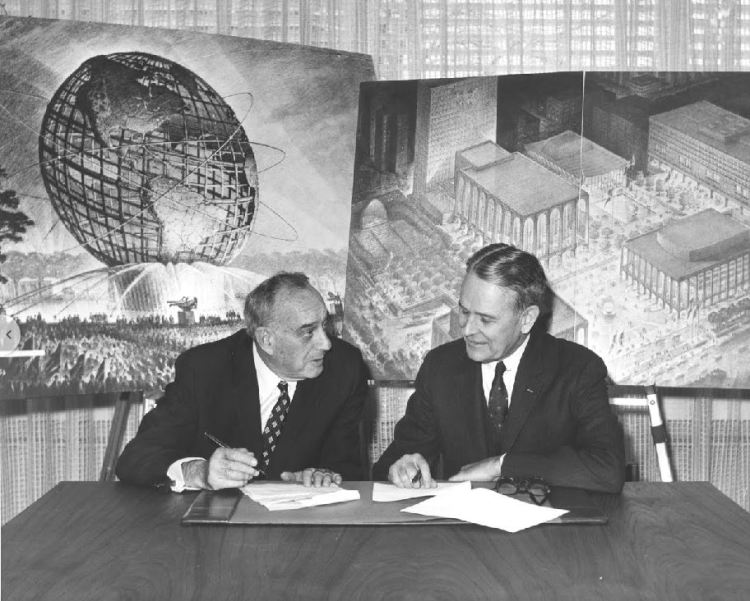
This piece by Katie Uva is the first entrant into the Third Annual UHA/The Metropole Graduate Student Blogging Contest. We invited graduate students to submit essays on “the birth, death, or aging of institutions, neighborhoods, cities, or suburbs,” and Uva hones in on the life cycle of the New York World’s Fair to argue that […]
Eric Häusler Ph.D. student, Department of History, University of Bern Researcher, Swiss National Science Foundation Sinergia-Project Doing House and Family. Material Culture, Social Space and Knowledge in Transition (1700-1850) @lurker85 Describe your dissertation research. What about it drew your interest? Thanks to the existence of thousands of bankruptcy records, a fascinating institutional arrangement, the […]
[Editor’s note: As part of our Book Review Series, The Metropole provides authors a chance to respond to reviews by The Metropole of their work. This week, New York University Professor Kim Phillips-Fein responds to the review of her work Fear City: New York City’s Fiscal Crisis and the Rise of Austerity Politics. You can […]
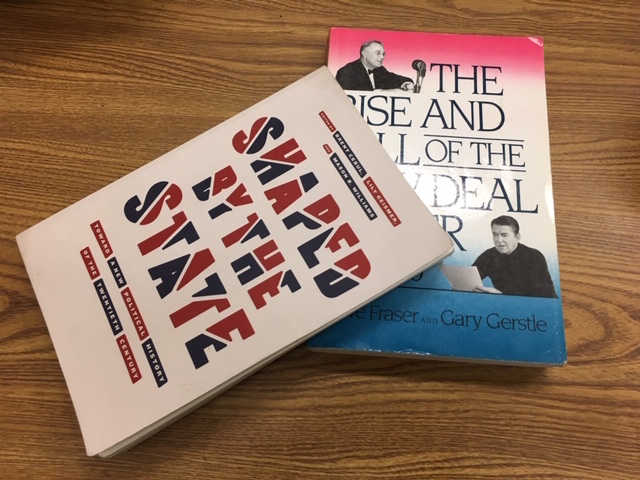
We close out the Metropole’s coverage of the new edited volume, Shaped by the State: Toward a New Political History of the Twentieth Century with a discussion of neoliberalism and its importance in thinking about urban history. Working backwards, Maryland historian David M.P. Freund explores economic policy notably the government’s role as “monetary sovereign,” in our third […]
Our focus on the new edited volume, Shaped by the State: Toward a New Political History of the Twentieth Century continues as University of Maryland historian David M.P. Freund explores economic policy notably the government’s role as “monetary sovereign.” Freund recently discussed his research and the value of applying heterodox economic analysis to the study of […]
“Political history — a specialization in elections and elected officials, policy and policy making, parties and party politics — was once a dominant, if not the dominant, pursuit of American historians,” professors Frederick Logevall and Kenneth Osgood noted in a controversial 2016 New York Times editorial. “But somewhere along the way, such work fell out […]




 The Metropole