[Editor’s note: As part of our Book Review Series, The Metropole provides authors a chance to respond to reviews by The Metropole of their work. This week, New York University Professor Kim Phillips-Fein responds to the review of her work Fear City: New York City’s Fiscal Crisis and the Rise of Austerity Politics. You can […]
Susan Opotow and Zachary Baron Shemtob, editors, New York after 9/11. New York: Fordham University Press, 2018. For anyone in New York that day, the terrorist attacks of September 11, 2001 remain very much in the present. But memory and raw emotions fade. Young men and women joining the armed forces today were not even […]
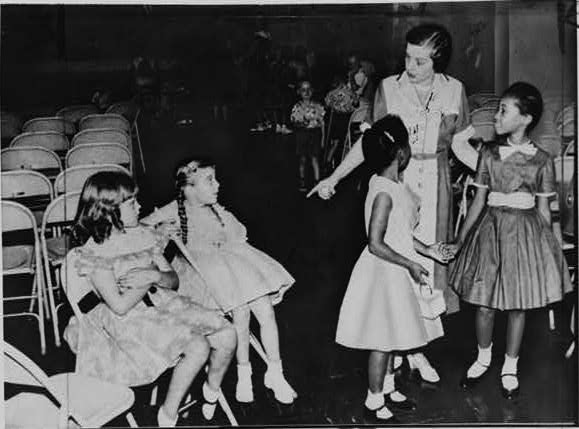
Ansley T. Erickson, Making the Unequal Metropolis: School Desegregation and Its Limits (Chicago: University of Chicago Press, 2016). 390 pp. notes, index. ISBN 978 0 226 02525 4. Reviewed by Walter C. Stern For decades the relationship between the value of housing and the desirability of schools has been practically inescapable. Realtors hype or pooh-pooh […]
Andrew Pope Lecturer in History & Literature Harvard University @popeand Describe your current research. What about it drew your interest? My current project, Living in the Struggle: Black Power, Gay Liberation, and Women’s Liberation Movements in Atlanta, 1964-1996, explores how poor and working class residents of Atlanta came to identify mutual interests across traditional lines […]
The Metropole/Urban History Association Graduate Student Blogging Contest exists to encourage and train graduate students to blog about history—as a way to teach beyond the classroom, market their scholarship, and promote the enduring value of the humanities. This summer’s blogging contest theme is “Life Cycles.” We invite graduate students to submit essays about the birth, […]
Call for Papers: 2020 Latrobe Chapter Symposium Race, Ethnicity, and Architecture in the Nation’s Capital In 2019, the Washington Post reported that the nation’s capital had the highest intensity of gentrification of any American city, with more than 20,000 African Americans displaced from low-income neighborhoods from 2000 to 2013. For architectural and urban historians, the […]
We close out the Metropole’s coverage of the new edited volume, Shaped by the State: Toward a New Political History of the Twentieth Century with a discussion of neoliberalism and its importance in thinking about urban history. Working backwards, Maryland historian David M.P. Freund explores economic policy notably the government’s role as “monetary sovereign,” in our third […]
Peter L. Laurence Associate Professor of Architecture Clemson University School of Architecture twitter.com/peterlaurence facebook.com/becomingjanejacobs Describe your current research. What about it drew your interest? Much of my research has been concerned with the presence (and absence) of urbanism in architectural theory and in architects’ thinking in general. This led me, more than twenty years ago, […]
As The Metropole enters its third year of publishing, we are looking to grow! We want to bring readers more great content, and we want to include more devoted urbanists in the blog’s operations–on the editorial side and with marketing and publicity. Why join in this work? Well, as UHA Member Walter Greason pointed out […]
Our focus on the new edited volume, Shaped by the State: Toward a New Political History of the Twentieth Century continues as University of Maryland historian David M.P. Freund explores economic policy notably the government’s role as “monetary sovereign.” Freund recently discussed his research and the value of applying heterodox economic analysis to the study of […]







 The Metropole