
This is the sixth post in our themed series, Cities at Play.
By Desiree Beare
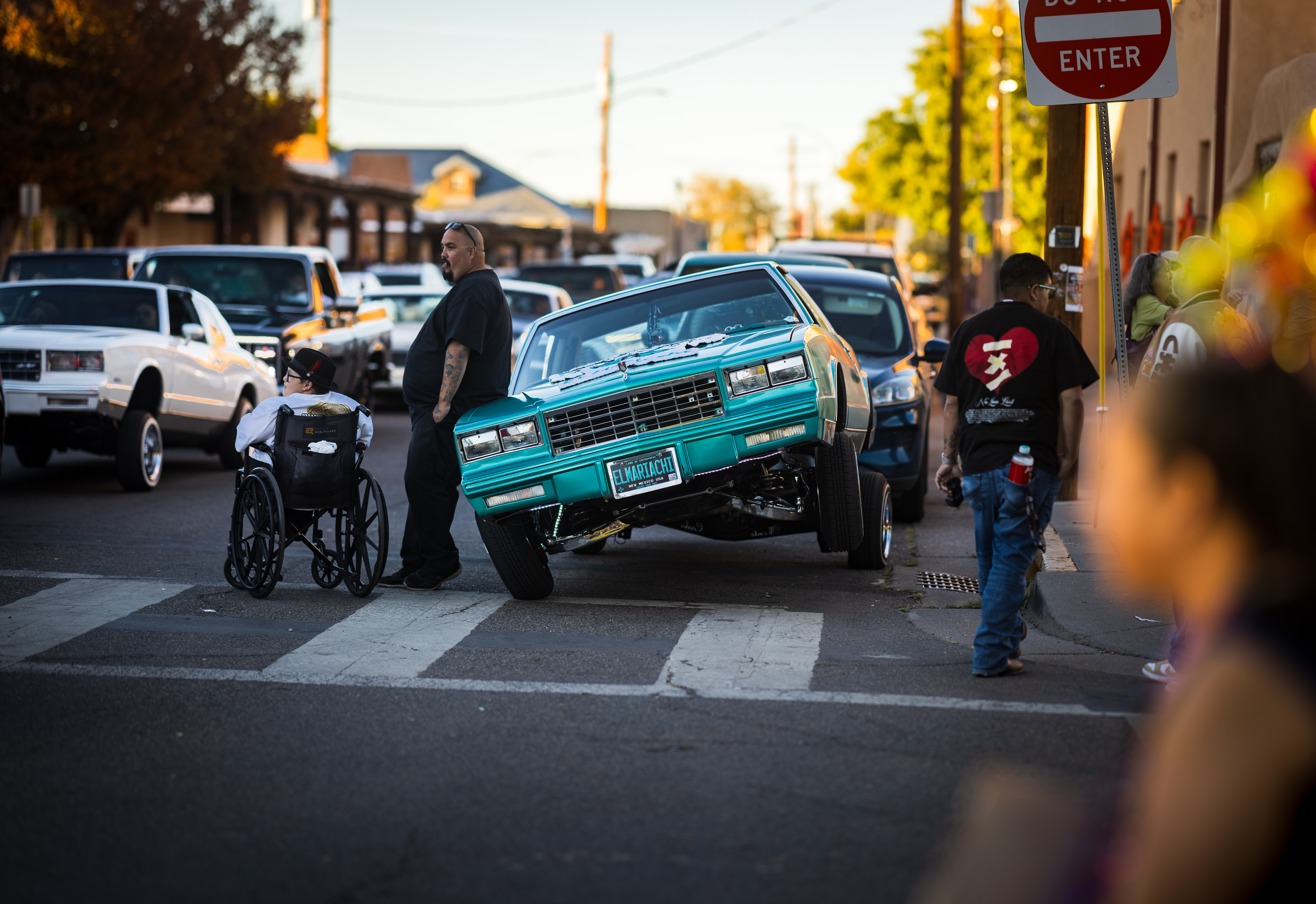
On summer evenings along Central Avenue in Albuquerque, the city’s historic stretch of Route 66 becomes something more than a transportation corridor: it becomes a stage. Lowriders glide slowly past neon signs and crowded sidewalks, their chrome catching the desert sun as hydraulic suspensions lift and settle in rhythmic motion. Music spills from open windows while drivers exchange nods and spectators pause to watch the procession. What might appear to outsiders as a casual car cruise is in fact a carefully choreographed form of leisure and cultural performance. For nearly eight decades, Albuquerque’s lowrider community has transformed the city’s streets into spaces of play, creativity, and identity, using the infrastructure of the modern automobile as a stage for Chicano artistry and social life. In these moments, the streets belong to the people moving through them, shaped by art, visibility, and community.
Lowrider culture emerged in Mexican American communities of the American Southwest during the mid-twentieth century, particularly in California and New Mexico, as young Chicanos in the post World War II era began modifying cars to ride lower to the ground in deliberate contrast to the automobile industry’s emphasis on speed and performance.1 In the decades following the war, increased access to industrial jobs, mechanical training, and surplus materials provided many working-class Mexican American youth with both the skills and resources to customize vehicles, turning everyday cars into sites of experimentation and creativity. As Ben Chappell notes, lowriders transformed “mass-produced automobiles into expressions of individuality and cultural identity.”2 Emerging alongside broader patterns of segregation, labor inequality, and cultural marginalization, these practices reflected a generation of Mexican American youth seeking what George J. Sánchez describes as “a sense of identity and cultural belonging” within a society that often excluded them.3 Embracing a philosophy often described as “low and slow,” or bajito y suavecito, lowriders prioritized craftsmanship, style, and presence over velocity, transforming Chevrolet Fleetlines and Impalas, Mercury Eights, and other American sedans into mobile works of art through lowered suspensions, intricate paintwork, and gleaming chrome.4
Although lowrider culture originated in the post–World War II era, the political and cultural currents of the 1960s and 1970s transformed it from a localized subculture into a highly visible expression of Chicano identity and community formation. The Chicano Movement had galvanized Mexican American communities across the United States around issues of labor rights, education, land, and cultural self-determination.5 The movement emphasized orgullo (pride) in Chicano heritage, asserting Indigenous and mestizo heritage at a time when assimilationist pressures and racial discrimination often rendered that identity invisible or marginalized.6
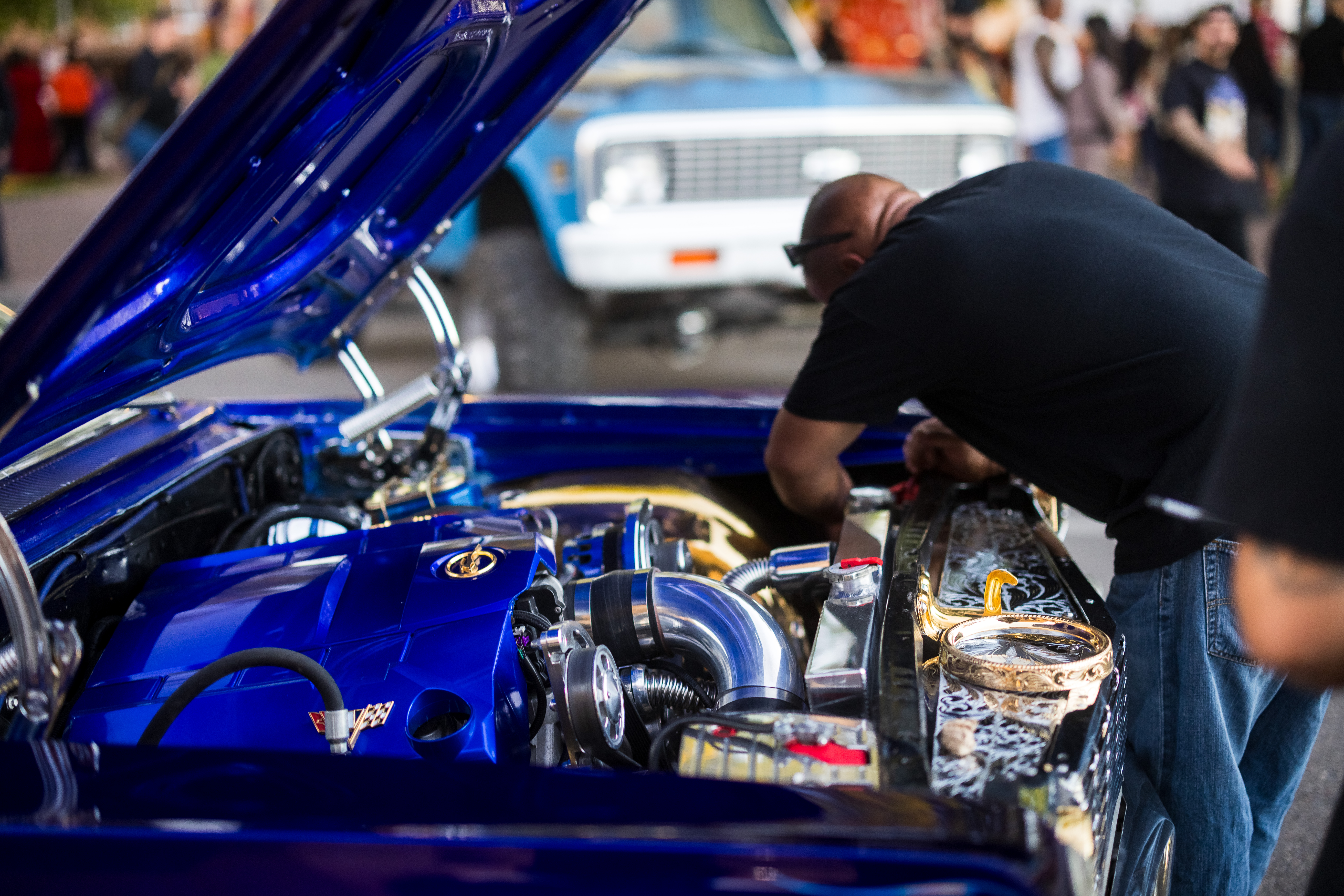
Within this broader political and local context, lowriding developed into a distinct visual language through which the ideals of the movement were carried into everyday life. Cars featured layered candy paint, intricate pinstriping, and detailed murals depicting Aztec iconography, the Virgen de Guadalupe, barrio scenes, and tributes to family members, visualizing the movement’s call to reclaim Indigenous heritage, affirm spiritual and cultural identity, and honor community memory. Interiors were often upholstered in velvet or leather, while chrome details emphasized craftsmanship and care, reflecting a commitment to pride and excellence in the face of marginalization. Hydraulic systems, originally adapted from aircraft technology, allowed drivers to raise and lower their cars, initially in response to laws prohibiting excessively lowered vehicles, but quickly evolving into a form of performance that introduced rhythm, movement, and spectacle. Music projected from customized sound systems often accompanied the synchronized motion of cruising and hopping cars, adding a sonic dimension to the visual choreography of the street. Motion itself became expressive, with slow, deliberate cruising asserting presence rather than speed or assimilation.
Nowhere is this transformation more visible in Albuquerque than along Central Avenue, especially the historic Route 66 corridor that cuts through Downtown, Nob Hill, and the city’s older central neighborhoods. By the mid-twentieth century, Central had become one of Albuquerque’s primary commercial and social arteries, linking businesses, entertainment districts, and residential communities across the city. Yet as suburbanization and urban renewal reshaped Albuquerque in the postwar decades, investment and commercial activity increasingly shifted away from the urban core toward newer developments in the Northeast Heights and other expanding suburban areas.7 At the same time, redevelopment projects and changing economic patterns contributed to the displacement and marginalization of many working-class and Chicano communities concentrated along Central’s older corridors. As middle-class white residents increasingly relocated their shopping, recreation, and social life elsewhere, portions of Central became more closely associated with working-class, youth, and Chicano public culture.8 The avenue’s meaning consequently shifted from a broadly shared commercial corridor to a space where visibility, gathering, and movement carried heightened cultural and political significance.
By the late 1960s and into the 1970s, in parallel with the Chicano Movement and in the wake of local tensions such as the 1971 Albuquerque Uprising, Central Avenue increasingly emerged as a locus for lowrider cruising. In Albuquerque, where cruising along Central became closely associated with Chicano youth culture, the avenue offered a highly visible space for collective gathering and cultural expression at a moment when Mexican American youth were frequently subject to heightened scrutiny in public space. Cruising transformed mobility into performance, reshaping the city’s primary commercial corridor into a stage for visibility, community, and identity. The avenue’s identity as part of Route 66, long mythologized as a symbol of American freedom and the open road, added another layer of meaning, even as lowriders reinterpreted that symbolism through slower, more deliberate movement that emphasized presence over destination.
This increasing visibility and concentration of lowrider activity was often met with suspicion and hostility from city officials and local media, a pattern that was reinforced through popular culture. Lowriders were increasingly framed in public discourse as symbols of disorder. Films such as Boulevard Nights (1979) and Colors (1988) helped popularize visual associations between customized cars, Chicano youth, and gang violence, reinforcing a narrow and often racialized image of urban life in the American Southwest. Similar rhetoric appeared in local reporting and municipal discussions surrounding cruising, where gatherings along major corridors such as Central Avenue were described in terms of “congestion, noise, and criminal activity associated with repeated cruising,” framing lowrider visibility as a public safety problem rather than a cultural practice.
In Albuquerque, these perceptions were formalized through municipal policy and policing. In 2005, the city enacted a “Cruising in Public Streets” ordinance restricting repeated passes along routes such as Central Avenue, enforced through citations and increased police monitoring. City officials and law enforcement frequently framed cruising in terms of traffic control and public safety; as one local report noted, the ordinance was intended to address “congestion, noise, and criminal activity associated with repeated cruising.”9 Enforcement practices targeted the visible markers of the culture: slow-moving customized cars, groups of young men, and stylized dress such as bandanas, khakis, and pressed shirts. Rather than focusing solely on discrete violations, these measures operated through the regulation of space and visibility, positioning lowriders as suspect within the urban landscape.
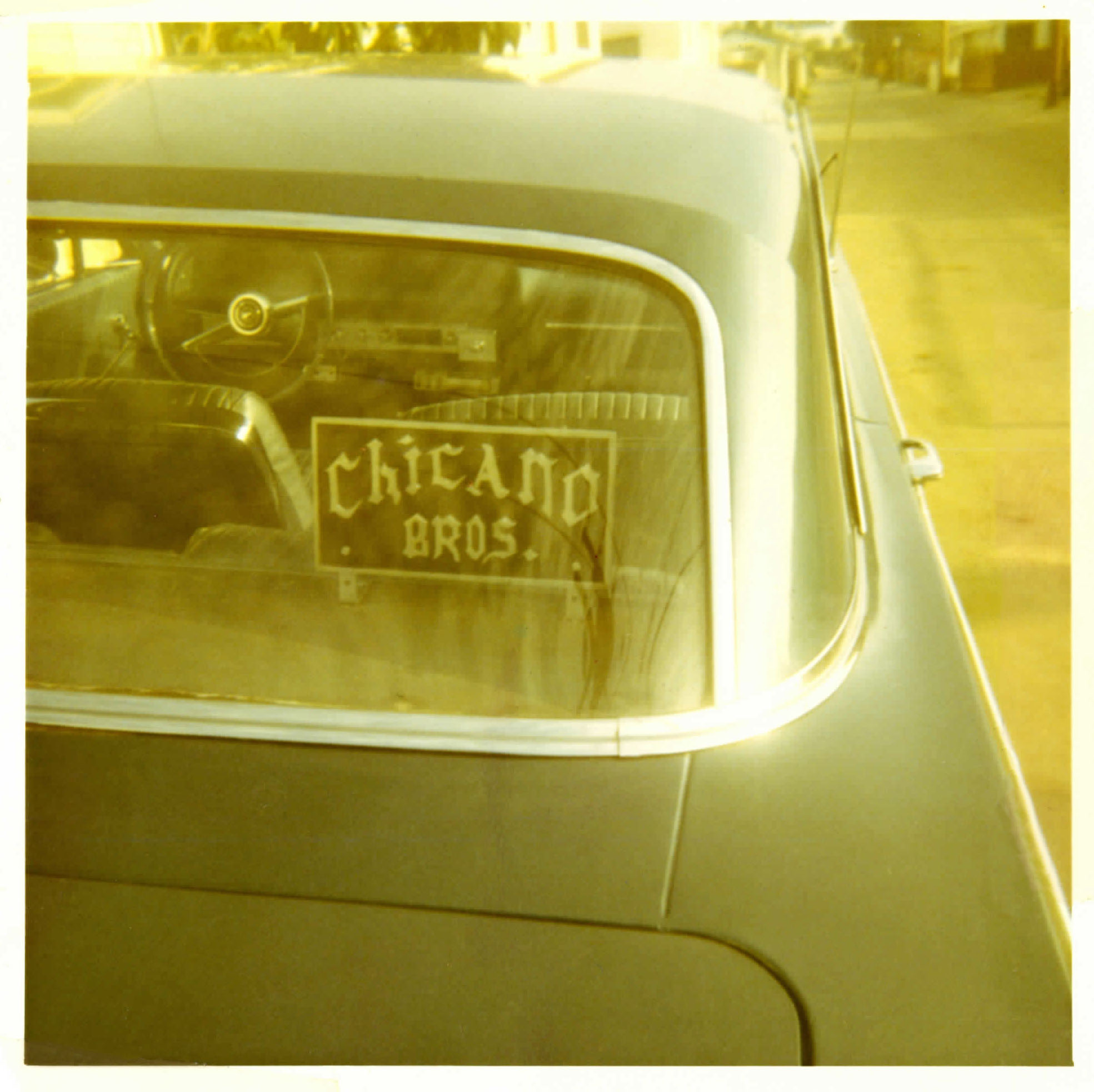
In response, car clubs emerged as organized social structures that shaped how lowrider culture was practiced, presented, and understood in public space. By the late twentieth century, as lowriding came under increasing scrutiny from both media and law enforcement, clubs formalized membership, established codes of conduct, and adopted identifiable insignia, creating internal systems of accountability while distinguishing participants from the criminalized images often projected onto them. These forms of organization were central to lowrider culture, structuring participation while shaping how identity and visibility were negotiated in public space. In some cities, these efforts extended into coordinated advocacy, with lowrider organizations forming councils to contest police harassment and negotiate the conditions under which cruising could take place. Local clubs became key organizers of sanctioned events, including car shows, parades, and permitted cruises. These gatherings created structured settings in which lowriding could be encountered differently—less as spontaneous congregation and more as coordinated exhibition. Over time, local coverage of these events increasingly reflected this shift in framing, describing organized cruises and car shows as “family-oriented” gatherings that emphasized community, craftsmanship, and cultural heritage rather than disorder.10 As these practices became more visible and organized, they also provided a foundation for sustained advocacy. Lowrider clubs and community organizers in Albuquerque engaged city officials through public meetings, demonstrations, and coordinated events, contributing to the repeal of the city’s anti-cruising ordinance in 2018 and reframing cruising as a cultural practice rather than a public nuisance.
Since then, lowrider culture has been in some ways institutionalized and absorbed into civic life. In 2020, the city launched the Duke City Lowrider Bike Program through the Department of Youth and Family Services, an after-school initiative that introduces middle and high school students to lowrider culture through hands-on design and fabrication.11 Working alongside community mentors, students develop technical skills while building connections to the culture and one another. Public showcases, including summer cruising events along Central Avenue and curated displays at civic sites such as the Albuquerque International Sunport, bring lowriding formal recognition.
These developments reflect broader changes within the city, including increased political visibility and representation of Latino communities, as well as a growing recognition of lowriding as a defining element of Albuquerque’s cultural identity. City leadership has increasingly positioned lowrider culture as core to the city’s public image, aligning with efforts to promote tourism, heritage, and community engagement along historic corridors such as Route 66. Together, these shifts mark a transformation in how lowriding is recognized and supported, and how the communities behind it are increasingly affirmed within the spaces they have long occupied.
The history of lowriding in Albuquerque demonstrates that play is never neutral. It is shaped by histories of exclusion, surveillance, and resistance, as well as by ongoing efforts to reclaim space and redefine cultural value. The slow rhythm of the cruise transforms the street into a site of memory, identity, and cultural endurance. What began as a grassroots practice within marginalized communities continues to assert a powerful presence in the city today, reminding us that urban space is not only built through infrastructure, but through the people who claim, reshape, and move through it, low and slow.
Desiree Beare is a New Mexico–based writer, educator, and doctoral candidate whose work examines how the intersections of culture, identity, and systems of power shape lived experiences and everyday life.
- Denise M. Sandoval, “Cruising through Lowrider Culture: Chicana/o Identity in Los Angeles,” Aztlán: A Journal of Chicano Studies 33, no. 2 (2008): 154–55. ↩︎
- Ben Chappell, Lowrider Space: Aesthetics and Politics of Mexican American Custom Cars (Austin: University of Texas Press, 2012), 46-47. ↩︎
- George J. Sánchez, Becoming Mexican American: Ethnicity, Culture, and Identity in Chicano Los Angeles, 1900–1945 (New York: Oxford University Press, 1993), 11-13 ↩︎
- Charles M. Tatum, Lowriders in Chicano Culture: From Low to Slow to Show (Tucson: University of Arizona Press, 2011), 24-27. ↩︎
- Mario T. García, The Chicano Movement: Perspectives from the Twenty-First Century (New York: Routledge, 2014). ↩︎
- “El Plan Espiritual de Aztlán,” adopted at the First National Chicano Liberation Youth Conference, Denver, Colorado, March 1969; see also Rodolfo “Corky” Gonzales, I Am Joaquín / Yo Soy Joaquín (1967). ↩︎
- David Kammer, The Historic Route 66 in New Mexico (Santa Fe: New Mexico Historic Preservation Division, 1993). ↩︎
- Laura E. Gómez, Manifest Destinies: The Making of the Mexican American Race (New York: NYU Press, 2007). ↩︎
- City of Albuquerque, “Cruising in Public Streets” ordinance, enacted 2005 and repealed 2018; see also local reporting and municipal discussions framing cruising along Central Avenue in terms of congestion, noise, and criminal activity associated with repeated cruising. ↩︎
- Local coverage of Albuquerque lowrider events in outlets including Albuquerque Journal, KUNM, and KRQE increasingly framed organized cruises and car shows as family-oriented and community-centered gatherings. ↩︎
- City of Albuquerque Department of Youth and Family Services, “Duke City Lowrider Bike Program,” 2020. ↩︎
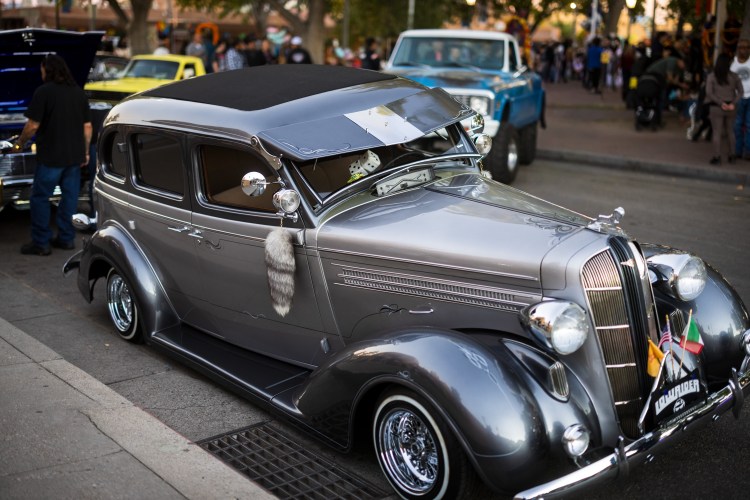
Featured Image (at top): Silver vintage lowrider bearing Mexican, American, and New Mexican flags. Photograph by Patrick Beare Photography, LLC, 2025. Used with permission.

