

Editor’s note: All entries for the November 2025 theme, Metropolitan Consumption can be viewed here.
By Ryan Reft
It’s no secret that cities and their residents consume. They are critical markets for food, consumer goods, retail products, leisure, and services. They swallow land and sometimes, in that process, people; just ask Bronx residents who Robert Moses turfed out with highway construction or folks living in Chavez Ravine, Los Angeles, who was displaced by the L.A. Dodgers and their now iconic stadium.
Though cities might be aggregators of culture and community, they devour the environment. By 1990, cities around the world took up about one percent of the Earth’s surface, but their “spatial growth,” historian J.R. McNeil notes, hardly accounts for their monumental environmental impact. “Urban growth…had tumultuous effects on water, land, and life – because cities have metabolism. They take in water, good, oxygen…and discard sewage, carbon dioxide (and more).”[1]
The suburbs that emerged around them did much the same. For example, the media has often presented Silicon Valley’s economic base as cleaner than the industrial economy that had dominated American commerce in previous decades. “No smokestacks, no railroad sidings, no noise, only ‘the world’s most beautiful freeway’ and high-tech industries with sales in billions,” wrote Esquire in 1981.[2] Yet despite its suburban veneer Silicon Valley was awash in waste. Whatever the merits of this cleaner, innovative industry, by the late 1980s Santa Clara County contained nineteen superfund sites, the most in the nation.[3]
Consumption’s expanses are not just physical and environmental, but also ideological. As postwar Orange County, California, bulged with young professionals working in the military, aerospace and technology, Lisa McGirr argues that new residents fed themselves politically and spiritually on anti-communism and Christian evangelicalism. “An older set of political and cultural traditions–-linked with the particular trajectory of Orange County’s economic development, its decentralized spatial organization, its in-migrants, and its powerful entrepreneurs-–made it fertile ground for many manifestations of conservatism, from libertarianism to evangelical Christianity.”[4]
Elsewhere, as documented by Elizabeth Hinton, cities served as incubators for social rebellion. In both the smaller towns and larger metropolises of the nation, local leaders responded with resistance to heavy-handed policing and histories of discrimination that Black and Latino residents had been forced to ingest for decades: “community-based Black rebellions sought redress from authorities in the form of employment, housing, education and law enforcement, as well as reordering the status quo so that Blacks would no longer be treated as second class citizens in their cities and in their country.”[5]
Though still political but arguably more prosaic, the consumption of tourism and leisure in cities also has far reaching implications by reshaping land use, reordering populations, and making demands of local resources. The relaxation and enjoyment of the amusement parks and Disneylands of the world might feed the soul, but they have also gobbled land, energy, and environment.
These are only a few examples of metropolitan consumption, but one could enumerate countless others: the devouring of voters and their ballots by political machines in late nineteenth-century New York or mid-century Chicago; the feeding of urban dreams in the minds of citizens everywhere, be it the nearest metropolis or iconic media centers like Bollywood or Los Angeles; the gorging on water and energy by data centers in Northern Virginia suburbs and elsewhere. The list goes on.
Our contributors this month engage some of these issues. Clif Stratton explores the intersection of baseball and food apartheid in metro Atlanta. David Bruno delves into the fever dream of tourism meant to drive economic development of Birmingham’s enigmatic and ultimately corrupt Mayor Larry Langford. Matthew King dives into the leisure-based watertopia of Wisconsin Dells and its impact not only on resources but also its crowding out of conservationist tourism. Emi Higashiyama untangles the tensions of commerce, development, and conservation in Tokyo.
Metropolises consume as do their people. How this consumption unfolds reveals not only these effects but tells us a larger story about ourselves. We hope this month does the same for our readers.
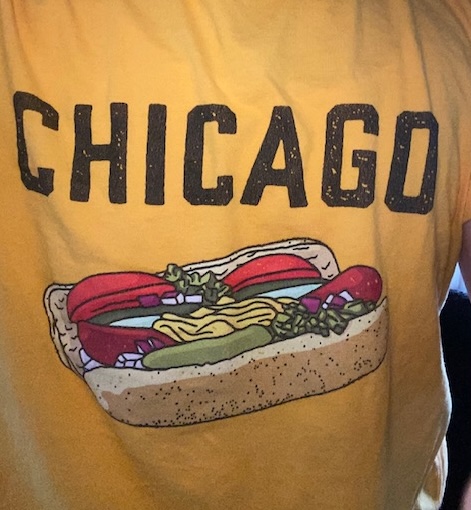
Featured image (at top) The most literal interpretation of metropolitan consumption, photo by author, 2024.
[1] J.R. McNeill, Something New Under the Sun: An Environmental History of the Twentieth-Century World. W.W. Norton & Company, 2000, 290-291.
[2] Margaret O’Mara, The Code: Silicon Valley and the Remaking of America. Penguin Books: 2020, 198.
[3] John M. Findlay. Magic Lands: Western Cityscapes and American Culture after 1940. University of California Press, 1992, 155.
[4] Lisa McGirr, Suburban Warriors: The Origins of the New Right. University of California Press, 2001, 273.
[5] Elizabeth Hinton, America on Fire: The Untold History of Police Violence and Black Rebellion since the 1960s. Liveright Publishing Company, 2021, 8.
 The Metropole