

Editor’s note: With UHA2025 just around the corner next month, historians Elaine Lewinnek and Daniela Sheinin offer some tips for getting the most out of an academic conference. See here for the conference program and the various tours available.
By Elaine Lewinnek & Daniela Sheinin
Academic conferences can feel intimidating. At our first academic conferences, we watched other people gathering with groups they seemed to already know, going out to events they’d already arranged, and chatting with book editors as if they knew what they were doing. We did not yet understand that everyone is continually figuring it out. Now that one of us is the Executive Director of the UHA and the other has been a UHA board member and conference co-chair, while currently co-leading the local arrangements committee for our 2025 conference in Los Angeles, we have some ideas we want to pass on to those who may be newer to academic conferences.
The UHA is one of the friendliest of academic conferences, perhaps because there are enough different geographic spaces to analyze that there is always room for newcomers, perhaps thanks to the incredible mensches who have led the UHA, and perhaps because the UHA is a perfect size, neither too large nor too small. Still, the 2025 meeting in LA will be our biggest ever, so here are a few tips for the too-often unarticulated rules of attending academic conferences.
- Make a preliminary plan
Read the conference program carefully ahead of time. There are usually themes planned for specific conference rooms, with Latinx urban history in one room throughout the day and environmental urban history in another conference room, while the most famous scholars tend to be placed in the largest room – so you can use that insight to plan which panels you want to attend. Our LA conference will have one room focused on teaching urban history on Saturday, with other rooms focused on Los Angeles and California and additional rooms for histories beyond North America.
Session formats vary. There will be traditional panelists presenting their recent research framed by a chair who keeps time and guides the questions, as well as roundtables that are more conversational events amongst seasoned scholars, advice-oriented workshops focused on teaching or getting published, and core plenaries that nearly every conference-goer may be attending.
- Talk to everyone
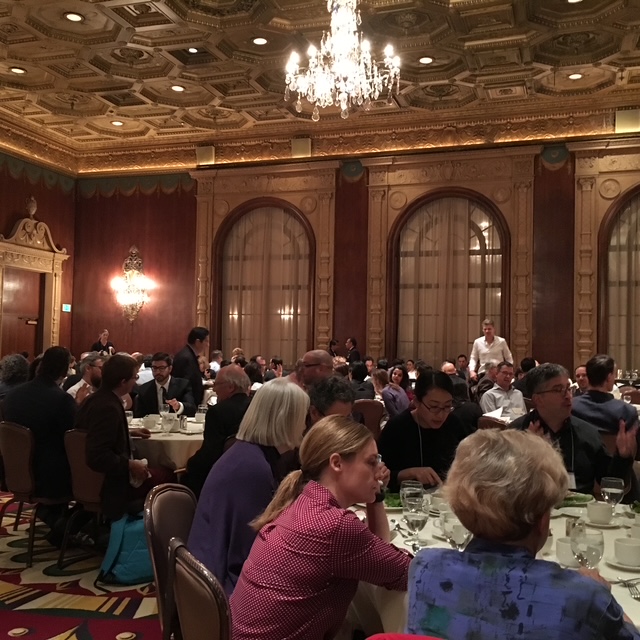
While you’re reading the program, if you notice the name of a scholar you admire, you can send them an email to tell them so, let them know you’ll be at the conference too, and see if they’re free for coffee. During the conference, you can also approach scholars after their panels or when your paths cross. Do not feel intimidated: this is expected conference behavior! Most people will be flattered and interested to hear how you use their work in your own project. Almost everyone appreciates being thanked for their work. This is one reason in-person conferences are worth attending and why we will all be wearing name tags.
This can also be awkward. You may be chatting with a senior scholar and feeling that the conversation is going well when someone else walks up who they’ve known for years, pulling them away in the middle of your conversation. This happens all the time and can feel disconcerting until you realize that it’s the natural flow of conference conversations. Most scholars mean well, some lack refined social skills, and it’s still worth attempting to talk to everyone who interests you.
- Go to the book exhibit
If there is an editor whose series you admire, tell them so. Editors are frequently looking for people to pitch them ideas or serve as peer reviewers. If you return on the last day of the conference, you can often find significant discounts on books the editors do not want to lug home.
- Take time to recharge
Leave yourself free time to get out of the conference hotel, explore the conference city or local archives, walk or jog or ride a bike, meet up with local friends, or get the solitude you need to recharge. If you can’t make it to every single session you planned to attend, that’s ok!
- Take a tour
Try to attend one of the tours the conference organizers have arranged: they are worth it. Our 2025 conference will have tours led by experts in Bunker Hill’s redevelopment, East LA’s Chicano urban design, Los Angeles’s urban core, suburban dreams and the Altadena fire, and the politics of Los Angeles’s beaches. Each tour goes beyond cliches of Los Angeles, revealing surprising diversity, important histories, and often tasty food.
- Connect with your co-panelists
Invite your co-panelists for coffee or a meal before or after your panel. Some of the best conference conversations can happen in informal spaces and folks will be grateful you reached out. From scholarly collaboration, to recommendation letters, to lifelong friendships, you never know what might come from these meetups. The conference program has restaurant suggestions that are worth considering.
- Be aware of panel etiquette
If you’re on a panel: use the microphones provided, because some audience members may find it hard to hear you otherwise. Practice your presentation beforehand. Stick to the time allotted, because that is the only way to respect everyone’s time. Send your presentation to your panel chair at least a few weeks ahead of time, so they can prepare the best possible framing questions. Above all, enjoy the opportunity to engage in a wider conversation about the subject you have been considering by yourself for a while.
If you’re attending a panel: engage in the question-and-answer time at the end of every panel. Listen to others asking questions to gather ideas about how to interact helpfully – and, unfortunately, sometimes how not to interact. “This is more of a comment than a question” is a phrase to avoid, along with questions that take more than five minutes to pose, questions that veer far astray from the presentations you just heard, or questions that seem designed to show off your knowledge instead of your curiosity and support. It’s nice to thank the speaker for something specific in their talk. Many of the best questions are invitations to expand on the topic at hand, seeking clarity, synthesis, and insight.
- Note that there are money-saving strategies
If you’re on a budget, you can find roommates to split the cost of housing and you don’t have to stay at the conference hotel. Contact the conference organizers to see if you can volunteer for a few hours (often at the registration table) in exchange for free registration. Take advantage of the free food that will be at the conference. Most hotels require conference organizers to purchase a large amount of food for the conference, and that food is for you.
- Take notes
In a physical notebook or your laptop, you’ll want to remember ideas you hear about research, methods and theories, unanswered questions, books to check out from your library, quotes and ephemera, and the names and contact information of people you will meet. You may want to take photos and gather brochures from the book display, collect business cards, annotate your own conference program, or find your own methods of remembering this time together that, at its best, will be incredibly inspiring.
See you in Los Angeles!
Elaine Lewinnek is a professor of American Studies and coordinator of Environmental Studies at California State University, Fullerton. She is co-author of A People’s Guide to Orange County and co-chair of the Local Arrangements Committee for UHA’s 2025 conference in Los Angeles.
Daniela Bohórquez Sheinin is Executive Director of the Urban History Association. She specializes in 20th century U.S. urban and cultural history, the history of neighborhood, and the history of New York City. Her work has been published by Leuven University Press, the University of Pittsburgh Press, the Journal of Transnational American Studies, Untapped New York, and the Gotham Center for New York City History Blog. She completed her PhD in history at the University of Michigan
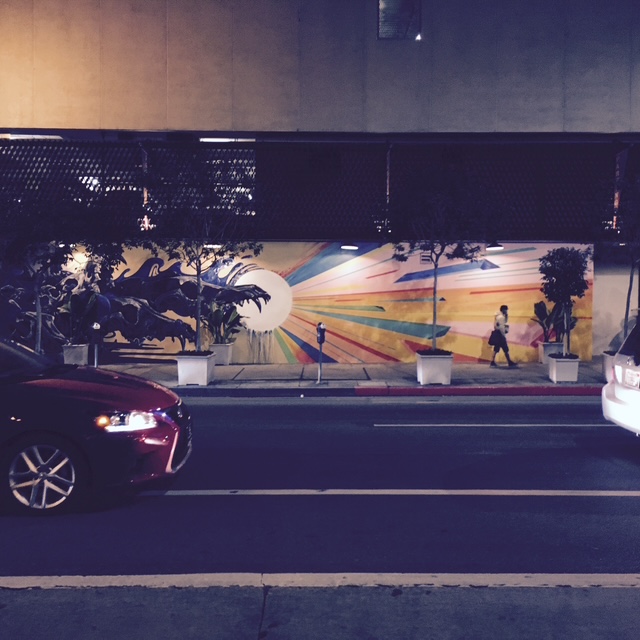
Featured image (at top): Downtown Los Angeles during SACRPH 2015, Ryan Reft, photographer.
 The Metropole