

The Metropole Bookshelf is an opportunity for authors of forthcoming or recently published books to let the UHA community know about their new work in the field. Other entries in the series can be viewed here.
By Romeo Guzmán
I’m a historian who is weary of origin stories. In presenting Writing the Golden State: the New Literary Terrain of California and doing interviews with journalists, it became clear to me that to speak of the “idea” behind the project is deceptive; it risks drawing too neat a line between the idea for a book and its final form, giving the editors too much credit. At their best, edited volumes surpass an editor’s vision. The book is inspired by the literary cartography section in East of East: The Making of Greater El Monte, a multiethnic history of two working-class suburbs in California, and grew out of series titled “postcards” at UC Press’ public-facing magazine Boom California. Its form—creative non-fiction about place—weds my training as a historian with my wife’s work as a fiction writer. However, it’s more fruitful to reflect on Writing the Golden State’s final form. By briefly narrating my own attachments to urban California, I hope to highlight the different ways our contributors write about place.
In 2013, two friends from Mexico City spent three weeks living with Carribean Fragoza and myself and our then two-year-old daughter. Together, we were working with community members to re-write the history of El Monte and South El Monte. In Mexico City, my friends had housed me and connected me to writers, artists, and journalists. They’d introduced me to a lettered city; though I was approaching thirty, it was a formative time for me. While they were with us, we worked in El Monte and drove daily to Chino Hills, where my mom had generously allowed us to crash at her house. The easiest way to from El Monte to Chino Hills is to take the 10 freeway to the 71. We took the 10 but instead of catching the 71, I passed it, exiting on Towne and driving through the heart of Pomona. Every day I would adjust our route to cover more of my own personal cartography: pointing to the house my family bought in the 1980, when it was still possible to buy a home on a working-class salary; flagging the schools I attended off Towne and Garey and the soccer fields where I coached after graduating from UCLA; nodding to the hospital in which my mother works and my father died. My friends and wife kindly dubbed this detour “the scenic route.”
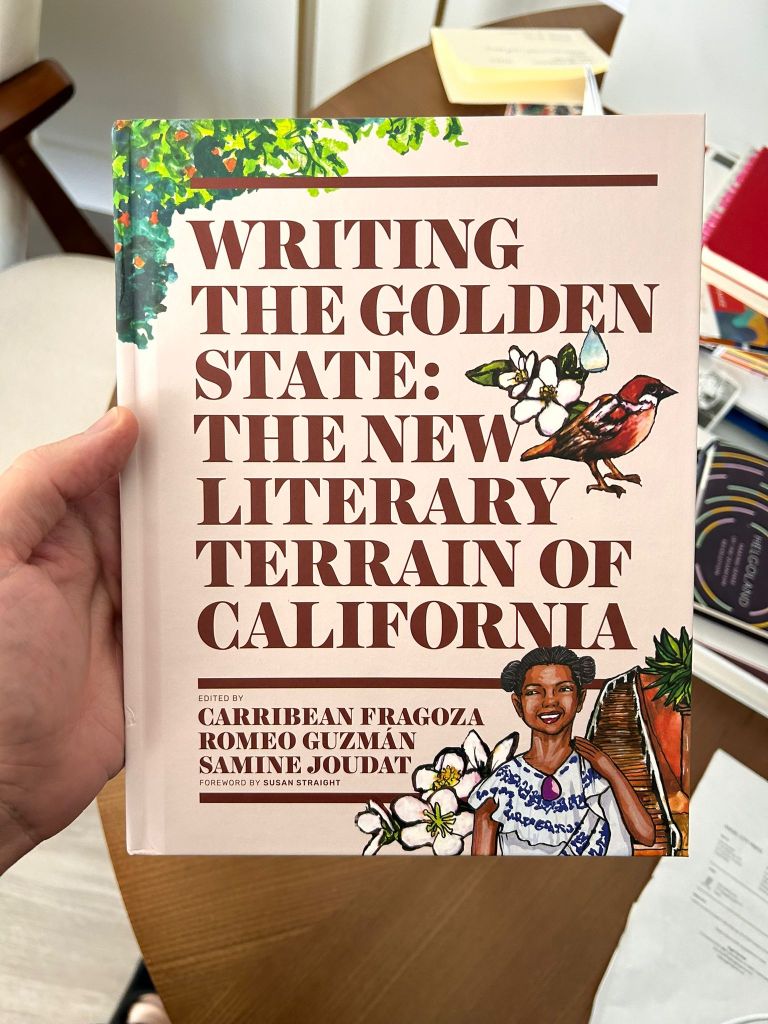
The authors in Writing the Golden State map their own personal cartography. Myriam Gurba places us in the middle of an epic junior high school brawl between Jenny “la chola” and a white girl name Karen: “The only reason I was sitting at the bleachers was because I wanted to watch this bitch get her ass kicked.” Daniel Rivers takes us on a road trip along the 5 freeway, and Annabell Long escorts us through the streets of Berkeley during the peak of the Covid pandemic. “I like to imagine myself,” she writes, “as someone just passing through, a footprint in the sand. Somehow existing in a time that is uniquely mine but also with everyone and everything who has ever existed here alongside me.”
***
In 2013, we were driving from Chino Hills to El Monte and South El Monte to learn about the city’s past. We spent our days in Monte scanning photographs, rummaging through city archives, and conducting oral histories with long-time residents. We textually excavated Mexican neighborhoods and barrios with names like Canta Ranas; we discovered young people defending their right to party at Legion Stadium despite efforts by authorities to shut it down; we unearthed a 1970s couple who founded a theater group called Teatro Urbano that performed plays at the same, Legg Lake.
Through the construction of this archive, I have come to know El Monte and South El Monte and in rewriting its narrative of the past, I know this place as a historian.
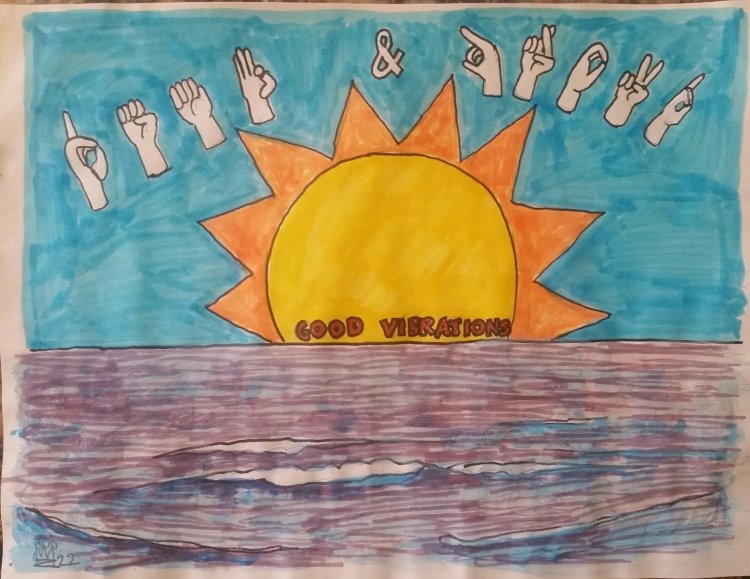
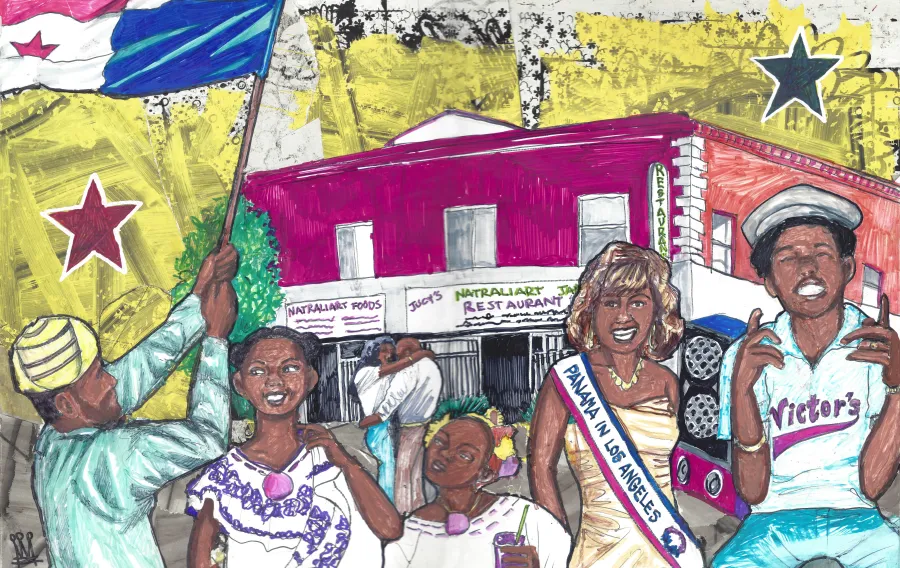
The authors in Writing the Golden State weave their personal experiences into the varying, decade-long developments that have transformed the state. Wendy Cheng reflects on the complexity of growing up in a suburb created in the image of the Spanish Fantasy Past. “The place where we were aliens, and alienated. And yet it was home.” Peter Chesney maps the history of Deaf communities in California. “Deaf people in California defied the bigotry of [Alexander Graham] Bell and found one another.” Jennise Miller demonstrates how her family and the broader Panamanian diaspora created home in private and public spaces throughout Greater Los Angeles. “Those of who grew up nurtured by this community of Black Panamanians, and those who are just discovering it, know that in any place we gather, we are our own multitude.”

***
My mom and her family arrived to South El Monte in the 1960s. While I didn’t grow up in Monte, I am not foreign to the neighborhood either. But working in a place in which I didn’t grow up proved great preparation for living and working in Fresno from 2016 to 2020. I came to know and love Fresno because of the kindness and openness of its residents.
My own interactions with Fresno itself drove my work. It was in collaboration with futbol activist, b-boys and b-girls, students and faculty, and community members that we documented how a Mexican Sunday league soccer team laid the foundations for the first professional team in Fresno, or how a group of Hmong youth formed the “Smurfs” and “Wizards” crews, perpetuating multicultural hip hop in the Central Valley’s largest city.
Culture served as an entry point for building both knowledge and archives. As I learned about the city’s futbol past, I was also becoming part of its futbol community: playing futsal inside and downtown and outside under the unforgiving summer sun on a field near Blackbeard’s Family Entertainment Center; organizing futbol tournaments in support of refugees; coaching girls teams on the eastside; and cheering for the Fresno Fuego. We left Fresno in 2020. My love for Fresno remains undeniable; we’ve visited every summer since we departed for Southern California, though each summer feels a bit hotter than the previous one. It’s a dry heat, I remind myself.
Not all the authors in this collection are from the places they write about, but they engage place with a deep respect and sense of community. George Sánchez-Tello joins a punk band in Salinas while working as a journalist. “We played in cafes, backyards, apartments, community centers, storage sheds, bars, restaurants, parking lots, and clubs.” A 5-page PDF connects Melissa Mora Hidalgo to her indigenous past and deepens her attachment to San Luis Obispo. “It was like a DIY version of Finding Your Roots with Henry Louis Gates, Jr.,” she recounts.
It can be a privilege to live in the place where one was born. I was born in Goleta in 1980 to migrants from Guadalajara. My father found work parking cars on Santa Barbara’s State Street during the day and driving limousines in the afternoon. My mother cleaned homes in Carpentaria, along the coast. The trailer park where we lived had one entrance—the cul-de-sac at the other end was where we played baseball. For my 42nd birthday, we spent the weekend near Goleta. At the risk of sounding like a poet and having my historian credentials revoked, my body recognized Goleta as home—I’m from here, it said.
Writing the Golden State approaches place through on-the-ground personal experience, deep engagement with the past, and with a poet’s sensibility. The essays in this collection will deepen your understanding about the state’s past and its future, while inviting you to reflect on your own relationship to place. May we work to transform it for all of us.
Featured image (at top): Original art by Fernando Corona, Courtesy of Angel City Press
Romeo Guzmán is an assistant professor in U.S. History at Claremont Graduate University and the co-director of the South El Monte Arts Posse. He has published in academic and public-facing outlets such as the Journal of American History, History of the Family, KCET, Boom California, and Zócalo Public Square. For more on his work visit romeoguzman.com
 The Metropole