

This piece is an entry in our Eighth Annual Graduate Student Blogging Contest, “Connections.”
by Joshua Rosen
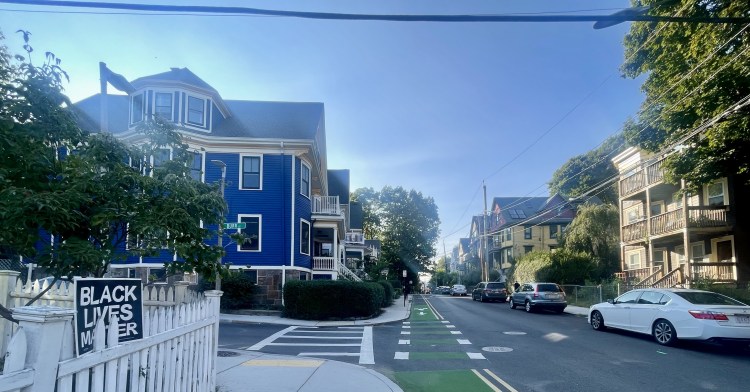
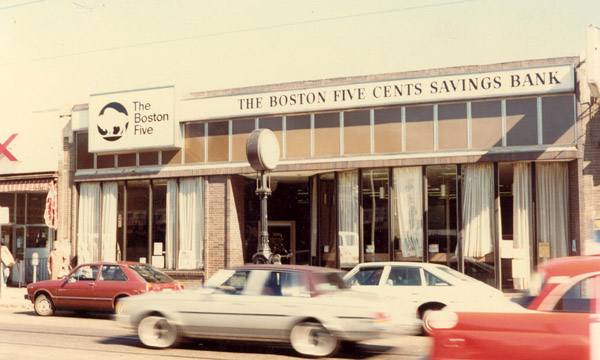
In 1974, when Richard Wise was hired as a community organizer in Boston’s Jamaica Plain,[1] there were thirty-one abandoned buildings in the center of the neighborhood. He remembers cars burning underneath the elevated train line nearly every week.[2] Banks refused to loan money to anyone who lived or wanted to live in the area, which meant no one could sell or improve their home. Today, fifty years later, the neighborhood is beautiful. Well-maintained triple-decker houses line narrow, tree-lined streets. Centre Street and Amory Street buzz with bars and restaurants. There are more than a dozen playgrounds, each within walking distance of one another. And the median rent for a one-bedroom apartment is more than $2,800. The median sale price for a single-family home exceeds $1 million. Most Americans can only dream of affording to live there.
Richard Wise not only witnessed those changes, he also helped lay the foundation for them. Between 1974 and 1976, he organized local homeowners against the discriminatory lending practices of local banks. He built coalitions, filed petitions, and led direct actions to get banks to invest in their own communities. By the end of the 1970s, federal legislation, alongside Wise’s organizing, helped end the redlining in Jamaica Plain (JP) and spur an era of reinvestment and revitalization. JP homeowners saw their equity skyrocket over the next several decades. It was a clear victory for Wise—or, at least, it felt that way at first. When I spoke with him in 2024, his enthusiasm for his organizing was tempered, his memories somewhat clouded, by the knowledge of how drastically the neighborhood has transformed since he left.
I interviewed Wise and an organizer from neighboring Dorchester as part of a larger oral history project on anti-redlining activism. I started those interviews hoping mainly to learn about the experiences of 1970s community organizers. Instead, I found myself in conversations that moved in and out of time; conversations shaped as much by the current housing-unaffordability crisis as they were about past anti-redlining campaigns. For a historian on a fact-finding mission about the 1970s, this might seem like an unwelcome distraction—as if the organizers’ testimonies were contaminated by the lens of the present. But for oral historians, it is precisely this subjectivity and mutability that makes working with human subjects valuable. When we interview people, we get their version of what happened: a narrative influenced by their context, the interviewer, the politics and culture of the present moment, and the subject’s personality. In other words, we learn how individual people processed, and are still processing, the history they witnessed.[3] We learn not just about the past, but about popular understandings of the past—how individual people draw connections between history and their lives today.
For urban historians specifically, oral history offers a glimpse into how residents and activists interpret neighborhood change. Modern discussions about gentrification tend toward static binaries: displaced residents vs. gentrifiers, NIMBYs vs. YIMBYs, landlords vs. tenants. But for longtime residents of Jamaica Plain, gentrification was a process set in motion almost fifty years ago—fueled, at least at first, by the organizing efforts of a diverse coalition that wanted to save the neighborhood from abandonment. As the current generation of urban historians grapple with the changing spatial dimensions of urban inequality—the influx of upper-class residents downtown amid increasing suburban poverty—oral histories like this one with Wise can give us a sense of how organizers and residents see their neighborhoods over time. The interview process provides a window into the interplay between the world of 1970s activists and our world today.
In 1974, Richard Wise was hired by the Ecumenical Social Action Committee, a nonprofit group that was organizing JP residents to campaign against redlining. Though the 1968 Fair Housing Act formally outlawed redlining, the law had few enforcement mechanisms, and redlining was still widespread in neighborhoods like JP, where residents struggled to sell their homes because banks would not provide potential buyers a mortgage. Wise was one of a burgeoning group of professionals called community organizers, hired for full-time work by nonprofit organizations funded through a combination of private and public money. For many of the activists who came of age in the 1960s, especially middle-class whites, community organizing was a way to maintain a commitment to left-wing politics in the context of salaried work.[4] When I asked Wise why he got into community organizing, he responded, simply: “I was sympathetic to the plight of regular people and thought that maybe I could do something.”[5] He came into JP as an outsider (he actually lived in Rhode Island), but he believed that he could be of some use in the fight to improve the neighborhood.
Wise, like many such community organizers, was originally inspired by Saul Alinsky and his 1971 book Rules for Radicals, which provided activists with a playbook full of unorthodox tactics for organizing residents and pressuring the powerful to adopt more progressive policies.[6] Sociologist Clement Petitjean describes Alinsky’s method of community organizing as “militant liberalism,” an ethos that embraced confrontation to produce small-scale, local reforms.[7] Wise, like Alinsky in Rules for Radicals, presents himself as a benevolent outsider, more capable of helping “regular people” than the state. Listen below as Wise describes Alinsky’s influence.
Being a cynical sort of guy, I saw what was going on in the Great Society and the anti-poverty programs as really not particularly useful. They seemed to be Band-Aid programs. They didn’t seem to achieve much of anything. So after reading Alinsky, I was pretty much converted to the community organizing model.
Wise built coalitions of residents who pressured the city into fixing up the streets, boarding up abandoned buildings, and providing more social services.[8] Alinsky encouraged organizers to listen to the issues residents were most concerned about. What Wise found in JP was that revitalizing the built environment in the neighborhood was something nearly everyone could agree on.
But organizing residents around housing issues proved more complicated. Fighting for fair housing policies in an era of redlining and urban disinvestment meant organizing a diverse, contradictory coalition. There were middle-class homeowners who wanted to leave JP for the suburbs but were unable to sell because most potential buyers could not get a mortgage. Some homeowners had no intention of leaving but did not want their equity to disappear. There was an influx of new residents, primarily immigrants and migrants from Cuba and Puerto Rico, often renting from absentee landlords who failed to maintain their properties. There was the first trickle of students and artists moving to the neighborhood, attracted by cheap studio space and low rent.[9] And there were self-identified “urban pioneers,” usually college-educated whites who believed in integration, were seeking a more urban lifestyle, and hoped that homes in JP would prove a good investment. In other words, for some of the middle-class homeowners, an end to redlining meant they could leave; for the urban pioneers, it meant they could stay and build equity; but for working-class tenants, only those who had hopes of becoming homeowners stood to benefit directly. According to Wise, “if they weren’t homeowners or home buyers, they weren’t really particularly interested.”[10] Some of the most active anti-redlining campaigners were urban pioneers.[11]

In 1975, facing pressure from a coalition of community organizations like Wise’s, then-governor of Massachusetts Francis Sargent ordered Massachusetts banks to publicly disclose their mortgage agreements. Sargent was campaigning for reelection and knew his Democratic opponent, Michael Dukakis, had made a similar pledge, but it was the strength of Wise’s coalition that pressured the governor into making the announcement.[12] Sargent’s decision came a few months before the federal passage of the Home Mortgage Disclosure Act, a key piece of legislation that similarly required banks to be transparent about their lending practices. HMDA, too, was the product of pressure from a national coalition of community organizations called National People’s Action. Two years later, the same coalition won the passage of the Community Reinvestment Act, which provided the federal government with still more mechanisms for ensuring banks were providing credit to their communities.[13] All this is to say, Wise was active in community organizing when coalitions were fighting for progressive legislation and winning victories at the national level. And at home in JP, both HMDA and the CRA helped homeowners who wanted to leave sell, and homeowners who wanted to stay build equity.
After those victories, though, the term urban pioneer began to appear more frequently in newspapers.[14] It described a cohort of young, mostly white professionals moving back into newly fashionable urban neighborhoods; later, this group came to be known by a more familiar term: yuppies. And as early as 1979, a Boston Globe columnist identified Jamaica Plain as “vulnerable to gentrification” by this group.[15] As historian Rebecca Marchiel points out, local banks that led urban reinvestment after the passage of HMDA and CRA favored urban pioneers at the expense of long-term residents.[16] Their name itself, urban pioneer, betrays a history of white settlement rooted more in colonization than in integration.
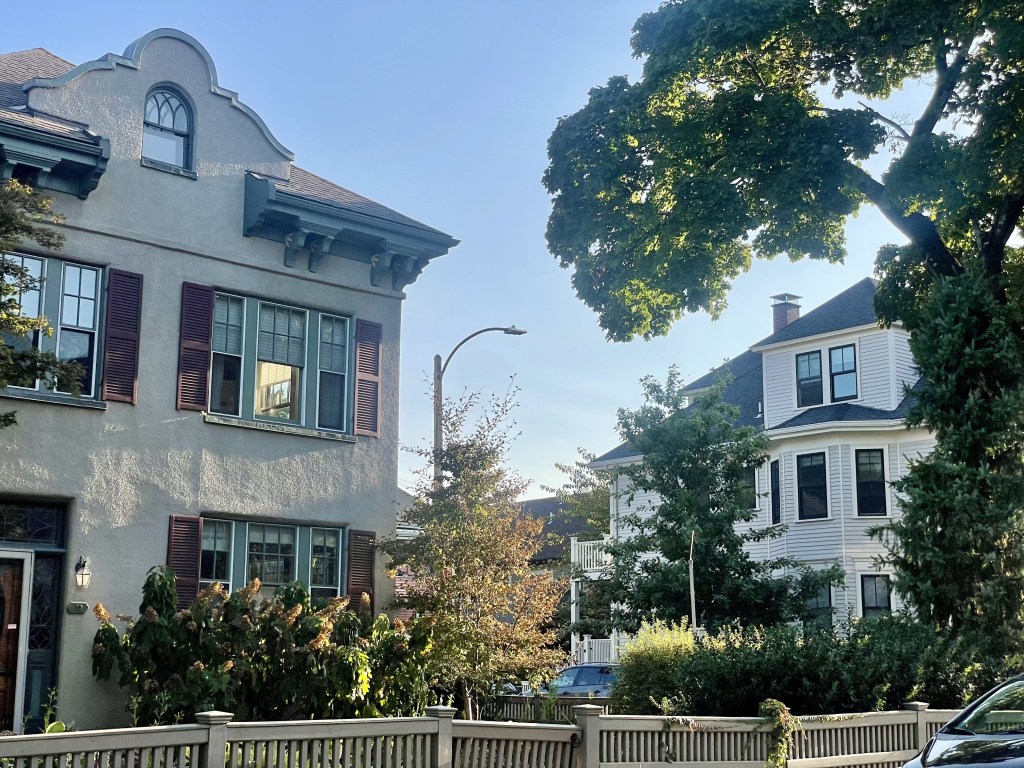
It took fifty years for housing in JP to reach current levels of unaffordability, and historical contingencies removed from the anti-redlining campaigns of the 1970s—including the outlawing of rent control in Massachusetts in 1994 and the contraction of national housing stock following the Great Recession—played a large role as well. But when Wise looks back on his organizing, it is hard for gentrification to not hang over his accomplishments. The current cost of living in JP complicates any sense that Wise’s organizing fostered fair or affordable housing policies for the long-term. Listen below as Wise describes his emotions on a visit to Jamaica Plain in 2019.
But I had been there, you know, I’ve passed through a couple of other times, but I was astonished because I walked from the B&B down to this restaurant. Parked my car at the B&B, which is sort of up the hill. Because if you’re in Centre Street, basically you go downhill to Washington Street. So I walked down, it was probably three blocks away.
The place was alive! I mean, there were kids playing, people walking around, little pocket park almost next to the restaurant. Nothing like when I was there. I mean, everybody was hiding in their houses, you know. The ESAC’s office, just about every week—I think it was Amory Street—you go down Amory Street and you go under a rail line, and almost every week there was a car burning down there that had been stolen. And somebody, kids joy ride in it, they brought it over to there and they set it on fire. So we had a burning car almost every week down the street from the office. None of that, you know, ice cream stands. And I mean, it just is very gratifying.
Now, a good sociologist would say, oh, well, you know, it gentrified. So what happened? The people you were trying to help essentially got pushed out of the neighborhood. True. To a degree, that is certainly true. Uh, on the other hand, as I said, if they were, uh, they’re a second, third generation residents and they sold their property, at least they got a mortgage.
So that’s, that’s always the problem with organizing to help the poor. It leads to paradoxes often[17].
The paradox was evident from the beginning of Wise’s organizing, and it persists in the present. Jamaica Plain hosts a huge swath of residents who did stick around before redlining and afterward, who did manage to buy a home and build equity, and who now live in a beautiful, safe, “revitalized” neighborhood. And still, more residents are displaced each year as rents climb up. Wise’s reflections—on urban pioneers, on middle-class homeowners, and on neighborhood abandonment—were shaped by his knowledge of JP’s past and present. His organizing meant a lot to him; he published a novel in 2019 called Redlined, based on his experiences. But in the last chapter, after the book-version of Dukakis promises to prosecute redlining banks, the lead organizer, Jed, is still morose. He says ironically to his partner: “Let the gentrification begin.”[18]
For residents, organizers, and onlookers, neighborhoods can be a window for witnessing and making sense of history. This happens in small ways, when we walk the streets we know best—this used to be a 7-11, this is where my cousins grew up—but neighborhoods are also among our most familiar spaces for taking stock of long-term political and cultural change.[19] Oral history provides historians with a window for seeing exactly how ordinary people are processing those changes. Such insights are necessarily limited. Wise’s testimony is particular to JP; an interview with anti-redlining organizers on the West Side of Chicago, for example, a neighborhood that still faces abandonment, would yield a much different story.[20] Testimonies like Wise’s also do not account for all the historical processes that shaped JP’s extreme gentrification, nor are they the best tool for understanding the complex connections between redlining and gentrification in the urban economy. But by giving scholars a window into individuals’ subjective perceptions of those connections, oral history sheds light on popular understandings of neighborhood change. Richard Wise, fifty years on, is still making sense of those changes.[21]

Josh Rosen is a PhD student in History at Boston College. He is interested in urban inequality, social movements, and finance capitalism. He is a former high school teacher, union chapter leader, and museum educator.
Featured image (at top): Boylston Street, Jamaica Plain, 2024, photograph by author.
[1] I will refer to Jamaica Plain as JP throughout the article.
[2] Richard Wise interview with Josh Rosen, April 2024. In possession of author. Wise’s assessment of the neighborhood and his role within it is corroborated by Howard Husock, “Battling the Banks of Jamaica Plain,” Boston Phoenix, July 9, 1974; David Rodgers, “Jamaica Plain Clergy Join Fight Against Savings Banks,” in Boston Globe, Nov 26, 1974; Howard Husock, “The State Joins the Fight Against Redlining,” Boston Phoenix, June 3, 1975.
[3] Alessandro Portelli, “The Peculiarities of Oral History,” History Workshop Journal 12, no. 1 (Autumn 1981), 99.
[4] Clément Petitjean, Occupation: Organizer: A Critical History of Community Organizing in America (Chicago: Haymarket Books, 2023), 23-29.
[5] Richard Wise interview with Josh Rosen, April 2024.
[6] Petitjean, 5.
[7] Petitjean, 132-133.
[8] Richard Wise interview with Josh Rosen, April 2024.
[9] Howard Husock, “The Strange Story Behind The Jamaica Plain Fire,” Boston Phoenix, Feb 10, 1976.
[10] Richard Wise interview with Josh Rosen, April 2024.
[11] Richard Wise interview with Josh Rosen, April 2024.
[12] Ken Harnett, “Sargent Orders Banks to Disclose Location of Mortgage Customers,” Boston Globe, Oct 23, 1974.
[13] Rebecca K. Marchiel, After Redlining: The Urban Reinvestment Movement in the Era of Financial Deregulation, Historical Studies of Urban America (The University of Chicago Press, 2021).
[14] Marchiel, 192.
[15] Robert A. Jordan, “A New Housing Threat to Blacks Living in the Inner City,” Boston Globe, Feb 23, 1979.
[16] Marchiel, 166.
[17] Richard Wise interview with Josh Rosen, April 2024.
[18] Richard Wise, Redlined: A Novel of Boston, (Brunswick House Press, 2020), 439, EPUB.
[19] Carlo Rotella, “The Unexpected Power of Your Old Neighborhood,” New Yorker, May 22, 2019.
[20] See Marchiel, 192-229.
[21] Many thanks to the editors of the Metropole Blog and Mike Glass for providing excellent feedback on an initial draft of this post. Thank you to Guy Beiner for teaching a seminar on oral history, where he helped me think through some of these ideas.
 The Metropole

Joshua Rosen’s piece really hits home. I was part of the anti-redlining movement in the 1990s, captured in my new book, “Communities of Resistance and Resilience in the Post-Industrial City: A Transnational Perspective from Lyon and Pittsburgh, 1980-2010” Joshua is welcome to contact me at holland6@aol.com. Thanks, Dan Holland, PhD, Duquesne University, Pittsburgh.
LikeLike
Congratulations and many thanks, Joshua Rosen on your award and for your insightful post detailing the battle against redlining in Jamaica Plain.
Richard W. Wise
LikeLike
Congratulations, Joshua, on your winning blog. Many thanks for your sensitive and insightful analysis of my organizing efforts and the Anti-Redlining fight in Jamaica Plain in the mid-1970s.
Richard W. Wise
LikeLike
It’s wonderful to see a detailed history of the anti-redlining movement in Jamaica Plain that Rick Wise organized. That movement eventually evolved into the Jamaica Plain Banking and Mortgage Committee, led by Edwina “Winky” Cloherty. In 1980, with funding from a Commonwealth of Massachusetts lawsuit against Household Finance for deceptive practices, JPBMC expanded into a statewide public interest organization, the Massachusetts Urban Reinvestment Advisory Group (MURAG). Hugh MacCormack served as Chair, and I was honored to serve as its first Executive Director.
One of MURAG’s early accomplishments was filing the first state-level Community Reinvestment Act (CRA) challenge against the Provident Institution for Savings. Massachusetts Banking Commissioner Gerry Mulligan ruled in our favor, and Provident was denied its application to open a branch in the affluent suburb of Newton. This ruling catalyzed discussions with Boston’s major banks about their CRA records. These conversations led to negotiated agreements that became models for similar agreements struck nationally.
I was fortunate to receive a John Hay Whitney Foundation fellowship, which allowed me to spend two years traveling throughout the southeastern United States, training community organization leaders and Legal Services attorneys on CRA. It was a transformative experience and a pivotal moment in the fight for equitable access to credit.
Feel free to reach out to me: James Carras, carras@bellsouth.net
LikeLike
It’s wonderful to see a detailed history of the anti-redlining movement in Jamaica Plain that Rick Wise organized. That movement eventually evolved into the Jamaica Plain Banking and Mortgage Committee, led by Edwina “Winky” Cloherty. In 1980, with funding from a Commonwealth of Massachusetts lawsuit against Household Finance for deceptive and usury lending practices, the JPBMC expanded into a statewide public interest organization, the Massachusetts Urban Reinvestment Advisory Group (MURAG). Hugh MacCormack served as Chair, and I was honored to serve as its first Executive Director.
One of MURAG’s early accomplishments was filing the first state-level Community Reinvestment Act (CRA) challenge against the Provident Institution for Savings. Massachusetts Banking Commissioner Gerry Mulligan ruled in our favor, and Provident was denied its application to open a branch in the affluent suburb of Newton. This ruling catalyzed discussions with Boston’s major banks about their CRA records. These conversations led to negotiated agreements that became models for similar agreements struck nationally.
I was fortunate to receive a John Hay Whitney Foundation fellowship, which allowed me to spend two years traveling throughout the southeastern United States, training community organization leaders and Legal Services attorneys on CRA. It was a transformative experience and a pivotal moment in the fight for equitable access to credit.
James Carras
carras@bellsouth.net
LikeLike