

It is September, and here at The Metropole that means it is time to publish entries to the Graduate Student Blogging Contest. Now in its eighth year, the contest is intended to encourage students to write pieces for a public-facing, online platform and share their research with a broad audience. Beginning Thursday and extending into October, we will be presenting their work.
This year our theme is “Connection.” We asked for blog posts that highlight any type of connection (or disconnection) within, among, and between cities and their residents. Our entrants interpreted this prompt in a variety of ways. Some wrote about literal connections: tunnels, transit lines, and bus stops. Others about the connections that create community: within an ethnic or racial group, through sport, with shared consumerism, or on summer vacation. A few focused directly on, and almost all touched on, the ways that memories and connections to the past inform subsequent policy making.
Our authors also demonstrate the range of connections we are forging in the Urban History Association. Our entrants come from a variety of graduate programs—not just from history departments, but from programs in American Studies, Architectural History, Urban Planning, and Anthropology. We have several authors hailing from Canadian schools, and the geography of our pieces includes big and small cities and suburbs all across the United States and beyond, as our writers also take us to Winnipeg, Canada, and Phnom Penh, Cambodia.
And we appreciate the way that this blog and readership connect these emerging scholars with the broader urban history community. Along those lines, we would like to thank our contest judges for 2024, Andrew Sandoval-Strausz, Elizabeth Hinton, and LaDale Winling, who will have their work cut out for them this year, as well as our team of assistant editors for their insightful help polishing these pieces.
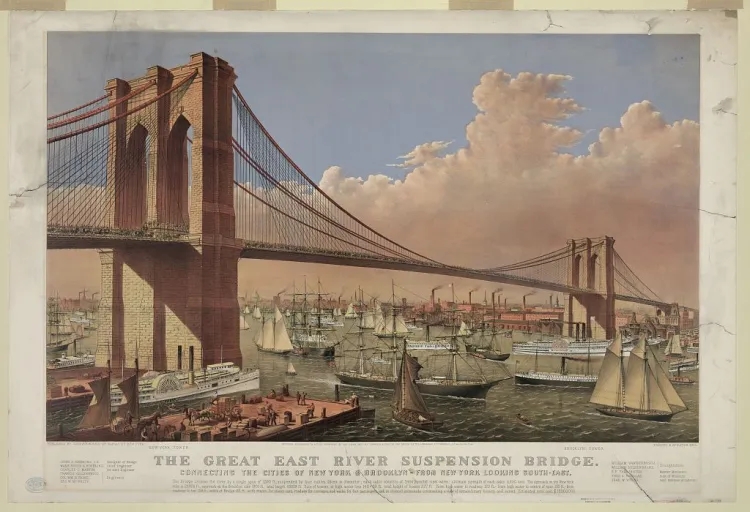
Featured image (at top): Charles R. Parsons and Lyman W. Atwater, “The Great East River Suspension Bridge: Connecting the Cities of New York & Brooklyn, from New York Looking South-East” (New York: Currier & Ives, ca. 1877).
 The Metropole