



This is the fourth installment to our theme for October 2023, Urban Disability, an exploration of the role cities and their residents have played in the expansions of disability rights. See here for a listing of all the posts published on this topic.
By Lisa Varty
As a disabled person myself, I have an interest in the history of disability rights in the United Kingdom. Despite the efforts of founders and activists of the disability rights movement, in 2023 accessibility remains an issue for disabled people worldwide. Following both World Wars, the population of disabled people increased due to injuries soldiers gained during battle and operation accidents. Perceived medical advances gone horribly wrong also contributed to disability rates. For example, during the late 1950s and early 1960s, pregnant women were prescribed Thalidomide to treat morning sickness. During this period, it wasn’t known that Thalidomide could cause miscarriages and birth defects in unborn children. More than ten thousand children, worldwide, were affected by the use of this medication; it is considered to be one of the worst medical disasters in history. At the time, society tended to isolate many disabled people, repeatedly ignoring issues regarding accessibility. It wasn’t until the 1970s that people began to fight for disability rights here in the UK, as other civil rights movements were also taking place.
Some of the efforts made by disability rights activists during the 1970s were most fruitful during the 1990s, when the UK Parliament in Westminster passed The Disability Discrimination Act of 1995. This was the first piece of UK legislation aimed at protecting disabled people against forms of discrimination. It is also tied in to the 2010 Equality Act. The Disability Discrimination Act has been refreshed a couple of times since 1995, the first was in 2005, then 2016. It affords protections against discrimination similar to the Americans with Disabilities Act (ADA), passed by the Unites States Congress in 1990, a civil rights law that prohibits discrimination based on disability.
People may not be aware of the history and the struggles behind these examples of transatlantic disability rights legislation. How did disabled people in the UK fight for their rights and recognition? Who were the pioneers and the activists who shaped the disability movement and the social model of disability? And what can we learn from their legacy today?
One of the major figures in the history of disability rights in the UK is Paul Hunt, who was a disabled activist and writer. Hunt cofounded the Union of the Physically Impaired Against Segregation (UPIAS) in 1972. Hunt and others organized UPIAS in order to challenge the medical model of disability for a social model of disability, which argues that disability is not a personal problem or a defect, but a result of the barriers and oppression created by society.
UPIAS published a manifesto in 1976, called the “Fundamental Principles of Disability,” that stated: “It is society which disables physically impaired people. Disability is something imposed on top of our impairments by the way we are unnecessarily isolated and excluded from full participation in society.” This manifesto influenced many other disabled people’s organizations and movements around the world and laid the foundation for the Disability Discrimination Act of 1995.
Paul Hunt and UPIAS developed of the concept of independent living, which means that disabled people have the right to choose how they live their lives, with the support and aid they need. Founding members of UPIAS Maggie and Ken Davis were responsible for pioneering independent living and commissioning their own housing scheme in Sutton-in-Ashfield, Nottinghamshire, which was designed to be accessible and adaptable for different needs. This was one of the first independent living schemes in the UK; it was completed on September 13, 1976, and it inspired many others to follow.
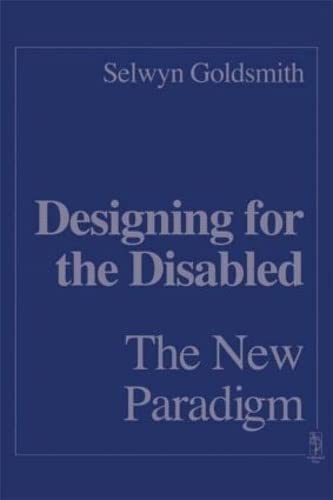
Another influential figure in the history of disability rights in the UK is Selwyn Goldsmith, who was an architect and a researcher. He was one of the first architects to focus on accessibility for all, and his 1963 book Designing for the Disabled is a text architects widely hail as the bible for those in the profession who want to focus on all aspects of accessibility in architecture and construction.[1] When working in Norwich in 1967, Goldsmith, who was a wheelchair user himself, interviewed other wheelchair users about the daily struggles they faced due to inaccessibility; his research led to the idea of dropped curb, as crossing a street safety and the inability to access the safety of a pavement were found to be a major issues for wheelchair uses during his research. Goldsmith installed fifteen dropped curbs around the city, making it easier for not just wheelchair users but all pedestrians to cross the streets. He also was responsible for the UK’s first unisex, disabled-access public toilet, at Castle Hill in Norwich. He also coined the term “universal design,” which means that design should be inclusive and usable by everyone, regardless of their abilities or disabilities. Goldsmith understood that his innovations had a positive impact beyond the disabled community, to inculde mothers with pushchairs, cyclists, and elderly people. He revised his book in 1976, incorporating his findings and experiences from Norwich.
Selwyn Goldsmith didn’t limit his efforts to the written word; he also campaigned for better access to public buildings and spaces, such as schools, libraries, theaters, and museums. He argued that access is not only a matter of ramps and lifts, but also of attitudes and awareness. He said: “The problem is not one of designing for disabled people but rather one of designing for all people,” meaning there should be equal access for all.
Sadly, some businesses still use the age or heritage of a building as justification for resisting accessibility reforms. Chatsworth House is a historical, stately home in Derbyshire, United Kingdom, which has been used as a movie set for films such as Pride and Prejudice (2005), The Wolfman (2010), and The Duchess (2008). It is owned and lived in by the twelfth Duke of Devonshire, Peregrine Andrew Morny Cavendish. If Chatsworth House, which has thousands of visitors a year, can be made more accessible for people with disabilities, it is hard to see why they use this argument. While more can be done, Chatsworth House has made efforts to improve its accessibility by installing ramps, lifts, hearing loops, tactile maps, and audio guides. It also offers free admission for carers and discounts for disabled visitors.
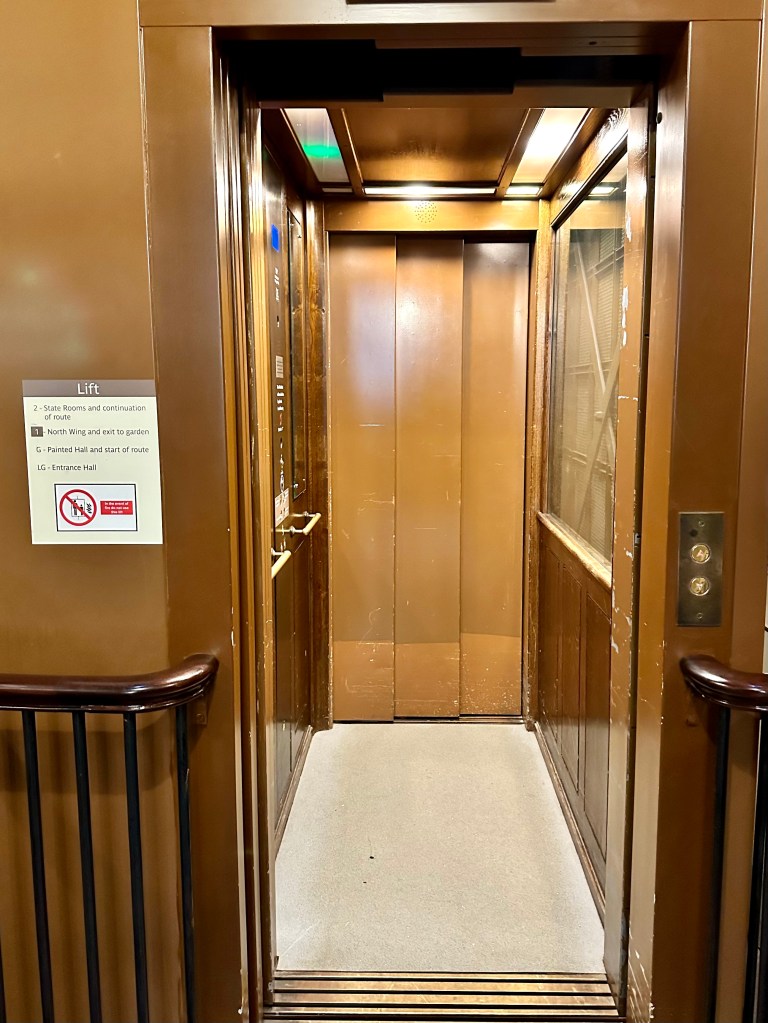
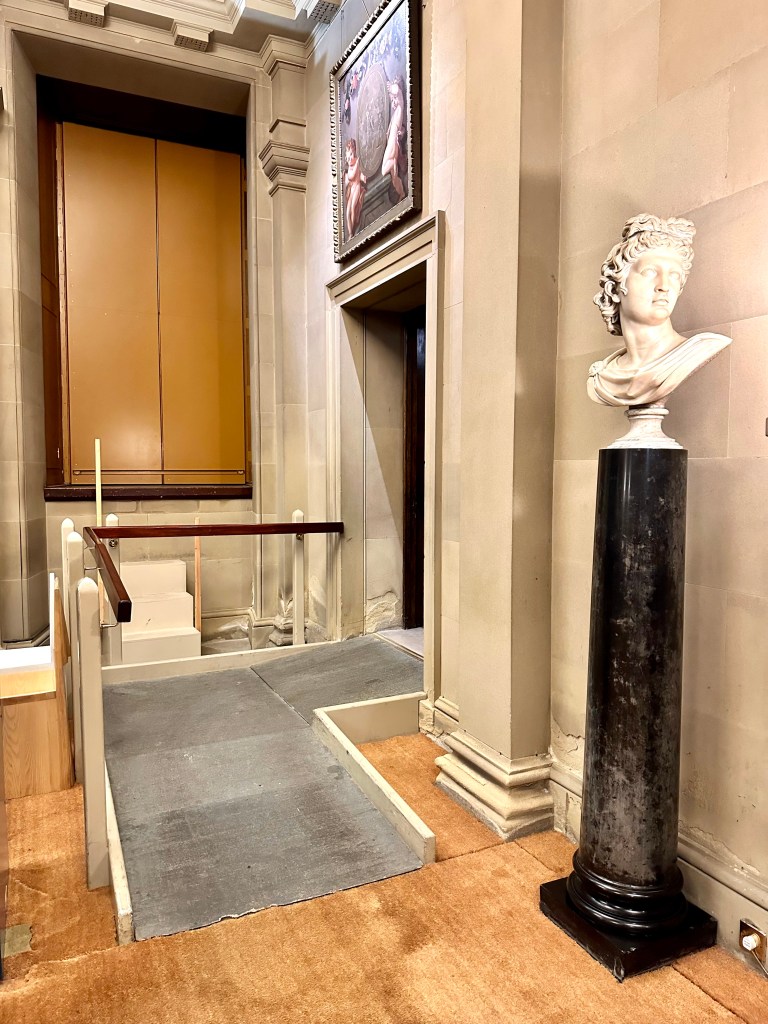

Goldsmith’s work in Norwich made it the first accessible town in England and inspired many other cities and countries to adopt similar measures. His books became standard texts for designers and architects around the world. Further, Goldsmith’s efforts laid the foundations for UPAIS’s ideals and 1976 manifesto. In 1999 he was awarded an Officer of the Order of the British Empire (OBE) for his services to architecture and disabled people. Goldsmith died in 2011 at the age of 78.
How UPIAS Influenced the Disability Rights Movement in America
The aforementioned 1976 UPIAS manifesto influenced many other disabled people’s organisations and movements around the world, including in United States. The disability rights movement in America was also inspired by the civil rights movement and the independent living movement, which advocated for self-determination, personal assistance, and community integration of disabled people. Some of the most prominent disability rights activists in America include Justin Whitlock Dart Jr., Ed Roberts, Judy Heumann, and Nyle DiMarco.
The disability rights movement in America culminated in the passage of the Americans with Disabilities Act (ADA) in 1990. The ADA is a civil rights law that prohibits discrimination on the basis of disability and requires reasonable adjustments for disabled people in various areas of life, such as employment, education, transportation, public services, and access to public places.
The ADA was influenced by the social model of disability and the principles set out by UPIAS, because it recognized that disability is a social convention, which means that disabled people have the right to equal opportunity and full participation in society. The ADA also used some of the concepts and language from UPIAS’s manifesto, such as “unnecessary isolation” and “full participation.”
So UPIAS played a big role in shaping the disability rights movement in America and the Americans with Disabilities Act by providing a profound and empowering perspective on disability and by challenging the dominant medical model of disability. UPIAS also contributed to the global recognition and acceptance of a social model of disability as a foundation for understanding and addressing all disability issues.
These are just a few examples of how disability rights have evolved in the world over time, thanks to the vision and action of disabled people themselves. Sadly, there is still much work to be done to ensure that disabled people are fully included and respected in society. We can honor the history and achievements of disability rights activists by continuing to challenge discrimination, remove barriers, and promote equality for all.
Lisa Varty is a freelance journalist from Derbyshire, United Kingdom. she reports on current affairs, local news, social issues, and disability rights. Lisa aims to create compelling and accurate content that raises awareness and sparks dialogue. She loves Derbyshire, history, reading books, and drinking coffee. You can learn more about Lisas’s work on her website, https://www.qcjeditorial.co.uk.
Featured image (at top): Ariel view of Chatsworth House, courtesy of Chatsworth House.
[1] Selwyn Goldsmith, Architectural Association (Great Britain), and School of Architecture, “Designing for the Disabled: A Manual of Technical Information” (London: Royal Institute of British Architects, Technical Information Service, 1963).
 The Metropole