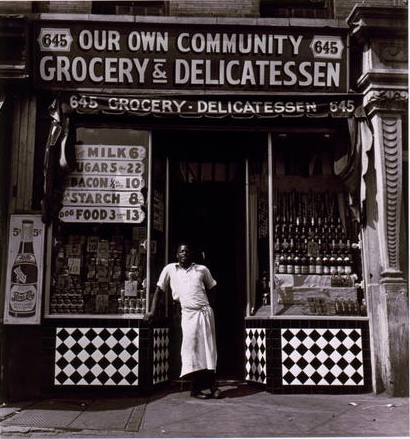
Editor’s Note: This is the fourth post in our theme for February 2025, “Celluloid City,” which explores the role of and interplay between cities and film. You can see all posts from the theme here By Alyssa Lopez In March 1935, when sixteen-year-old Lino Rivera pocketed a knife while cutting through the S.H. Kress dime […]
Davida Siwisa James. Hamilton Heights and Sugar Hill: Alexander Hamilton’s Old Harlem Neighborhood Through the Centuries. New York: Fordham University Press, 2024. Reviewed by Kevin McGruder In Hamilton Heights and Sugar Hill: Alexander Hamilton’s Old Harlem Neighborhood Through the Centuries, author Davida Siwisa James uses several individual buildings and collections of buildings, the people who […]
The Metropole Bookshelf is an opportunity for authors of forthcoming or recently published books to let the UHA community know about their new work in the field. by Stephen Robertson I was not intending to write Harlem in Disorder: A Spatial History of How Racial Violence Changed in 1935 when my University of Sydney colleagues […]
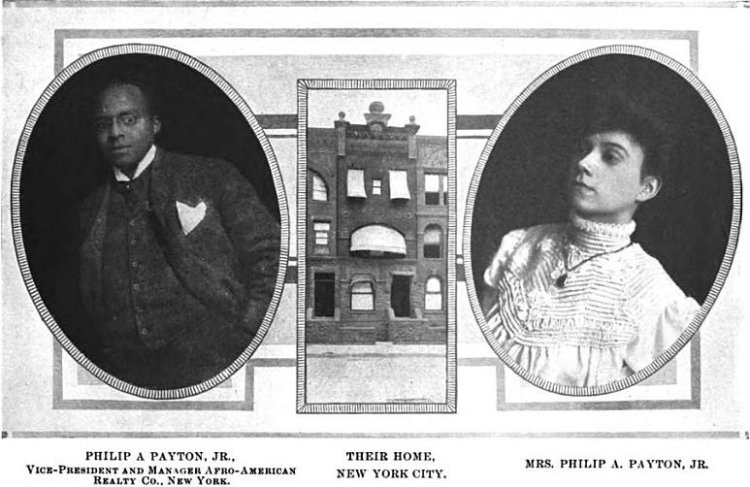
McGruder, Kevin. Philip Payton: The Father of Black Harlem. New York: Columbia University Press, 2021. Reviewed by Carla DuBose-Simons In his latest work, Philip Payton: The Father of Black Harlem, Kevin McGruder continues to explore the processes by which Harlem became the “Culture Capital” for African Americans. This book, which follows his first book, Race […]
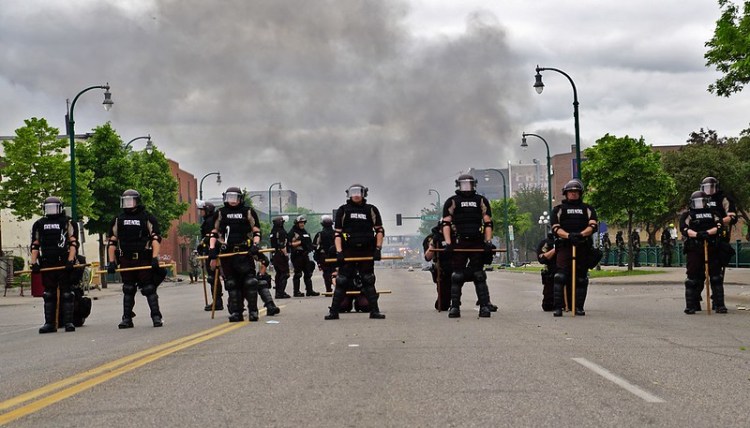
🔥🔥🔥🔥@UrbanHistoryA panel on Urban Uprisings and Racist Police Terror in Historical Context with @Prof_Suddler @AustinMcCoy3 @mfkantor and @hthompsn with @CharlotteERosen and @mguariglia moderating pic.twitter.com/UbY4A6pqTw — Marisol LeBrón (@marisollebron) July 8, 2020 In 1973, Detroit’s Stevie Wonder released Innervisions, a groove-filled album that was simultaneously joyous, sharp-eyed, and steely. In its third track “Living for the […]
All good things must come to an end, and this is especially true of summer school. Whether talking about the 1980s Mark Harmon feature or the classroom, digital and analog, it’s come time to shutter our doors for a couple weeks as The Metropole takes some time off. We’ll re-open after Labor Day with a […]
Today we are initiating our Scholar-Activist of the Month series. Nick Juravich, defended his dissertation in U.S. History at Columbia University on Monday, and in September he will be an Andrew W. Mellon Postdoctoral Fellow in the Center for Women’s History at the New-York Historical Society. Nick offers this reflection on the relationship between scholarship […]




 The Metropole