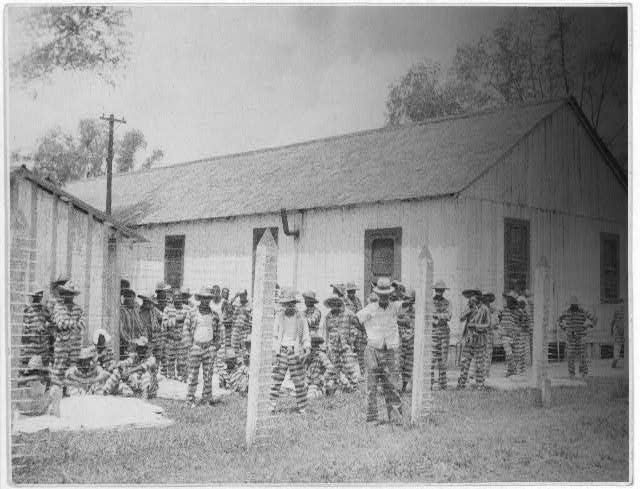
In his 2003 work, The Contradiction of American Capital Punishment, University of California law professor Franklin E. Zimring suggested that a correlation existed between lynchings and capital punishment; states with more of the former participated at higher rates in the latter. Zimring’s statistics, Elaine Cassel argued, “should give pause to anyone who believes that the […]
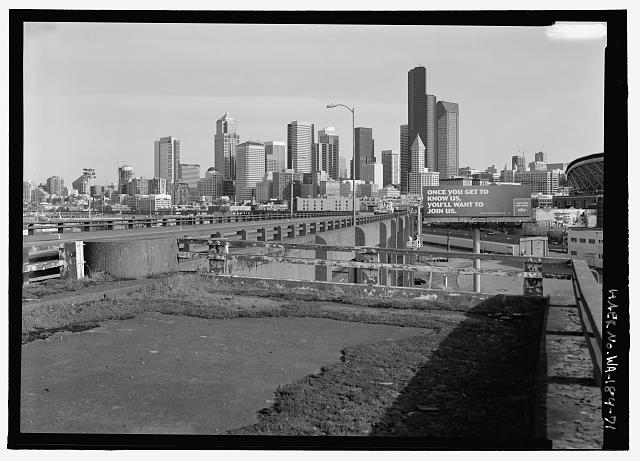
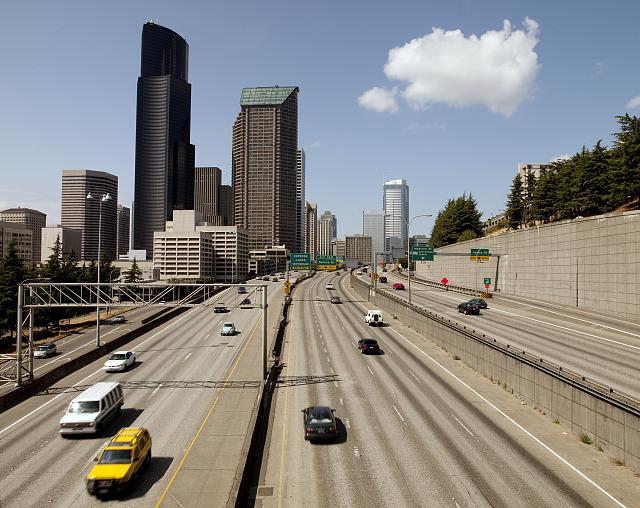
Seattle has long been connected to cutting edge technology: Boeing’s aerospace dominance, Seattle’s 1962 World Fair, and more recently the rise of Microsoft and Amazon. The ascent of “digital Seattle” was arguably best captured in two books; Stephen Manes and Paul Andrews on Microsoft in Gates: How Microsoft’s Mogul Reinvented an Industry and Made Himself […]
New Orleans, and the state of Louisiana more generally, are often held up as the worst examples of policing and criminal justice. It’s where the Angola 3 were incarcerated, alongside Zulu Whitmore, as political prisoners. It’s where Amnesty International has focused much of its anti-carceral state activism. Angola often gets held up as “a modern […]
Peter Siskind, Ph.D. Assistant Professor & Chair, Department of Historical & Political Studies, Arcadia University Executive Director, Urban History Association Describe your current research. What about it drew your interest? I’ve been exploring the politics of development in the cities, suburbs, and recreational vacationlands of the post-World War II northeast corridor from Boston to Washington, […]
In a 2014 interview, indie rock malcontent Stephen Malkmus reflected on 1990s nostalgia. “It’s a time that seems romantic to people now, whereas at the time, it seemed like a cynical era,” he told the magazine. “There were all these worries about selling out and the Man and corporate rock and irony and sincerity. But […]
This week on The Metropole, we traveled from prisons in Paris to Buenos Aires and Brazil, then northwest to Gay Seattle and back eastwards to the Chrysler Village neighborhood of Chicago. We hope you enjoyed reading about poisoners and policing in seventeenth century France, the uniquely local form of LGBTQ activism that developed in twentieth-century […]
This is the inaugural post in a series highlighting urban and suburban public history projects. The Chrysler Village History Project has its origins in the spring semester of 2013, when a group of history graduate students from Loyola University Chicago nominated the Chrysler Village neighborhood on Chicago’s southwest side to the National Register of Historic […]
In many ways, 1977 represented a great deal of possibility for Seattle’s LGBTQ community. Granted in years prior, the Gay Community Center on Renton Hill had been bombed and Robert Sirico’s gay Metropolitan Community Church faced possible closure, yet on July 1, 1976 the state’s anti-sodomy law was repealed and the Seattle City Council had […]
Claudio Daflon @claudiodaflon Doctoral Candidate in History University of Connecticut Describe your current research. What about it drew your interest? My dissertation is about the expansion of the national university system towards the metropolitan municipalities of the Gran Buenos Aires. It questions how this process relates to the urbanization and transformation processes experienced in the […]
Although Professor Holly Tucker wrote her new book for a non-academic audience, City of Light, City of Poison: Murder, Magic, and the First Police Chief of Paris begins with a scene uniquely suited to evoke terror and handwringing from historians. The preface, which Tucker entitles “Burn Notice,” is set in the palace of Versailles in […]